Rare Earths Americas Launches Initial Assessment at Constellation in Poços de Caldas Amid Growing Strategic Focus on Brazilian Ionic Clay Rare Earths
Rare Earths Americas Launches Initial Assessment at Constellation in Poços de Caldas Amid Growing Strategic Focus on Brazilian Ionic Clay Rare Earths
Rare Earths Americas, Inc. (NYSE American: REA) has commenced an Initial Assessment (“IA”) at its Constellation Rare Earths Project in Brazil's Poços de Caldas district, which hosts an inferred mineral resource of 266.2 million tonnes at 2,637 ppm TREO. Constellation is one of three rare earth projects REA holds in Brazil, alongside the Alpha Project in Bahia and the early-stage Homer-A exploration project in Goiás. Recent activity involving Meteoric Resources' Caldeira Project in Poços de Caldas and Serra Verde's Pela Ema operation in Goiás reflects growing interest in Brazilian ionic clay assets. REA is targeting completion of the IA in mid-2027.
Highlights:
- Accelerating economic evaluation: REA has commenced an IA, which will outline an initial mine plan, rare earth annual production potential, metallurgical review, infrastructure assessment, permitting overview and preliminary project economics, with completion targeted for mid-2027.
- Leading Ionic Adsorption Clay (“IAC”) rare earth district: Constellation consists of 21 mineral tenements/titles covering approximately 59.5 km² within the Poços de Caldas alkaline complex, with the resource currently defined on approximately 16 km² of that package, in proximity to advanced-stage rare earth projects in one of the world's most significant districts for ionic adsorption clay and heavy rare earth development.
- Large inferred mineral resource: 266.2 million tonnes at 2,637 ppm total rare earth oxides ("TREO") at a 1,000 ppm TREO cut-off, with magnet rare earths neodymium-praseodymium (“NdPr”) and dysprosium and terbium (“DyTb”) making up approximately 21% and 1% of the TREO basket, respectively.
Rare Earths Americas' CEO, Donald Swartz, commented: “Constellation combines the attributes we believe matter most in Brazilian ionic clay rare earths: scale, strong grade, meaningful heavy rare earth content and location in a district that is increasingly attracting strategic capital. Recent activity involving Meteoric's Caldeira Project and Serra Verde provides context for the growing interest in Brazil and in IAC projects capable of supplying magnet rare earths outside China and Myanmar. Our next step is to accelerate Constellation's economic evaluation through the IA targeted for mid-2027. Importantly, Constellation is one part of a broader Brazilian portfolio that also includes Alpha and Homer-A, giving REA multiple potential development pathways and the ability to sequence projects as technical work advances.”
MINAS GERAIS, Brazil--(BUSINESS WIRE)--Rare Earths Americas, Inc. (NYSE American: REA) ("REA" or the "Company") is pleased to announce that it has commenced an IA at its Constellation Rare Earths Project, advancing an inferred mineral resource of 266.2 million tonnes grading 2,637 ppm TREO. The current Constellation mineral resource estimate is supported by an initial assessment included in the Constellation Technical Report Summary; the IA now commenced is intended to expand that work to include an initial mine plan and preliminary project economics. The Constellation Technical Report Summary is filed as Exhibit 96.2 to the Company’s Form S-1 registration statement that was previously filed in connection with the Company’s initial public offering. Constellation is located within the Poços de Caldas alkaline complex in southern Minas Gerais, one of the world's leading districts for ionic adsorption clay rare earths.
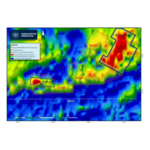
The Constellation Project covers approximately 59.9 km² across 21 mineral tenements/titles (see Figure 1) in a district that hosts some of the largest and highest-grade ionic adsorption clay rare earth resources globally and has recently drawn strategic investment from established rare earth producers. The resource is currently defined on approximately 16 km² of the tenement package.
The Company believes Constellation's 266.2 million tonnes inferred resource at 2,637 ppm TREO provides substantial scale; however, its economic potential remains subject to the results of the IA and future technical studies. The mineral resource estimate has an effective date of October 31, 2025, was prepared by McGarry Geoconsulting Corp. and Karst Geo Solutions LLC through qualified persons under S-K 1300, and is described in the Constellation Technical Report Summary dated March 25, 2026, filed with the U.S. Securities and Exchange Commission.
The IA is expected to include an initial mine plan, rare earth annual production potential, metallurgical review and infrastructure assessment, permitting overview and preliminary project economics. The Company is targeting completion of the IA in mid-2027.
Poços de Caldas District and Brazilian Ionic Clays: The Poços de Caldas alkaline complex in Minas Gerais is a volcanic structure about 30 km across and has emerged as one of the world's leading areas for exploration and development of IAC rare earths. Its deeply weathered clay profiles host significant rare earth mineralization, and the district benefits from established infrastructure, including paved highways, grid power and road access to the Port of Santos. Constellation is located in the same alkaline complex as the advanced-stage Caldeira and Colossus projects (see Table 1), and is in proximity to both (see Figure 1). The Poços de Caldas complex also has a long history of mining.
Interest in Brazilian IAC rare earth projects has increased through recent public transactions and government-backed investment. Lynas Rare Earths (ASX: LYC) has announced a proposed acquisition of Meteoric Resources (ASX: MEI), owner of the Caldeira Project in the Poços de Caldas complex. In September 2026, USA Rare Earth (Nasdaq: USAR) completed its acquisition of Serra Verde, owner of the Pela Ema IAC operation in Goiás. These transactions involve third parties and projects that differ from Constellation in stage, scale, grade, metallurgy and ownership, and are not indicative of the value of Constellation or the Company. USA Rare Earth has disclosed a US$565 million loan facility from the U.S. International Development Finance Corporation. Viridis Mining and Minerals (ASX: VMM) is also advancing its Colossus Project within the Poços de Caldas complex.
REA holds three rare earth projects in Brazil at different stages of development (see Table 1). Constellation, in Poços de Caldas, hosts an inferred mineral resource and is now entering an IA. Alpha, in Bahia, hosts an inferred mineral resource and is advancing an IA, being prepared by Hatch Ltd., which is anticipated to be completed in early 2027, in addition to an in-fill program to upgrade resource classification for future technical studies. Homer-A, in Goiás, is an early-stage exploration project, not currently considered a material property, where initial drill results have indicated widespread, near-surface clay- and saprolite-hosted rare earth mineralization; no mineral resource has been estimated, the deposit type has not yet been established and metallurgical testing is underway.
Together with Alpha and Homer-A, the Company believes these assets provide development flexibility and position REA among rare earth developers operating in Brazil. As the Company advances technical work at Constellation, it continues to build a portfolio that it believes is capable of supporting future Western rare earth supply chains.
|
Rare Earths Americas (NYSE American: REA) |
Viridis (ASX: VMM) |
Lynas Rare Earths (ASX: LYC)* |
USA Rare Earth (Nasdaq: USAR)* |
Aclara Resources (TSX: ARA) |
||
Project |
Alpha |
Homer |
Constellation |
Colossus |
Caldeira |
Serra Verde - Pela Ema |
Carina |
Location |
Bahia, Brazil |
Goiás, Brazil |
Poços de Caldas REE District in Minas Gerais, Brazil |
Goiás, Brazil |
Goiás, Brazil |
||
Resource (Mt) |
202 |
- |
266 |
473 |
1,631 |
911 |
302 |
TREO (ppm) |
1,520 ppm |
- |
2,637 ppm |
2,505 ppm |
2,317 ppm |
~1,200 ppm |
1,570 ppm |
MREO** (% TREO) |
24% |
- |
22% |
24% |
22% |
Not Disclosed |
22% |
NdPr (% TREO) |
22% |
- |
21% |
22% |
21% |
19% |
|
DyTb (% TREO) |
2% |
- |
1% |
1% |
1% |
3% |
|
Stage |
SK-1300 Resource |
Exploration |
SK-1300 Resource |
Definitive Feasibility Study |
Definitive Feasibility Study |
Operational*** |
Feasibility Study |
Life of Mine (LOM) (years) |
Initial Assessment Underway, targeting 1Q27 publication |
Initial Resource Estimate targeting 2027 publication |
Initial Assessment Underway, targeting mid-2027 publication |
25 |
23 |
20+ |
18 |
DyTb LOM Avg. Annual Production (tpa) |
126 |
127 |
193 |
183 |
|||
NdPr LOM Avg. Annual Production (tpa) |
2,841 |
3,862 |
1,700-1,800 |
1,191 |
|||
Y LOM Avg. Annual Production (tpa) |
1,160 |
623 |
1,534 |
Not Disclosed |
|||
Initial Capex ($M) |
$449 |
$498 |
Not Disclosed |
$781 |
|||
NPV8% after tax ($M) |
$1,196 |
$2,721 |
$1,661 |
||||
Table 1 – Overview of Rare Earths Projects in Brazil. |
|||||||
*On October 1, 2026, Lynas Rare Earths and Meteoric Resources announced a binding scheme implementation deed under which Lynas proposes to acquire 100% of Meteoric Resources. In September 2026, USA Rare Earth (Nasdaq: USAR) completed its acquisition of Serra Verde, owner of the producing Pela Ema IAC operation in Goiás, which is supported by a US$565 million loan facility from the U.S. International Development Finance Corporation.** Magnetic Rare Earth Oxides (MREO) includes Neodymium (Nd), Praseodymium (Pr), Dysprosium (Dy) and Terbium (Tb). *** Production based on 2027 estimates, not LOM.
What are Ionic Adsorption Clays (IAC)? Why are they important source of heavy rare earths?
In general, and not specifically with respect to Constellation, IAC deposits are a source of heavy rare earth elements, including DyTb, which are critical to high-performance permanent magnets used in electric vehicles, robotics, drones, wind turbines and defense applications. China and Myanmar have historically supplied most of the world's heavy rare earths from IAC deposits and, according to Adamas Intelligence, account for more than 90% of global DyTb production.
IAC deposits form through a two-stage natural concentration process. First, rare earth elements become enriched within alkaline rocks through magmatic fractionation, a geological process that concentrates rare earths as magma cools and crystallizes. Over millions of years, intense tropical weathering driven by rainfall, groundwater circulation and chemical alteration breaks down these rocks, removing more mobile elements while leaving the relatively immobile rare earth elements behind. As a result, rare earths become naturally concentrated within the weathered profile and become adsorbed onto the surface of clay particles.
The Constellation Project is located within the Poços de Caldas Alkaline complex, an ionic clay rare earth district that hosts several rare earth projects and provides an ideal setting in which this process may occur. Rare earth-enriched source rocks, combined with prolonged tropical weathering, have created ionic clay systems with attractive grades and significant concentrations of valuable magnetic rare earth elements, including neodymium, praseodymium, dysprosium and terbium. This natural enrichment process has contributed to the district being recognized as a source of future rare earth supply outside China and Myanmar.
Unlike conventional hard-rock rare earth deposits, where rare earths remain locked within minerals such as monazite and bastnaesite and must be liberated through crushing, grinding and beneficiation, rare earths in IAC deposits are weakly bound to clay particles. Consequently, they can often be recovered using relatively mild leaching solutions, such as ammonium sulfate.
While IAC deposits typically contain lower rare earth grades than many hard-rock deposits, commonly ranging from 500 ppm to 3,000 ppm TREO, they remain highly attractive due to several characteristics:
- Mineralization is typically located near surface and can often be mined using simple open-pit methods and conventional excavator fleets.
- The clay generally requires little or no crushing, grinding or beneficiation before processing.
- Rare earths can often be extracted using comparatively mild and lower-cost reagents.
- IAC deposits are frequently enriched in high-value heavy rare earth elements, including dysprosium and terbium.
- IAC deposits may contain lower levels of deleterious elements and, depending on mineralogy and location, may contain lower levels of naturally occurring radioactive materials than some hard-rock rare earth deposits; actual conditions vary by deposit.
- The relatively simple mining methods and limited physical disturbance associated with some clay extraction operations may contribute to a smaller environmental footprint and may support a more streamlined permitting process compared with some conventional mining projects, but permitting remains project-specific. No formal environmental baseline studies have been conducted on the Constellation Project as of the date of the Constellation Technical Report Summary.
- These characteristics may allow for simpler processing flowsheets and reduced handling requirements, subject to project-specific mineralogy and process design.
About Rare Earths Americas
Rare Earths Americas, Inc. is an exploration-stage company advancing a diversified portfolio of critical mineral projects focused on rare earths in the United States and Brazil. The Company is focused on rare earth assets that contain heavy rare earths, including dysprosium and terbium, which are critical to high-performance permanent magnets and for which supply has historically been concentrated in China and Myanmar. In Brazil, REA is advancing three rare earth projects (Alpha, Constellation and Homer-A) across distinct rare earth districts, giving the Company multiple potential development pathways. Constellation, Alpha and Shiloh are the Company’s three material projects. Alpha and Constellation each host inferred mineral resources, giving REA significant resource scale. The portfolio is intended to provide flexibility in development sequencing and capital allocation as technical studies advance. In the United States, REA is exploring the Foothills Rare Earths District in Georgia, which the Company believes has the potential to become a new domestic source of rare earths. Rare earth elements are essential to advanced industries including robotics, electric vehicles, energy, defense and consumer electronics.
Data Verification: No new exploration results, mineral resources or mineral reserves are reported in this release. Information regarding the Constellation mineral resource, including data verification, QA/QC, assumptions and limitations, is set forth in the Constellation Technical Report Summary and the Company’s Rule 424(b)(4) Prospectus filed on May 7, 2026.
Qualified Persons: The scientific and technical information regarding Constellation is based on the Constellation Technical Report Summary prepared by McGarry Geoconsulting Corp. and Karst Geo Solutions LLC, independent and not affiliates of the Company, filed as Exhibit 96.2 to the Company’s Form S-1 registration statement that was previously filed in connection with the Company initial public offering, and has been reviewed and approved by Leandro Coracini Ollita, a qualified person registered with the Brazilian Commission for Resources and Reserves (CBRR), Registration No. 023160, and an employee of a wholly-owned Brazilian subsidiary of the Company, a qualified person under Item 1300 of Regulation S-K. Information regarding Homer-A has been reviewed by Leandro Coracini Ollita (employee, CBRR No. 023160). Mineral resources are not mineral reserves and do not have demonstrated economic viability. Inferred mineral resources have a lower level of confidence and may not be converted to mineral reserves.
Forward-Looking Statements & Technical Notes
This communication contains forward-looking statements within the meaning of Section 27A of the Securities Act of 1933, as amended, and Section 21E of the Securities Exchange Act of 1934, as amended. When used in this communication, the words "plan," "target," "anticipate," "believe," "could," “designed to,” "estimate," “evaluate,” "expect," “focused on,” "intend," "may," “opportunities,” "potential," “seeks," "should," "will," "would" and similar expressions are intended to identify such forward-looking statements. Any express or implied statements contained in this communication that are not statements of historical fact may be deemed to be forward-looking statements.
Forward-looking statements in this communication include, but are not limited to: the scope, timing and completion of the IA for the Constellation Project, including the Company's target of completing the study in mid-2027; the timing and completion of the IA for Alpha, including the Company’s target completion of the IA in early-2027; expectations regarding potential mine plans, production rates, metallurgical performance, infrastructure, permitting and preliminary project economics; the potential advancement of Constellation through future technical and development stages; statements regarding the strategic significance of the Poços de Caldas district, Brazil and Brazilian ionic adsorption clay projects; comparisons of Constellation's grade, scale or rare earth distribution with other projects; the potential benefits of REA's diversified Brazilian project portfolio, including development optionality and sequencing; and the Company's strategic objectives relating to the exploration and development of critical mineral opportunities.
The Constellation Project has an inferred mineral resource of 266.2 million tonnes at 2,637 ppm TREO at a 1,000 ppm TREO cut-off, effective October 31, 2025. The resource is currently defined on approximately 16 km² of the approximately 59.5 km² tenement package. Inferred mineral resources are subject to a high degree of geological uncertainty and may not be converted to mineral reserves. The Company has not completed the IA and has not made a development or construction decision for Constellation. There can be no assurance that the IA will demonstrate economic viability or that the project will advance to development.
There is no certainty that the IA will be completed on the anticipated schedule or within budget, that additional technical work will confirm favorable metallurgical, mining, infrastructure, environmental or permitting assumptions, or that Constellation will advance toward development. Any production, cost or economic expectations remain subject to completion of the IA and subsequent technical studies. Mineral resources that are not mineral reserves do not have demonstrated economic viability.
These forward-looking statements are based on assumptions and expectations that may not prove to be accurate and are subject to numerous risks and uncertainties that could cause actual results to differ materially from those described in such statements. These risks and uncertainties include, among others: geological, technical and interpretation risks; uncertainty associated with inferred mineral resources; uncertainties relating to metallurgical recovery, mining methods, infrastructure, permitting and project economics; the possibility that technical studies may not achieve their objectives or may take longer or cost more than anticipated; the risk that peer comparisons may not be meaningful due to differences in analytical methods, cut-off grades, resource classifications, reporting standards and project maturity; fluctuations in rare earth commodity prices, including dysprosium, terbium, neodymium and praseodymium; regulatory, environmental and permitting risks in Brazil; political, economic and trade-policy risks in Brazil and the United States; currency exchange-rate fluctuations between the U.S. Dollar and the Brazilian Real; availability of financing on acceptable terms; the Company's need for substantial additional capital; market conditions; and general economic, political and business risks. The foregoing list is not exhaustive.
Investors are cautioned that mineral resources, particularly inferred mineral resources, are subject to significant uncertainty and do not constitute mineral reserves or demonstrate economic viability. The results of the IA and future technical work may differ materially from current expectations.
For additional information regarding factors that may cause actual results to differ materially from those indicated in our forward-looking statements, we refer you to the risk factors included in the Company’s Rule 424(b)(4) Prospectus filed on May 7, 2026, the Company’s Quarterly Reports on Form 10-Q for the quarters ended March 31, 2026 and June 30, 2026, filed on June 4 2026 and August 11, 2026, respectively, and future filings, which are or will be available at www.sec.gov. We caution investors not to place undue reliance on the forward-looking statements contained in this communication. These statements speak only as of the date of this communication, and we undertake no obligation to update or revise these statements, whether as a result of new information, future events or otherwise, except as may be required by law.
This press release does not constitute an offer to sell or the solicitation of an offer to buy any securities.
Appendix A
The following Appendix A section provides general background information on rare earths. The IAC explainer section and Figure 2 are likewise included for educational context only. This information is derived from publicly available third-party sources.
None of this information is intended as, and none should be construed as, an assessment of the economic viability of the Constellation Project or any other REA project.
What are Rare Earths?
Rare earth elements are a group of 17 specialty metals critical to a wide range of advanced and everyday technologies. They are used in high-performance permanent magnets, particularly neodymium-iron-boron (NdFeB) magnets, which enable high strength and efficiency in applications such as robotics, electric vehicles, defense systems, wind turbines, and consumer electronics. In simple terms, motion generated by electricity is often powered by NdFeB magnets, making rare earths essential inputs in everyday items, from the motor that raises and lowers a car window to the motors used in drones and humanoid robots.
Of the 17 rare earth elements, neodymium (Nd), praseodymium (Pr), dysprosium (Dy), and terbium (Tb) are the key materials used in high-performance permanent magnets. Dy and Tb are particularly valuable due to their ability to enhance magnet performance at high temperatures.
According to Adamas Intelligence, China accounts for over 90% of global Dy and Tb production. This concentration has increased the strategic importance of developing new rare earth projects in other jurisdictions to support supply chain diversification and long-term demand growth.
Contacts