Canadian Investors Say They're Diversified but New Data Suggest Many Don't Fully Understand What That Means
Canadian Investors Say They're Diversified but New Data Suggest Many Don't Fully Understand What That Means
New research finds 83 per cent of investors are confident they're diversified, despite gaps in understanding of how concentrated the market is today
TORONTO--(BUSINESS WIRE)--Canadian investors are navigating an increasingly complex market environment with high confidence in their portfolios. Yet new polling from PICTON Investments, conducted by Pollara Strategic Insights, suggests that confidence may not always be matched by a full understanding of the risks shaping today’s markets, or the tools available to help manage them.
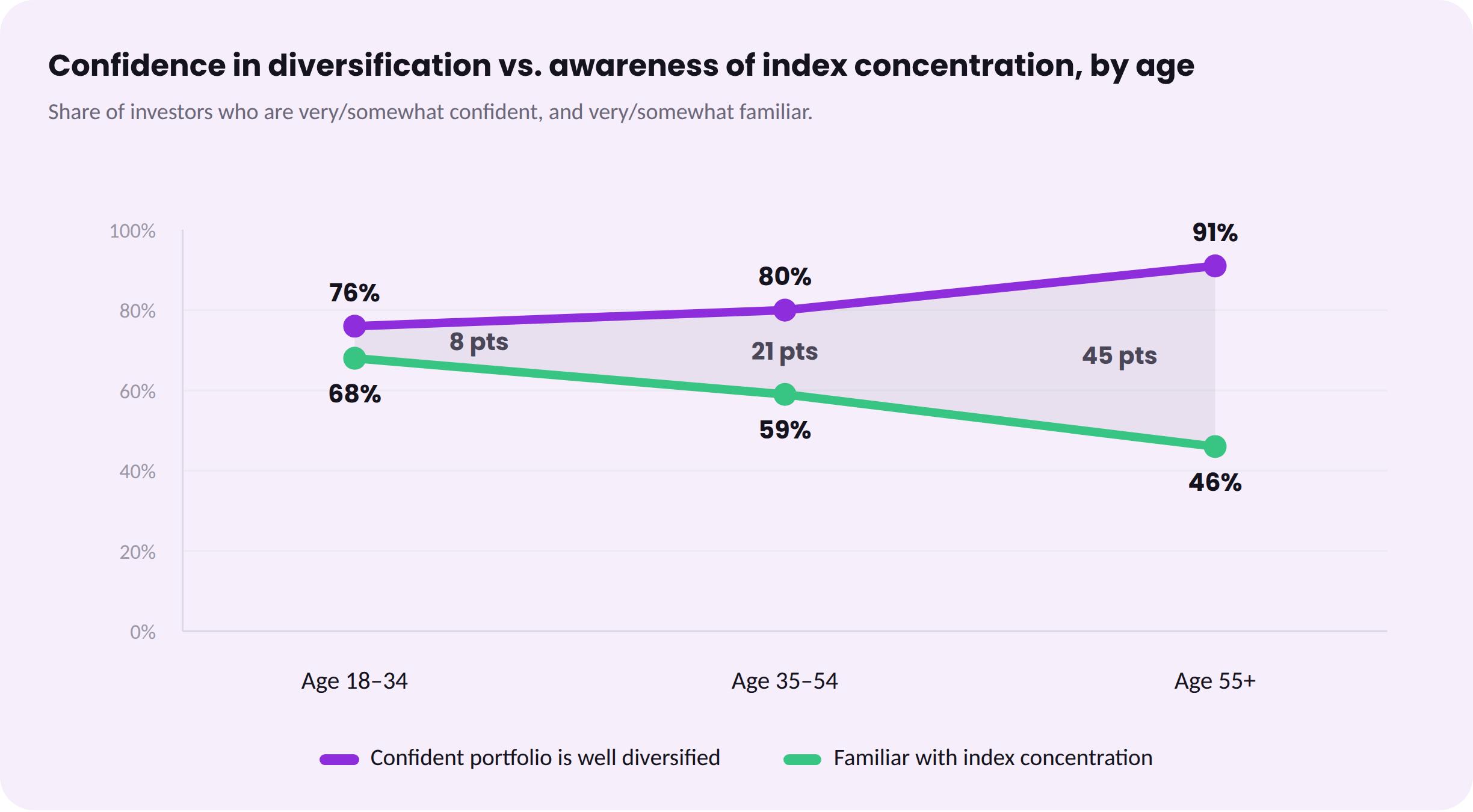
The survey found that 67 per cent of Canadian investors are concerned about market volatility affecting their investments over the next 12 months. Yet more than eight in 10 (83%) are confident their portfolios are well diversified. Diversification may help manage risk, but it does not guarantee profits or protect against losses, and portfolios can still decline during market downturns.
Confidence is high, but awareness of concentration risk lags
For decades, diversification has been associated with owning a mix of funds, sectors and geographies. However, as a relatively small number of companies now account for an increasingly significant share of major global stock market indices, the diversification conversation has become more nuanced.
"The findings suggest Canadian investors are approaching today's markets with a high degree of confidence, but confidence and understanding are not always the same thing," said Robert Wilson, Head of Innovation and Portfolio Strategist, PICTON Investments. "Diversification is about more than the number of investments in a portfolio. As markets become more concentrated, investors need to understand not only what they own, but the risks that may exist beneath the surface of a seemingly diversified portfolio."
Despite this shift, familiarity with index concentration is far from universal among Canadian investors. Only 57 per cent say they are familiar with the trend. The awareness gap is particularly pronounced among older investors, with familiarity rising to 68 per cent among investors aged 18 to 34, compared to just 46 per cent among those aged 55 and older.
The research also suggests understanding concentration risk may contribute to portfolio confidence. Among investors who are familiar with index concentration, 88 per cent say they are confident in their portfolio diversification, compared with 67 per cent among investors who are completely unaware of the issue.
Investors continue to rely on traditional approaches to diversification
Despite widespread confidence in diversification, investors continue to rely predominantly on traditional investment products. Among Canadian investors, mutual funds, GICs, stocks and ETFs are the most commonly held investments, while only eight per cent of investors report holding alternative investments.
Low awareness of alternatives doesn't mean low interest
Alternative strategies such as hedge funds and liquid alternatives remain unfamiliar territory for most investors, with just 31 per cent saying they are familiar with them.
Yet that lack of familiarity does not appear to reflect a lack of interest: six in 10 investors (60 per cent) say they would like to learn more about how alternative investment strategies could impact their portfolios. When asked what would make them more comfortable considering them, the most common answer among Canadian investors was a better understanding of the risks and benefits (25%), followed closely by a recommendation from their financial advisor (22%) and more education about how they work (20%).
"The findings point to a meaningful opportunity for investor education," said Macan Nia, Investment Strategist, PICTON Investments. "Investors are telling us they want to better understand how modern portfolios can be built to navigate today's market realities. The conversation around diversification needs to evolve beyond simply owning more stocks and bonds to understanding how different investments can contribute to portfolio construction and risk management."
At a time when investors are seeking greater resilience in increasingly concentrated markets, the findings suggest the opportunity isn't simply to introduce new investment solutions. It's to help Canadians better understand the risks they may already face and the broader range of tools available to build more diversified portfolios.
About the research
Between August 6 to 14, 2026, 3,020 adult Canadians, 18 years of age or older, participated in an online survey conducted by Pollara Strategic Insights, an independent research firm, on behalf of PICTON Investments, which commissioned the study. A representative sample of this size would be considered accurate to within ±1.8%, 19 times out of 20. Results have been weighted using the latest Statistics Canada data to be representative of the Canadian population as a whole. The survey included a sub-sample of 1,968 Canadian investors (adults who individually or jointly hold investments such as stocks, mutual funds, ETFs, GICs, bonds, real estate investment products, alternative investments or cryptocurrency), accurate to within ±2.2%, 19 times out of 20. Unless otherwise noted, findings cited in this release are based on this investor sub-sample. Pollara Strategic Insights is a member of the Canadian Research Insights Council (CRIC), and this research was conducted in compliance with CRIC standards.
About PICTON Investments
PICTON Investments is a Canadian investment firm with $20 billion in assets under management (as of August 31, 2026). Since 2004, PICTON has helped advisors and investors rethink portfolio construction, offering alternative investment strategies that challenge traditional thinking and move beyond traditional models. Drawing on deep expertise in quantitative research, fundamental analysis and authentic hedging strategies, the firm builds modern portfolio solutions designed to be more resilient and diversified, and to seek more consistent risk-adjusted returns over a full market cycle. PICTON’s philosophy is to “Build from the Bear Up™,” bringing a bear mindset of resiliency, adaptability and strength to help Canadians navigate uncertainty.
PICTON Investments™ and Build from the Bear Up™ are trademarks of Picton Mahoney Asset Management.
© 2026 Picton Mahoney Asset Management. All rights reserved.
Contacts
PICTON Investments Contact
Adam McPhail
ChangeMakers for PICTON Investments
adam.mcphail@thechangemakers.com