Universal Signalling Selects Ferrocene to Develop the First Rust-Based Railway Certification Package
Universal Signalling Selects Ferrocene to Develop the First Rust-Based Railway Certification Package
The collaboration will enable the use of qualified Rust tooling for safety-critical railway applications under EN 50716
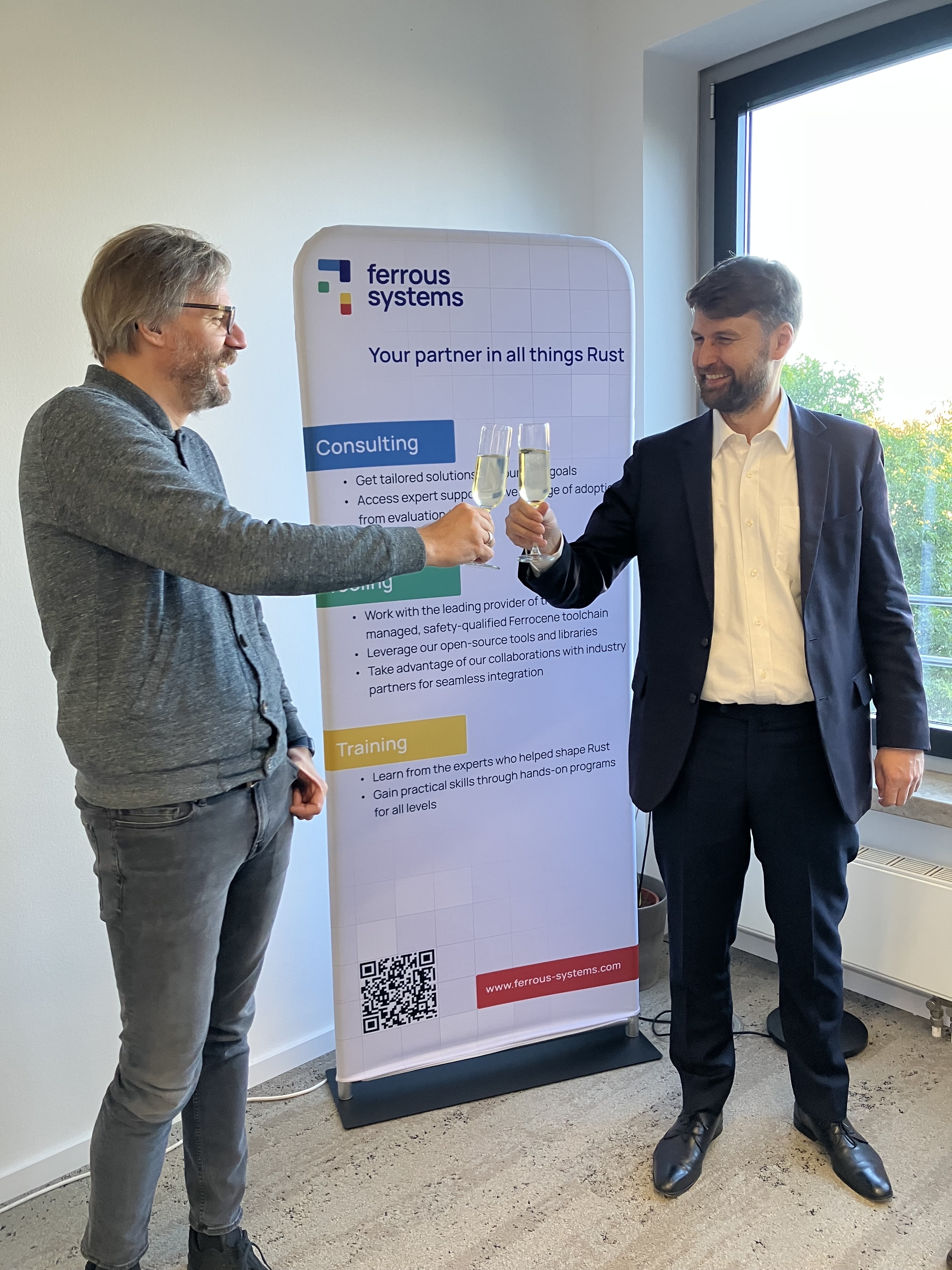
DERBY, England--(BUSINESS WIRE)--Universal Signalling Ltd, a leading railway signaling company, and the team behind Ferrocene, the quality-managed, safety-qualified Rust toolchain, today announced a collaboration to develop the first railway certification package for Rust in compliance with EN 50716. The goal is to establish a certification pathway for using the Rust programming language in safety-critical railway applications.
Universal Signalling was founded in 2022, with the aim of bringing a step change in the performance of digital railway signaling products, using novel architectures and approaches to projects. Those unique approaches allow delivery in days, rather than the decades that the rail industry has become accustomed to.
Universal Signalling’s products are primarily developed in Rust and utilize QNX OS for Safety (QOS). The Ferrocene team will provide a Rust integration layer to enable Universal Signalling’s applications to access QNX functionality. They will also provide qualification materials for the Ferrocene toolchain and required libraries to support the development and certification of the company's high-assurance software under EN 50716. The qualification package, including all required certification materials, is expected to be delivered in an upcoming Ferrocene release. The resulting certification package will include all the necessary elements to enable the first Rust-based railway product to achieve certification.
Dr. Nicholas Wright, CTO of Universal Signalling, commented: “Rust’s unique features make it the obvious choice for railway safety applications, but without adequate certification and qualification, it cannot be deployed in real-world applications. Universal Signalling was founded to bring step-change innovation to the railway signalling industry, and our partnership with the Ferrocene team is a prime example of that. Together, we are leading the way in ensuring the Railway can utilise the best tools for the job.”
“Railway signaling has some of the most stringent requirements for software safety and reliability, and Rust’s strong memory-safety properties make it a natural fit,” said Felix Gilcher, Managing Director responsible for Ferrocene. “But using Rust in this environment goes beyond the language itself: it requires a robust, qualified toolchain and the processes to support certification. We look forward to working with Universal Signalling to build that foundation and enable the use of Rust across the railway industry.”
About Ferrocene
Ferrocene began at Ferrous Systems GmbH in 2019 as an initiative to bring Rust to safety- and mission-critical industries. It has since evolved into a quality-managed, TÜV SÜD-qualified, open source Rust toolchain.
Ferrocene is qualified for safety-related development according to ISO 26262 (ASIL D), IEC 61508 (SIL 3) and IEC 62304 (Class C), and supports customer certification efforts toward SIL 4 and DO-178C (DAL C). A certified core subset is available for ISO 26262 (ASIL B) and IEC 61508 (SIL 2).
Available under permissive MIT or Apache 2.0 licenses, Ferrocene supports a range of qualified targets, including Linux, QNX, Red Hat In-Vehicle Operating System, bare metal on multiple architectures such as Arm and x86-64, and your choice of RTOS upon request. Regular requalification enables customers to benefit from the latest Rust features, while open-source qualification documentation provides transparency and flexibility when developing safety-critical systems. To learn more, visit www.ferrocene.dev.
About Universal Signalling
Universal Signalling is headquartered in Derby, the heart of the UK’s railway industry. The highly experienced team have worked across the globe in rail engineering, operations and product development for many years, but became frustrated at the slow pace of innovation and technology adoption in the sector. This motivated them to found their own company in 2022. Within just a few short years they have agreed contracts to install their novel technology on over 100 miles of railway in Wales, won several innovation awards and industry accolades, and started to receive enquiries from all over the globe. To learn more, visit www.universalsignalling.com
Contacts
Media contacts
Sam Bemment
Chief Innovation Officer
sam.bemment@universalsignalling.com
+44 7944 629317
Jessie Glockner
Global PR Manager, Ferrous Systems GmbH
jessie.glockner@ferrous-systems.com
+1-508-612-1186 (ET)