Virginia Communities Become the Front Line in Disrupting Online Scams for Everyone
Virginia Communities Become the Front Line in Disrupting Online Scams for Everyone
Attorney General-sponsored initiative using Proxyware’s technology transforms schools and senior communities from targets into active participants in dismantling online scams
MCLEAN, Va.--(BUSINESS WIRE)--Every day, cybercriminals launch thousands of phishing campaigns, fraudulent websites, fake purchase notifications, and malicious advertisements designed to steal money and personal information from unsuspecting victims. Most people assume the only defense is learning how to recognize these scams before it's too late.
Virginia is proving there is another way.
Through an initiative sponsored by the Virginia Office of the Attorney General and using Proxyware’s proprietary technology, schools and senior living communities across the Commonwealth have become active participants in identifying, disrupting, and helping remove the digital infrastructure cybercriminals use to target vulnerable Americans.
Rather than simply protecting themselves, participating organizations contribute intelligence that enables researchers to identify malicious campaigns, trace the criminal infrastructure behind them, and coordinate takedowns that prevent the same scams from reaching future victims across the Internet.
"This initiative fundamentally changes the role communities play in digital safety," said Chris Olson, CEO, Proxyware. "Every participating school and senior living community contributes intelligence that helps identify and dismantle criminal infrastructure before it reaches someone else. Virginia communities aren't simply defending themselves, they're helping protect millions of internet users."
Beyond Blocking: Eliminating Criminal Infrastructure
Using Proxyware technology, eight senior living communities and five school districts generated intelligence that enabled researchers to identify phishing campaigns, malicious advertisements, redirect chains, fraudulent domains, and coordinated scam networks operating across the open web.
By tracing those attack chains back to their source, Proxyware coordinated takedowns that removed malicious infrastructure before additional victims could encounter it.
Criminals Are Changing Their Playbook
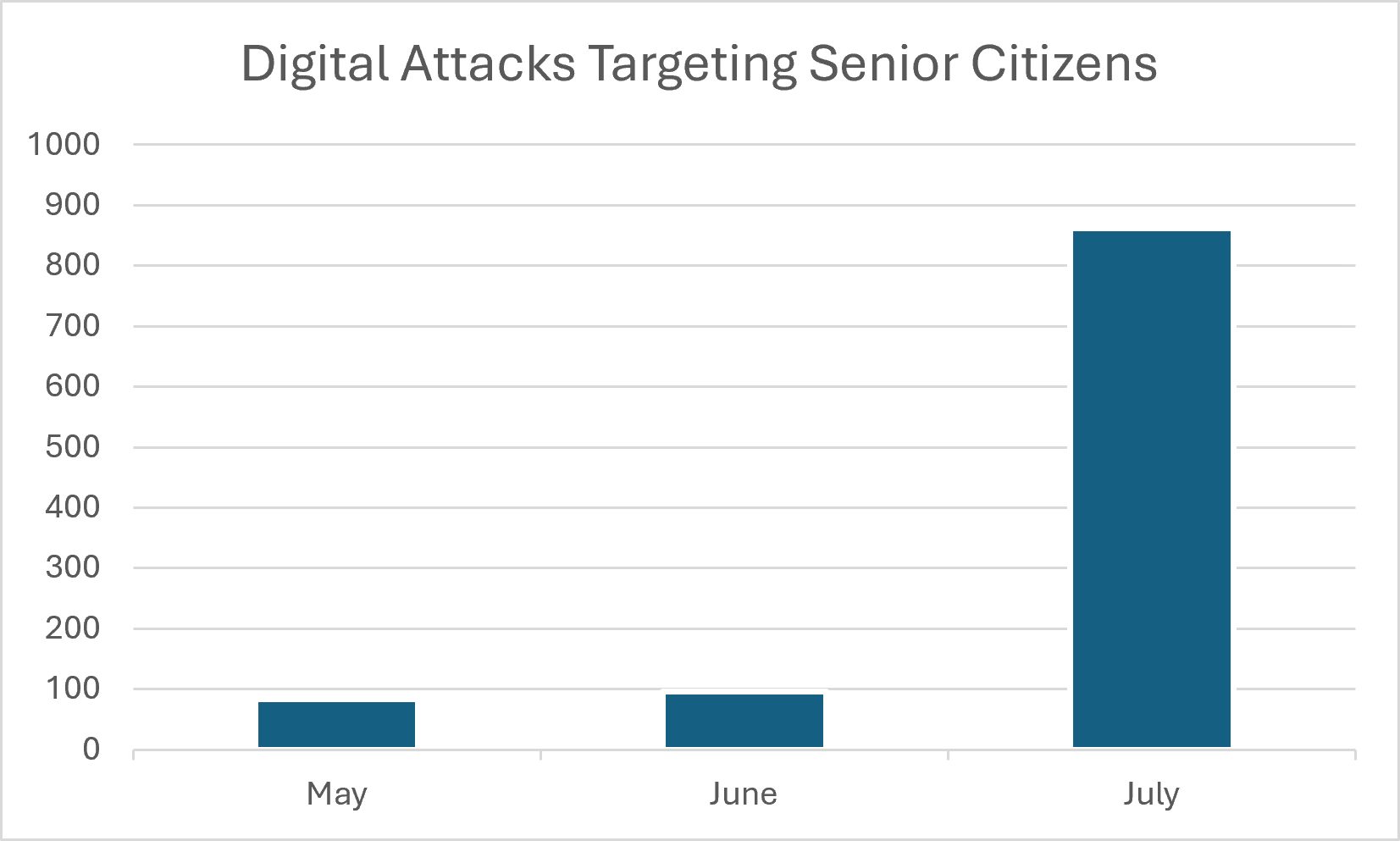
The need for this collaborative approach has never been greater. July threat intelligence from The Media Trust, a global leader in digital trust and safety, revealed a shift in how cybercriminals are targeting older Americans. Malicious campaigns directed at seniors surged from 96 incidents in June to 862 in July—a nearly ninefold increase in just one month.
"Consumers have become better at recognizing fake virus warnings, so criminals have simply changed the story," said Sarah Ralston, Chief Product Officer at Proxyware. "Today's scams don't tell you your computer is infected. They tell you your Amazon order has shipped or your Apple Pay account has been charged. The psychology is different, but the objective is exactly the same."
Nearly 9x Increase in Senior-Targeted Digital Attacks from June to July 2026
The Media Trust observed a dramatic increase in malicious digital content targeting senior citizens during July as criminals shifted toward sophisticated financial impersonation campaigns delivered through online advertising.
Source: The Media Trust
This dramatic increase coincides with a significant change in criminal tactics.
Rather than claiming a computer is infected, criminals now impersonate trusted brands like Amazon, Apple Pay, Walmart, PayPal, and other familiar financial services, displaying convincing purchase confirmations and payment notifications that pressure consumers into calling fraudulent customer support numbers.
Once on the phone, criminals attempt to steal banking credentials, payment information, or gain remote access to victims' devices.
Yesterday's Tech Support Scam Has Become Today's Fake Purchase Notification
Cybercriminals are abandoning fake virus alerts in favor of sophisticated financial impersonation campaigns that mimic trusted brands consumers interact with every day. These attacks create urgency by convincing victims an expensive purchase has already been made and must be cancelled immediately.
Protecting Virginia's Most Vulnerable
While senior citizens experienced the sharpest increase in July, the same collaborative intelligence network is already protecting another vulnerable population preparing to return to classrooms.
As Virginia students return to the classroom this fall, participating schools are already operating from a position of defense. Proxyware is actively intercepting harmful digital content before it reaches school-issued devices, preventing students from encountering deceptive advertisements, fraudulent websites, malicious search results, phishing campaigns, and inappropriate content delivered through online learning platforms, educational applications, search engines, and other trusted digital environments.
Harmful Digital Content Is Often the First Step in a Larger Criminal Scheme
Source: The Media Trust, MediaScanner©
These examples were intercepted on Virginia school-issued devices during the 2026 school year. Content like this is rarely the end goal. It is often the first step in sophisticated attack chains designed to steal credentials, compromise identities, deliver malware, facilitate financial fraud, or expose children to grooming, sextortion, and other forms of online exploitation. By stopping these threats before students ever see them, Virginia schools are preventing digital harm before it has the opportunity to escalate.
Communities Protecting Communities
Making a Difference in Virginia
- 93% success rate of identifying and removing digital attacks
- 77% of harmful online content blocked before reaching children
- $20M+ prevented from online fraud at eight senior living communities
The Virginia initiative shows what digital public safety looks like when it's built on collaboration, not isolated defense. The Attorney General's office funded it, but the success belongs to the schools, senior living communities, educators, caregivers, and residents who took part, turning from potential victims into active partners in dismantling the criminal networks behind today's scams. Their work is helping build a safer internet for everyone.
"For years we were told the best we could do was avoid becoming victims," said Eric Jacobson, a resident of Cadence on the Potomac. "I never imagined our community could actually help stop these criminals. Knowing that something blocked here can help protect another senior or another family somewhere else makes me proud. We're not just protecting ourselves anymore. We're doing our part to make the internet safer for everyone."
Contacts