Ant Group Open-Sources SingGuard-NSFA to Establish New Security Paradigms for Autonomous AI Agents
Ant Group Open-Sources SingGuard-NSFA to Establish New Security Paradigms for Autonomous AI Agents
HANGZHOU, China--(BUSINESS WIRE)--Ant Group’s AI Security Lab today announced the open-source release of SingGuard-NSFA, a specialized security guardrail framework designed specifically for autonomous AI agents. The framework secures agentic AI systems against operational threats like prompt injection, addressing critical vulnerabilities as AI transitions from passive content generation to active, autonomous execution.
As AI agents rapidly move from research labs to business scenarios, the security landscape has fundamentally shifted. The explosive global adoption of open-source agent frameworks like OpenClaw, celebrated for their "one-click deployment" and "full-stack autonomy", has simultaneously exposed significant operational risks, including permission escalation and prompt injection.
Industry frameworks, including the OWASP (Open Web Application Security Project) Top 10 for Agentic Applications 2026, have formally categorized threats such as goal hijacking, tool misuse, malicious code execution, and identity and privilege abuse as critical vulnerabilities. These behavioral threats represent blind spots that traditional security technologies struggle to address.
SingGuard-NSFA is designed specifically to tackle these gaps. It provides a robust security layer that intercepts malicious requests and validates responses before autonomous actions are executed, ensuring safe deployment in complex operational environments.
The framework introduces a systematic defense mechanism grounded in industry-standard security principles. It categorizes agent-specific risks into a comprehensive taxonomy encompassing 185 distinct operational threat scenarios spanning 7 categories. To facilitate validation and continuous iteration, Ant Group’s AI Security Lab constructed a rigorous benchmark suite covering 133 languages with nearly 100,000 test samples.
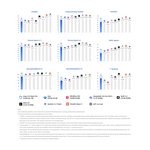
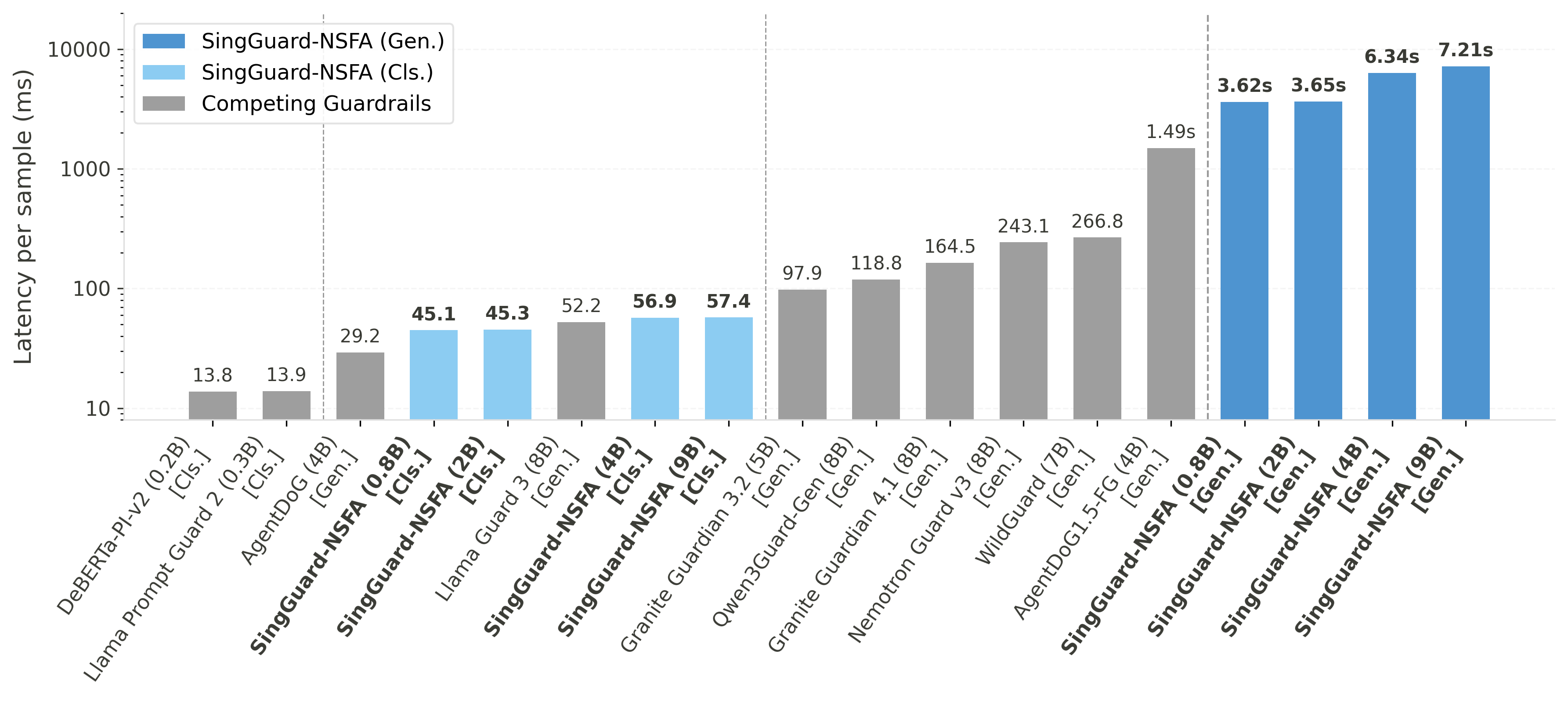
In benchmark evaluations, SingGuard-NSFA demonstrates state-of-the-art performance. The compact 0.8B parameter model rivals the capabilities of competing 8B models, while the 9B variant achieves real-time detection latency of approximately 50 milliseconds, delivering both speed and accuracy for production environments.
This open-source release builds upon Ant Group’s commitment to AI security research. The AI Security Lab has been actively contributing to the safety of the open-source agent ecosystem, having conducted specialized security audits on the OpenClaw framework and, in April 2026, collaborating with Tsinghua University to open-source ClawAegis, a security plugin covering the entire lifecycle of OpenClaw agents.
Rooted in over two decades of expertise in payment safety, data security, and privacy protection, these advancements are already deployed in Ant Group’s products such as Alipay AI Pay and AI healthcare app AQ. Furthermore, Ant Group is actively participating in global AI governance by supporting ITU international standards and advancing industry protocols for secure agent interoperability, driving AI security from technological innovation to industrial practice.
In addition to the agent-focused SingGuard-NSFA, Ant Group’s AI Security Lab has also open-sourced SingGuard, a policy-adaptive multimodal guardrail model family. Designed to secure complex interactions across both image and text generation, SingGuard serves as a comprehensive safeguarding tool that provides robust protection for user privacy and intellectual property, while preventing the generation or dissemination of illicit material such as child sexual abuse material (CSAM), self-harm content, and other illegal outputs.
To learn more about SingGuard-NSFA, please visit:
GitHub: https://github.com/inclusionAI/SingGuard-NSFA
Hugging Face: https://huggingface.co/collections/inclusionAI/singguard-nsfa
Contacts
Vick Li Wei
Ant Group
vick.lw@antgroup.com