New Security Debt Index Model from ISACA Helps Organizations Track Overall Debt Posture
New Security Debt Index Model from ISACA Helps Organizations Track Overall Debt Posture
ISACA guidance provides insights and best practices for addressing and reducing security debt and risk
SCHAUMBURG, Ill.--(BUSINESS WIRE)--As businesses accelerate their adoption of cloud technologies and artificial intelligence (AI), security debt— the accumulated risk created by outdated systems, deferred remediation, unpatched vulnerabilities, and under-resourced programs—has become one of the largest threats to enterprise resilience.
ISACA guidance provides insights and best practices for addressing and reducing security debt and risk.
Share
Unpatched systems, weak identity and access management, siloed monitoring and alerting, and gaps in governance and oversight are just some examples of security debt that can inflict massive operational, financial, reputational, and strategic damage for organizations. In a complimentary new white paper, Security Debt: The Unseen Risk Undermining Cyber Resilience, ISACA examines the types, key drivers, lifecycle, and impacts of security debt, as well as insights into identifying, measuring, and quantifying security debt, including through its new Security Debt Index (SDI).
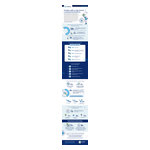
Meant to be used in addition to existing risk ratings, this SDI model provides organizations with a composite score to track whether their overall debt posture is improving or worsening, offering directional indicators that can help support decision making. When used consistently, it can reveal patterns and help organizations compare debt trends across systems, teams, or time periods, and prioritize remediation where risk is both material and accelerating. SDI considers three dimensions, each of which are scored on a normalized scale:
- Severity—the business impact of each issue
- Duration—how long the debt has remained unresolved
- Velocity—how quickly new issues of the same type appear
The paper also explores the ways that organizations can manage and reduce security debt, including through the use of a risk register, and by incorporating security into DevOps and adopting a zero trust mindset. It also outlines the best practices for knowing which risk to act on, delay, or share, including:
- Mitigate risk when exposure threatens operations, compliance, or trust.
- Transfer risk through insurance, managed services, or shared responsibility models when third parties can better absorb the burden.
- Accept risk when the cost or effort outweighs the impact; keep accepted debt visible with clear ownership and regular reviews.
Additionally, the resource walks through how to explain security debt to leadership, how compliance and regulatory frameworks factor in, and how security debt has evolved along with technology.
“As technology evolves, so does the nature of security debt. The future will require organizations to pair AI and automation with robust governance, meet rising regulatory expectations, and ensure risk and performance reporting reaches senior leadership,” says Safia Kazi, ISACA principal research analyst - privacy. “The organizations that succeed will be those that recognize, measure, and act on security debt early, with intentionality and transparency.”
The free white paper can be viewed at https://www.isaca.org/resources/white-papers/2026/security-debt-the-unseen-risk-undermining-cyber-resilience.
ISACA offers additional resources related to risk at www.isaca.org/resources/it-risk, and recently launched its Advanced in AI Risk (AAIR) certification. Additional ISACA security resources are available at www.isaca.org/resources/cybersecurity.
About ISACA
For more than 55 years, ISACA® (www.isaca.org) has empowered its community of 195,000+ members with the knowledge, credentials, training and network they need to thrive in fields like information security, governance, assurance, risk management, data privacy and emerging tech. With a presence in more than 190 countries and with more than 230 chapters worldwide, ISACA offers resources tailored to every stage of members’ careers—helping them to thrive in a rapidly changing digital landscape, drive trusted innovation and ensure a more secure digital world. Through the ISACA Foundation, ISACA also expands IT and education career pathways, fostering opportunities to grow the next generation of technology professionals.
Contacts
communications@isaca.org
Emily Ayala, +1.847.385.7223