Teledyne to Deliver Advanced Detectors for the Lazuli Space Observatory, Accelerating Next-Generation, Open-Access Astronomy
Teledyne to Deliver Advanced Detectors for the Lazuli Space Observatory, Accelerating Next-Generation, Open-Access Astronomy
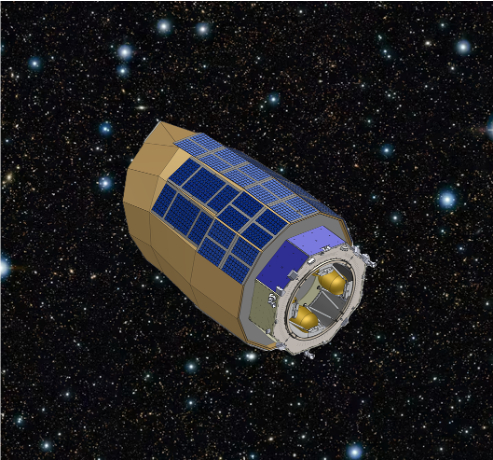
THOUSAND OAKS, Calif.--(BUSINESS WIRE)--Teledyne Space Imaging, part of Teledyne Technologies Incorporated (NYSE:TDY), has been awarded a contract by Schmidt Sciences to deliver advanced near-infrared (NIR) H4RG-10 flight focal plane arrays (FPAs) and custom electronics for integration into the Integral Field Spectrograph on the groundbreaking Lazuli Space Observatory. Part of the Eric and Wendy Schmidt Observatory System, Lazuli aims to transform open-access astronomy by expanding scientific access while reducing development time. Lazuli will observe nearby supernovae and other transient events to trace the universe’s expansion history while enabling discoveries across time-domain astronomy, the study of stars and planets, and cosmology.
Lazuli, a state-of-the-art 3-meter–class observatory, is designed for rapid-response observations and precision astrophysics across optical and near-infrared wavelengths. Its innovative, unobscured three-mirror anastigmat telescope delivers diffraction-limited image quality (Strehl ratio > 0.8 at 500 nm) over an extensive 400 –1700 nm bandpass. The scientific payload features a focused suite of three instruments: a wide-field optical imager, a high-contrast coronagraph, and an integral field spectrograph.
The Teledyne NIR H4RG-10 FPAs and electronics will enable Lazuli’s spectrograph to capture and analyze the faint light from these supernovae with unprecedented sensitivity and spectral resolution (R ≈ 100–500), supporting stable spectrophotometry and rapid transient science. Teledyne’s highly reliable, advanced detector technology is essential to capturing these fleeting signals and delivering the precision measurements required to achieve Lazuli’s ambitious science goals.
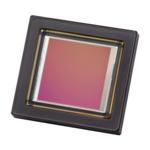
Teledyne’s H4RG-10 is a highly advanced, large-format focal plane array featuring 4,096 × 4,096 pixels at a 10-micron pitch available in near-infrared to long wave infrared wave lengths. Renowned for exceptionally low noise, wide dynamic range, high quantum efficiency, and minimal image persistence, the H4RG-10 sets the standard for scientific-grade infrared imaging. To date, Teledyne has delivered over 25 flight-quality H4RG-10 sensor chip assemblies, exceeding rigorous performance and reliability standards. These detectors form the core of NASA’s Nancy Grace Roman Space Telescope’s wide-field instrument, which will be the largest infrared focal plane ever flown in space, while also supporting premier ground-based observatories worldwide. This technology enables breakthrough research in cosmology, exoplanet science, and astrophysical transients. For Lazuli, the selection of H4RG-10 detectors aims to achieve the sensitivity and stability essential for its mission to probe the universe’s expansion history.
“Teledyne is honored to support Schmidt Sciences and the Lazuli Space Observatory with our high sensitivity detector solutions,” said Megan Tremer, President, Teledyne Space Imaging. “Our NIR H4RG-10 FPAs are engineered to meet the demands of cutting-edge astrophysical research and are ideally suited to probe the faintest signals from distant supernovae. Through this partnership, we are advancing the capabilities of open, collaborative science and pioneering new avenues of astronomical discovery.”
The Lazuli Space Observatory represents a new paradigm in private, innovation-driven facility development, accelerating the deployment of next-generation astronomy and expanding global access to precision scientific data. Operating from a lunar-resonant orbit, Lazuli’s architecture will enable target acquisition within four hours of a trigger (with a goal of 90 minutes) and flexible, automated scheduling. Science-ready, quality-assured data products will be delivered to the global community within days of acquisition, reinforcing the mission’s commitment to open data and accelerating access for researchers worldwide.
“Lazuli’s integral field spectrograph requires detectors with well-understood performance across a broad bandpass and dynamic range,” said Arpita Roy, Director of Astrophysics at Schmidt Sciences. “This is necessary to support measurements spanning bright targets to very faint signals, including exoplanet atmospheres and fleeting transient events."
Teledyne Space Imaging has a distinguished legacy in developing space-qualified imaging sensors, focal plane arrays, and integrated camera systems for leading space agencies and observatories spanning NASA, ESA, JAXA, and KARI, with participation in over 250 space projects and a range of commercial space specifications.
Teledyne Space Imaging is part of Teledyne Technologies, a leading provider of sophisticated digital imaging products and software, instrumentation, aerospace and defense electronics, and engineered systems. To learn more, visit: www.teledyne.com and www.TeledyneSpaceImaging.com.
Contacts
Megan Tremer
(805) 373-4059