Aviva Bio Announces FDA Guidance on Development Pathway for Women’s Testosterone Therapy and New Evidence of a Reduced Risk of Breast Cancer Cell Proliferation for AVA-291
Aviva Bio Announces FDA Guidance on Development Pathway for Women’s Testosterone Therapy and New Evidence of a Reduced Risk of Breast Cancer Cell Proliferation for AVA-291
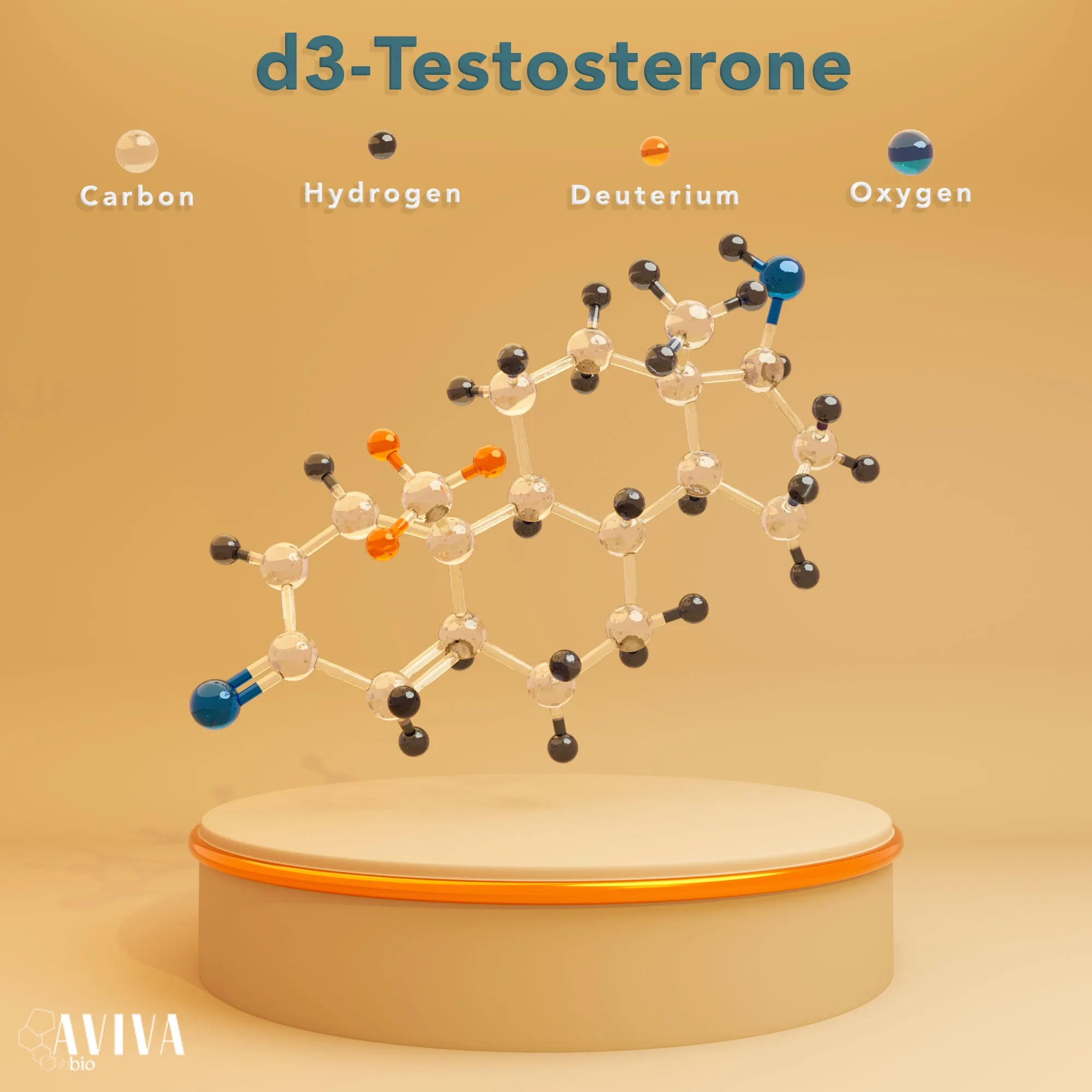
CONCORD, Mass.--(BUSINESS WIRE)--Aviva Bio, a new biotechnology company focused on rewriting the narrative around hormone-based medicine, announced today it has received formal feedback from the FDA in a Type B meeting regarding the requirements for the development of a testosterone (T) therapy for women. AVA-291 (d3-T) is a next-generation testosterone designed to retain T’s androgen activity while resisting aromatization. The aromatization of T locally in breast tissue is linked to an increased risk of breast cancer.1,2,3 Today’s announcement marks an important milestone in advancing testosterone therapy for women, a patient population with significant unmet need that has been long constrained by safety concerns and the absence of an FDA-approved, female-specific therapy.
Aviva Bio Announces FDA Guidance on Development Pathway for Women’s Testosterone Therapy.
Share
In its feedback, the FDA acknowledged the potential breast cancer risk associated with T use in women—a central safety issue that has historically limited the development of a T therapy for women. Aviva Bio reflects a shared commitment to addressing this risk through molecular design and evidence-based development strategies.
To further support the differentiated profile of AVA-291 (d3-T), Aviva Bio announced that new data have been accepted for presentation at the American Association for Cancer Research (AACR) Annual Meeting in April 2026. The data demonstrate that AVA-291 (d3-T) has approximately 1,000-fold less potential to stimulate breast cancer cell proliferation compared to ordinary T, supporting its differentiated safety profile.
“For decades, testosterone therapy for women has depended on repurposed male formulations, rather than drugs designed with women’s biology and safety considerations in mind,” said Judith A. Boice, PhD, CEO of Aviva Bio. “Our FDA feedback reinforces the need for a new standard—one anchored in safety, enabled by molecular precision, and developed with regulatory clarity from the start.”
Aviva Bio is advancing AVA-291 (d3-T) as a differentiated testosterone in a broad development program addressing multiple indications in both women’s and men's health where androgen signalling plays a clinically meaningful role but is limited by aromatization.
“The data we are presenting at AACR provides mechanistic evidence that AVA-291 (d3-T) has a reduced risk of exacerbating breast cancer compared with ordinary T,” said Bradford C. Sippy, CTO of Aviva Bio. “This builds on our prior work showing that AVA-291 is resistant to aromatization and highlights the potential clinically differentiated profile.”
As scientific and public attention around testosterone therapy for women continues to grow, Aviva Bio is focused on translating regulatory guidance and differentiated data into a disciplined development program for AVA-291 (d3-T). The company continues to advance its pipeline across multiple indications with high unmet need and evaluate strategic collaborations to support the next phase of clinical, regulatory, and commercial progress.
About Aviva Bio
Aviva Bio is a clinical-stage biotechnology company unlocking the full potential of hormone-based medicine. Through novel drug design and a focus on unmet needs, Aviva Bio is developing next-generation therapeutics to improve lives.
About AVA-291 (d3-Testosterone)
AVA-291 or d3-Testosterone (d3-T) is a novel, deuterium-substituted isotopologue of testosterone designed to resist aromatization. The aromatization of testosterone is linked with potential safety (breast cancer) and tolerability (gynecomastia) concerns associated with T therapy. In vitro studies of AVA-291 (d3-T) have demonstrated a similar metabolic profile and similar androgen receptor affinity as testosterone, but, unlike testosterone, AVA-291 is highly resistant to aromatization. In human clinical studies, d3-T was shown to be a direct substitute for ordinary testosterone.
AVA-291 (d3-T) may be a useful alternative to testosterone in clinical situations where the aromatization of testosterone limits its therapeutic potential, such as hormone replacement therapy in menopausal women, men on testosterone therapy who develop gynecomastia, addressing muscle loss and/or low-libido in patients on GLP-1 therapy, and in the treatment of ER+ breast cancer.
As a structurally identical form of testosterone, AVA-291 shares similar physical properties as T, and can be substituted in any current T formulation. AVA-291 is covered by multiple issued US patents that extend to at least 2041.
References
- Sonne-Hansen K, Lykkesfeldt AE. Endogenous aromatization of testosterone results in growth stimulation of the human MCF-7 breast cancer cell line. J Steroid Biochem Mol Biol. 2005;93(1):25-34. doi:10.1016/j.jsbmb.2004.11.005.
- Davis SR, Bouchard C, Braunstein GD, Rodenberg C, Moufarege A. Testosterone for Low Libido in Postmenopausal Women Not Taking Estrogen. N Engl J Med. 2008;359:205-217.
- Early Breast Cancer Trialists’ Collaborative Group. Aromatase inhibitors versus tamoxifen in early breast cancer: patient-level meta-analysis of the randomised trials. Lancet. 2015;386(10001):1341-1352. doi:10.1016/S0140-6736(15)61074-1
Contacts
Jessica Halem, Co-founder and Head of Business Development
Email: jessica.halem@aviva-bio.com
Cell: (773) 505-3140
Website: www.aviva-bio.com
LinkedIn: www.linkedin.com/company/aviva-bio