Mythic to Challenge AI’s GPU Pantheon with 100x Energy Advantage and Oversubscribed $125M Raise
Mythic to Challenge AI’s GPU Pantheon with 100x Energy Advantage and Oversubscribed $125M Raise
100x more energy-efficient than industry standard GPUs, Mythic’s analog processing units (APUs) promise a new era of accelerated computing across the AI hardware stack, at the data center and the edge
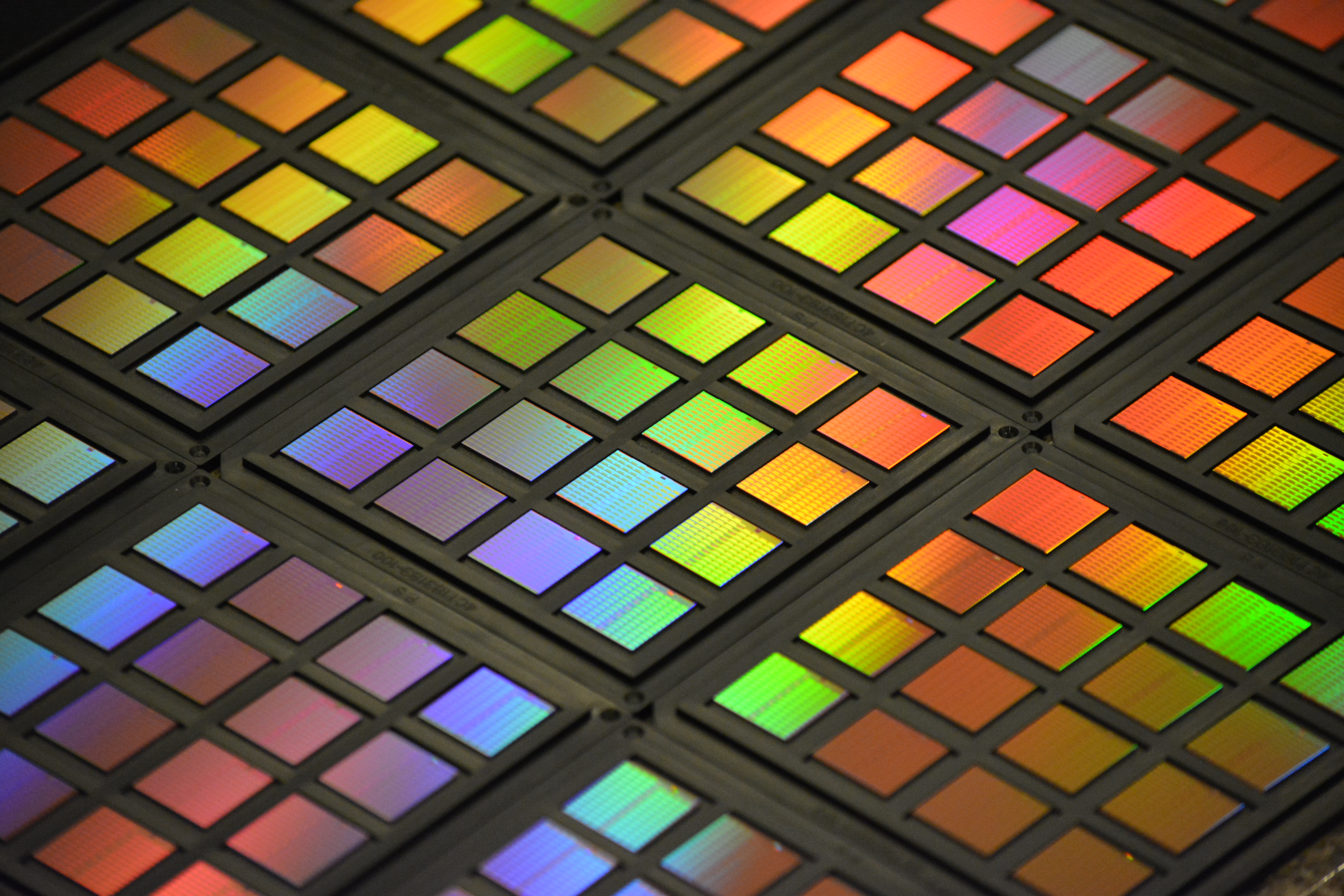
PALO ALTO, Calif.--(BUSINESS WIRE)--Capping a dramatic turnaround, Mythic has raised $125M in an oversubscribed funding round led by DCVC to solve the biggest problem of AI—its insatiable, ruinous energy consumption—at both the data center and the edge, with an architecture that is 100x more energy-efficient than today’s top-of-the-line GPUs and all competing AI ASICs.
“Mythic will win based on this fundamental insight: energy efficiency will define the future of AI computing everywhere.” — CEO Taner Ozcelik
Share
Mythic has the only semiconductor architecture that approaches the energy efficiency of the human brain—and the company can serve all parts of the AI market. Its analog AI chiplets support AI models in the robotics, automotive, and defense industries, as well as 1T+ parameter Large Language Models (LLM) in data centers. In addition to offering massive energy savings, Mythic’s chiplets can dramatically lower cost and latency, while achieving massive throughput advances. With the world’s first analog computing silicon in production, validated by DoD, major auto OEMs, and major defense partners, Mythic gives the United States an enormous advantage in the global competition for AI leadership, because victory will no longer come down to which country can produce, at disastrous economic and environmental cost, the greatest amount of electricity soonest.
The new funding follows a period of intense reinvention for Mythic. Under new leadership, the company has completely rebuilt its architecture, roadmap, software, and strategy. That progress convinced a consortium of investors led by deep-tech venture-capital firm DCVC (which has backed Mythic since 2016) and joined by NEA, Atreides, Future Ventures, Softbank KR (SBVA), S3 Ventures, Linse Capital, One Madison Group, Catapult, UDC, and many others. These top venture funds were joined by Honda Motors and Lockheed Martin, each ranked in the top 10 in the world in their respective industries, automotive and defense, turbo-charging Mythic in two vitally important, trillion-dollar markets that are being transformed by AI.
Mythic APUs to augment GPUs, solving the AI energy crisis
Massive energy consumption has become an existential problem for GPUs in AI: by the end of the decade, one-tenth of the electricity produced by the US power grid is expected to be consumed by data centers running AI workloads powered by GPUs. While GPUs fueled the rise of generative AI, they now face a power wall, because they are the relic of a 1945-era chip design architecture, called Von Neumann, in which memory and compute are physically imagined, architected, and built separately. This divide forces modern chips to move data back and forth between the memory and the processor, consuming three orders of magnitude more energy than necessary, which results in 90% of the energy used in AI being wasted. Incumbent GPU-based AI accelerators attempt to patch this with High Bandwidth Memory (HBM), an expensive and marginal improvement that cannot prevent an imminent crash of the current AI systems against the power wall.
Mythic’s computer architecture does not delineate between the processor and the memory, instead treating them as one and the same, much like they are in the human brain. What is more, Mythic’s APUs perform the most intense part of the AI workloads, i.e., matrix multiplications, in analog—much as a human brain operates. The result is unprecedented levels of energy efficiency in AI—yielding 120 trillion operations per second (TOPS) per watt in Mythic’s current APU architecture, which is 100x better than today’s top-of-the-line GPUs (including memory transfers), while yielding accuracy levels higher than those of Von Neumann architectures operating in higher precision.
Mythic has essentially found a way to scale the human brain. The company unlocks AI that is as impressive for its parsimonious use of energy as it is for its exceptional powers of inference. Mythic’s APUs are the closest thing to the human brain in silicon in energy consumption, where a single multiply accumulate (MAC) math operation, i.e. a giant matrix multiplication, which comprises 95% of today’s AI math workloads, consumes only 17 femto joules. That is 1,000x more energy-efficient than the same operation performed on today’s GPUs.
Led by an ex-NVIDIA executive, Taner Ozcelik, who founded NVIDIA’s automotive business and grew it consistently over a decade, Mythic intends to go after four trillion-dollar industries: data centers, automotive, robotics, and defense, with a singular strategy of being the unambiguous leader in AI in performance per watt, and 100% R&D leverage, much like NVIDIA does for its GPUs.
Dr. Ozcelik said, “Mythic will win based on this fundamental insight: energy efficiency will define the future of AI computing everywhere. Much as GPUs have become the accelerated computer of choice next to CPUs due to their performance per watt benefits, our insanely energy-efficient APUs will become the accelerated computer of choice next to GPUs.”
Mythic’s new generation of APUs makes scaling of AI dramatically easier than with GPUs, because the more complex the relevant networks, the bigger the advantage in energy efficiency becomes with APUs. APUs scale incredibly easily to 1T parameter models, in both 2D and 3D, and do not need a high-speed APU-to-APU connection in the way that GPUs do with NVLINK. Internal benchmarks show that Mythic APUs can achieve up to 750x more tokens per second per watt in running 1T parameter LLMs than NVIDIA’s highest-end GPUs.
“NEA is excited to be partnering with Mythic’s visionary leadership on their mission to leverage deeptech innovation to disrupt trillion-dollar markets,” said Aaron Jacobson, Partner at NEA. “Their APU platform is a clean-sheet reinvention of the AI infrastructure—one that collapses today’s limits on energy and cost. This significant new funding gives Taner and Mythic the runway to execute quickly and at scale and leave outdated chip architectures behind.”
Additionally, the “neurons” of Mythic APUs are constructed out of highly mature silicon memory cells (150 billion units shipped to date), which are manufactured using standard semiconductor materials. Moreover, Mythic’s chips are manufactured in the United States and allied countries around the world. This manufacturing strategy and footprint give Mythic a formidable leg up compared to both existing competitors that use GPUs, as well as the new analog computing competitors. Next-generation Mythic APUs demonstrate massive cost advantages, with internal benchmarks showing benefits of up to 80x in cost per million tokens compared to the latest GPUs, with levels at half a cent per million tokens in 100B LLMs and 4 cents per million tokens in 1T parameter models.
Steve Jurvetson, Founder and Managing Director of Future Ventures, who was the first investor in Mythic and recently rejoined the Board, said, “Mythic is taking a radically novel approach to building low-power, low-cost neural nets that can make any product more intelligent. Mythic can do an 8-bit multiply and add (the core element of AI compute) in a single transistor! No digital design can achieve that efficiency. Computation and memory are unified, as in the brain. We are excited to see Mythic continue to outperform all digital chips on calculations/$ and calculations/watt."
Sensing at the edge, and an exceptional software development kit
Mythic, with its radically energy-efficient architecture, has invented a new category of sensing devices, called Starlight, which are sub-1W and packed with Mythic APUs, improving the performance of image sensors by 50x by extracting signals from noise using analog AI. The results are major performance benefits, especially in areas most important to mission-critical applications, such as lowlight performance, with outcomes that are literally “day-and-night-better” than outcomes from top-of-the line image sensors. Applications for this technology are boundless—from defense to robotics to automotive. Mythic is the only company that can pack a powerful, yet ultra-low-energy AI engine into a sensor and the results are a dramatic life saving innovation.
Since coming on board last year, Dr. Ozcelik has also intensified Mythic’s laser focus on software development and SDK maturity in order to compete effectively against the entrenched CUDA platform from NVIDIA. Mythic’s CAMP (Compute Analog in-Memory Processing) SDK enables frictionless running of Deep Neural Network (DNN) applications on its GEN 1 APUs, today, and supports ONNX, PyTorch, and TensorFlow, natively as well as via NVIDIA’s TensorRT, on several CPU platforms including NVIDIA Jetson, and was rated recently in a German research study at the highest maturity level among its compute-in-memory processor peers.
Mythic, with this new funding round, is poised to make a huge difference in all mission-critical AI inference markets, bringing massive benefits in energy efficiency and cost to LLMs and DNNs, in data centers, robotics, automotive, and defense. The company is well-positioned to be a leader in the two most significant waves in AI: inference time scaling and physical AI. Mythic’s technology roadmap is so powerful that one of its next-generation technologies is expected to enable ChatGPT3+ level LLMs in your pocket with no internet connection at approximately 1/100th the cost of today’s solutions.
Matt Ocko, Co-Founder and Managing Partner of DCVC, said, “Mythic is now fully empowered to scale the world’s next great computing architecture. The company’s hard-earned breakthrough will ensure that AI does not rob people everywhere of the energy they need to thrive–and it will give the United States the AI advantage it requires in order to ensure the security of the free world. Taner and his team have made a civilizational advance.”
About Mythic
Mythic is ushering in a new era of accelerated computing with its Analog Processing Units (APUs)—a fundamentally different approach to AI inference that collapses compute and memory into a single plane. By overcoming the energy bottlenecks of traditional digital architectures, Mythic delivers unparalleled performance-per-watt across edge devices, autonomous systems, and data centers. Its investors include DCVC, NEA, Atreides, S3 Ventures, Softbank KR, Future Ventures, Honda Motors, Lockheed Martin, One Madison Group, and Linse Capital, among others. Learn more at www.mythic.ai.
About DCVC
DCVC is deep tech venture capital. Over more than a dozen years, the firm has backed brilliant entrepreneurs using computational approaches to solve trillion-dollar problems in the real world across a broad set of industries, especially those that haven't seen material progress in decades. With billions of dollars of assets under management, DCVC builds long-term relationships with the founders it backs. The firm has been with many of its companies from their very start—and through to their recognition by the public markets as category-defining businesses. Learn more at https://www.dcvc.com.
About NEA
New Enterprise Associates, Inc. (NEA) is a global venture capital firm focused on helping entrepreneurs build transformational businesses across multiple stages, sectors and geographies. Founded in 1977, NEA has more than $28 billion in assets under management as of June 30, 2025 and invests in technology and healthcare companies at all stages in a company’s lifecycle, from seed stage through IPO. The firm's long track record of investing includes 284 portfolio company IPOs and more than 500 mergers and acquisitions. For more information, please visit www.nea.com.
About Future Ventures
Future Ventures is a deep tech venture capital firm focused on mission-driven companies at the cutting edge of disruptive technology and new industry formation. With 30 years of experience, the Future Ventures partners have led founding investments in several companies that had successful IPOs and others that were billion-dollar acquisitions, representing $1.7 trillion of aggregate value creation. Some of those early VC investments include Commonwealth Fusion, D-Wave, Mythic, Planet, SpaceX, Tesla and xAI.
Contacts
Media contact:
Taner Ozcelik taner.ozcelik@mythic.ai
Nate Nickerson nate.nickerson@dcvc.com