Omdia: LTPO to Surpass LTPS as Dominant Technology for Flexible Smartphone AMOLEDs in 2025
Omdia: LTPO to Surpass LTPS as Dominant Technology for Flexible Smartphone AMOLEDs in 2025
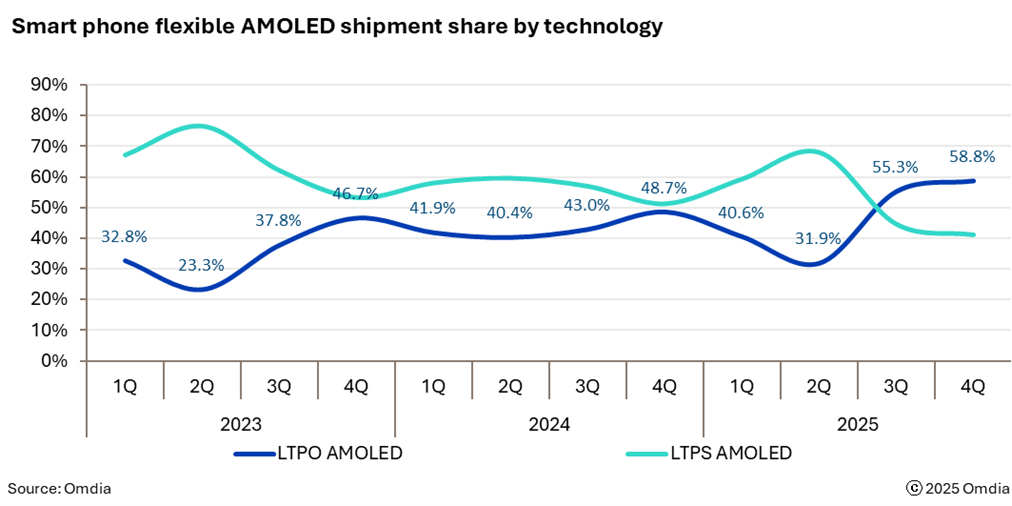
LONDON--(BUSINESS WIRE)--Shipments of LTPO (Low-Temperature Polycrystalline Oxide) flexible AMOLEDs are expected to surpass those of LTPS (Low-Temperature Polycrystalline Silicon) flexible AMOLEDs in the second half of 2025, according to Omdia’s latest OLED Display Market Tracker.
“As Apple completes its transition to LTPO AMOLED for its flagship iPhones, Android brands are accelerating the adoption of the technology to remain competitive," said Brian Huh, Principal Analyst in Omdia's Display research practice.
Share
This transition to LTPO comes as flexible AMOLED has solidified its position as the mainstream technology in the smartphone display market. In 2024, total AMOLED display shipments finally overtook TFT LCD shipments for the first time, accounting for 51% of the overall smartphone display shipments. Notably, within the flexible AMOLED segment, the demand for low-power consumption in high-end devices is driving the specific shift from LTPS to LTPO. According to panel maker shipment plans for the second half of the year, LTPO’s share is projected to reach 55.3% in the third quarter and grow to 58.8% in the fourth quarter of 2025.
Apple’s product strategy is a primary driver of this market shift. In 2025, the company released five new AMOLED iPhones, including the iPhone 16E and the new iPhone 17 series. This move signals the phasing out of the LTPS LCD-based iPhone SE model, causing a sharp decline in demand for TFT LCD panels for iPhones. Consequently, Apple’s overall demand for AMOLED is rising, and its adoption of LTPO flexible AMOLED across all four new iPhone 17 series models, including the new iPhone 17 and iPhone Air, is significantly increasing LTPO demand in the second half of 2025.
This trend is amplified by Chinese smartphone OEMs, who are also continuing to expand their adoption of LTPO flexible AMOLEDs from flagship models into the high-end segment.
From a panel supplier perspective, the surge in demand is expected to boost shipments for most AMOLED panel makers, with Samsung Display, BOE, and Tianma projected to be the primary beneficiaries of this market shift.
According to Brian Huh, Principal Analyst in Omdia’s Display research practice, “As Apple completes its transition to LTPO AMOLED for its flagship iPhones, Android brands are accelerating the adoption of the technology to remain competitive. Simultaneously, Chinese panel makers are aggressively promoting LTPO to capture market share. This combination of factors will ensure robust and continued growth for LTPO AMOLED in the smartphone display market.”
ABOUT OMDIA
Omdia, part of Informa TechTarget, Inc. (Nasdaq: TTGT), is a technology research and advisory group. Our deep knowledge of tech markets grounded in real conversations with industry leaders and hundreds of thousands of data points, make our market intelligence our clients’ strategic advantage. From R&D to ROI, we identify the greatest opportunities and move the industry forward.
Contacts
Fasiha Khan: Fasiha.khan@omdia.com