SFL Missions Inc. Awarded Contract for Fast-Turnaround AISSat-4 Nanosatellite Development to Expand Capacity in Norwegian Maritime Monitoring System
SFL Missions Inc. Awarded Contract for Fast-Turnaround AISSat-4 Nanosatellite Development to Expand Capacity in Norwegian Maritime Monitoring System

TORONTO--(BUSINESS WIRE)--The Norwegian Space Agency (NOSA) has awarded a contract to SFL Missions Inc. to develop the AISSat-4 maritime ship tracking microsatellite for launch in less than one year. AISSat-4 is needed to expand operational capacity in Norway’s maritime situational awareness network.
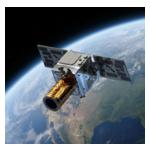
AISSat-4 is being developed on SFL’s SPARTAN 6U nanosatellite platform and will carry a single payload – a miniaturized Automatic Identification System (AIS) receiver built by Kongsberg Seatex of Trondheim, Norway. The SPARTAN bus is space proven with 18 commercial communications satellites previously deployed using this platform.
SFL Missions is uniquely prepared to develop AISSat-4 on an accelerated schedule. Additionally, the SPARTAN platform relies on heritage hardware and software and is easily tailored to accommodate the AIS receiver and antennas.
“We have extensive experience in implementing AIS missions, and therefore we have the expertise and design heritage needed to implement the AISSat-4 mission on a short schedule,” said Dr. Robert E. Zee, SFL Missions Director and CEO.
More broadly, he added, SFL Missions Inc. has the capacity to work on many satellite missions concurrently, and since the team is vertically integrated, it maintains full control over the subsystem and spacecraft level assembly, integration, and testing schedules.
Under the leadership of NOSA and the Norwegian Coastal Administration, Norway operates the world’s most extensive and sophisticated space-based marine monitoring system to protect the safety of vessels and sustainability of resources in its vast territorial waters.
“The societal benefits we gain from collecting AIS information from satellites is significant. It is therefore important that we ensure the maintenance of this capability,” said Coastal Administration Director Einar Vik Arset. “AISSat-4 will be a valuable addition at a time when several of our operational satellites are nearing the end of their expected lifespan.”
Norway launched the first ship-tracking satellite of its operational AISSat series in 2010 and then funded a parallel series of larger NorSat microsatellites. While the smaller AISSat nanosatellites each carry a single payload focused solely on collection of AIS signals, the NorSats each operate a ship-tracking device along with one or more technology demonstration payloads. NorSat-1 and -2 are both eight years old and have operated beyond their five-year design lives.
Norway’s leadership in space-based maritime monitoring includes eight spacecraft spanning more than 15 years, all of which were developed with SFL:
- AISSat-1 launched in 2010 with funding from Norwegian Defence Research Establishment (FFI) to prove that Automatic Identification System (AIS) signals from ships at sea could be detected by an AIS receiver in orbit. AISSat-1 was quickly transitioned to operational status where it collected data for 12 years.
- AISSat-2, a twin to AISSat-1, launched as an operational asset in 2014 until decommissioning nine years later.
- NorSat-1 and -2 launched in 2017, each carrying successively improved AIS receivers developed by Kongsberg Seatex. Additionally, NorSat-1 carries two experimental space science instruments, while NorSat-2 tested a two-way communication VHF data exchange device.
- NorSat-3 launched in 2021 with an experimental radar navigation detector to augment the ship-tracking capabilities of its AIS receiver.
- NorSat-TD launched in 2023 with a suite of technology demonstration payloads including a Dutch-built laser communications device that successfully enabled faster, more secure optical transmission of data between the spacecraft and ground station.
- NorSat-4 launched in January 2025 carrying a fifth-generation AIS receiver complemented by a first-of-its-kind low-light imaging camera to detect and identify “dark” ships not operating their AIS transponders.
AISSat-4, now under development, will have the capacity to capture 1.5 million unique AIS signals every day even in crowded shipping lanes. Additionally, Norwegian AIS data collected from space will continue to serve as the mainstay of the Blue Justice Ocean Surveillance Program initiated by Norway in September 2023 to fight international fisheries crimes. Participants in this program share coastal data to uncover illegal fishing activities worldwide.
About SFL Missions Inc. (https://sflmissions.com)
SFL Missions Inc. generates bigger returns from smaller, lower cost satellites. SFL Missions pushes the performance envelope and disrupts the traditional cost paradigm. We build quality small satellites at low cost that work the first time and enable NewSpace companies to mass produce through our Flex Production program. Satellites are built with advanced power systems, stringent attitude control and high-volume data capacity that are striking relative to the budget. We arrange launches globally and maintain a mission control center accessing ground stations worldwide. The pioneering and barrier-breaking work of SFL Missions is a key enabler to tomorrow’s cost-aggressive satellites and constellations.
Contacts
Dr. Robert E. Zee
SFL Missions Inc.
info@SFLMissions.com
Follow SFL Missions Inc.
Twitter X @SFLMissions
Instagram at sfl.missions