ISACA Poll: 89% of Digital Trust Pros Say Increased AI Skills and Knowledge Needed to Retain Job or Advance Career Over Next Two Years
ISACA Poll: 89% of Digital Trust Pros Say Increased AI Skills and Knowledge Needed to Retain Job or Advance Career Over Next Two Years

Global digital trust association ISACA conducts an annual poll taking the pulse of AI in the workplace. New results show AI skills and expertise are not just a nice-to-have: they’re essential in today’s workplace as AI usage soars and AI-related risks abound. AI policies, training and risk prioritization continue to lag, but significant progress has been made since last year.
SCHAUMBURG, Ill.--(BUSINESS WIRE)--As artificial intelligence (AI) continues to reshape the workplace, new ISACA research reveals that digital trust professionals are feeling the pressure to upskill—or risk falling behind. ISACA’s 2025 AI Pulse Poll provides a crucial snapshot into how digital trust professionals and their organizations are approaching AI training and skill development, as well as the potential risks associated with AI adoption—ultimately shaping the future of work.
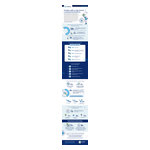
ISACA poll: 89% of digital trust professionals say increased AI skills and knowledge needed to retain job or advance career over next two years.
Share
ISACA’s annual AI Pulse Poll, which surveyed 3,029 digital trust professionals worldwide, delves into AI usage, training, and risk prioritization in the workplace, finding both areas of promise and room for improvement.
AI Use Surging—But Training Lacking
Eighty-one percent of respondents believe AI is being used in their organizations, whether officially permitted or not. The most common applications include creating written content (52 percent), increasing productivity (51 percent) and automating repetitive tasks (50 percent). Yet only 28 percent of organizations have a comprehensive AI policy in place—up from 15 percent last year.
Though 59 percent of organizations say they permit the use of generative AI (up from 42 percent last year), 32 percent of respondents say there is no AI training provided to any employees, 35 percent provide training only to those in IT-related positions, and only 22 percent train all employees.
AI Skills: A Career Imperative
The poll underscores a growing recognition that AI skills are no longer optional. Nearly a third of organizations plan to increase hiring for AI-related roles in the next 12 months, and 85 percent of respondents agree that many jobs will be modified due to AI. Eighty-nine percent say they will need AI training within the next two years to advance their careers or keep their current roles, and 45 percent say it is needed within the next six months.
Despite Risks, Action Lags
Despite widespread concern about AI-related threats, many organizations are slow to respond. Sixty-six percent of respondents expect deepfake cyberthreats to become more sophisticated and widespread in the next 12 months, but only 21 percent say their organizations are actively investing in tools to detect and mitigate them. Sixty-one percent are very or extremely worried that generative AI will be exploited by bad actors, and 59 percent believe that AI-powered phishing and social engineering attacks are now more difficult to detect.
Only 42 percent of respondents say AI risks, including the below, are an immediate priority for their organization:
- Misinformation/disinformation (80 percent)
- Privacy violations (69 percent)
- Social engineering (63 percent)
- Loss of IP (53 percent)
- Job displacement (40 percent)
“Enterprises urgently need to foster a culture of continuous learning and prioritize robust AI policies and training in AI to ensure they are equipping their employees with the necessary expertise to leverage these technologies responsibly and effectively—unlocking AI’s full potential,” says Jason Lau, ISACA board director and CISO, Crypto.com. “It is just as important for organizations to make a deliberate shift to integrate AI into their security strategies—threat actors already are doing so, and failing to keep pace will expose organizations to escalating risks.”
AI Guidance, Resources
Access the pulse poll and related resources at www.isaca.org/ai-pulse-poll.
ISACA offers a range of other AI resources, including the Artificial Intelligence Audit Toolkit and several courses—including AI Fundamentals, AI Governance, and AI Threat Landscape. ISACA has also recently released its new Advanced in AI Audit (AAIA) certification—a first-of-its-kind certification that can be earned by CISAs, CPAs and CIAs— and will be launching its Advanced in AI Security Management (AAISM) certification, which can be earned by CISMs and CISSPs, in August.
About ISACA
For more than 55 years, ISACA® (www.isaca.org) has empowered its community of 185,000+ members with the knowledge, credentials, training and network they need to thrive in fields like information security, governance, assurance, risk management, data privacy and emerging tech. With a presence in more than 190 countries and with nearly 230 chapters worldwide, ISACA offers resources tailored to every stage of members’ careers.
Contacts
communications@isaca.org
Emily Ayala, +1.847.385.7223