vFunction Introduces Industry’s First Architecture Governance Capabilities to Help Enterprises Conquer Microservices Complexity
vFunction Introduces Industry’s First Architecture Governance Capabilities to Help Enterprises Conquer Microservices Complexity
vFunction Expands Architectural Observability Platform with Comprehensive Flow Analysis Features to Address Issues with Actual User Flows in Monolithic and Distributed Applications
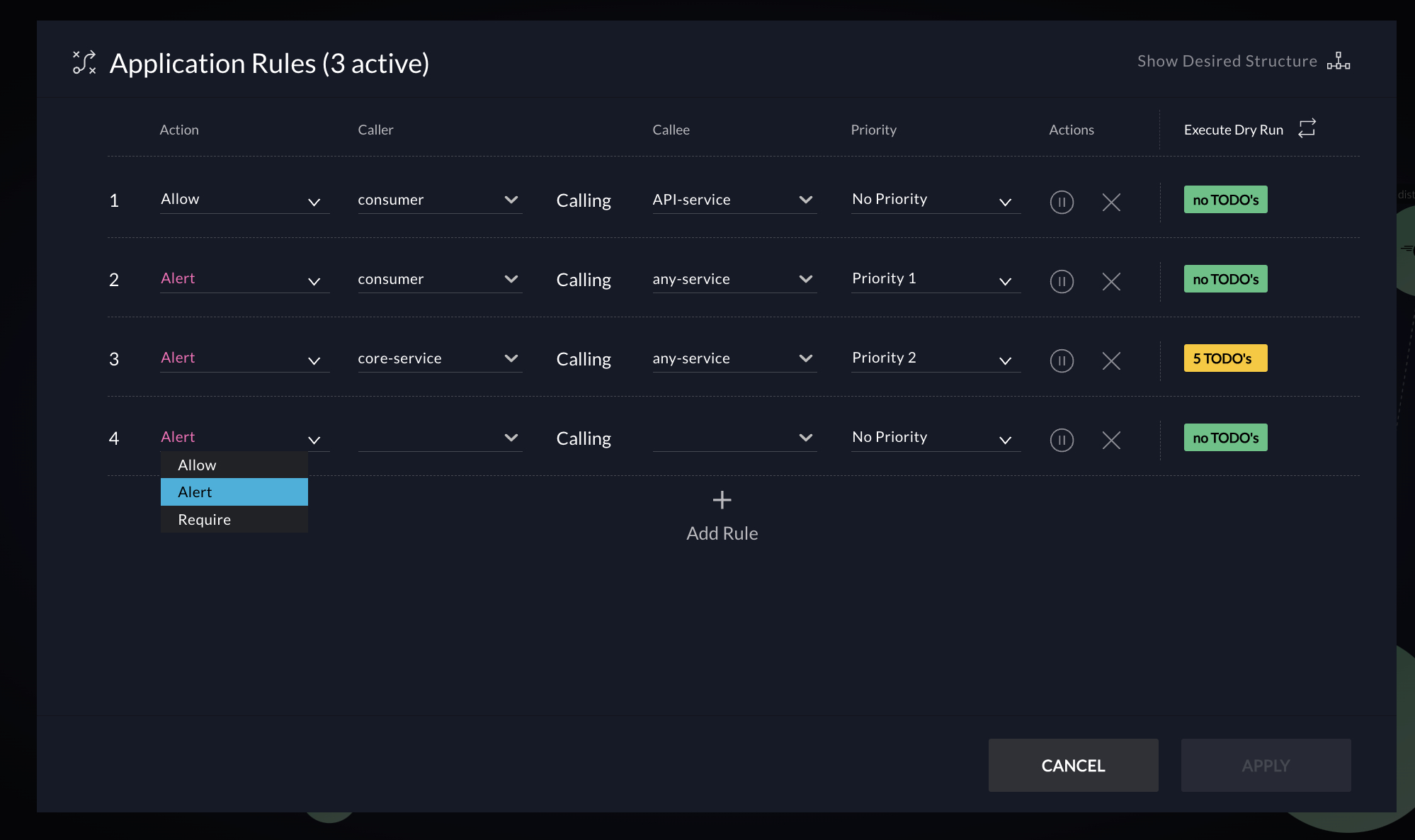
MENLO PARK, Calif.--(BUSINESS WIRE)--vFunction, the pioneer of AI-driven architectural observability (AO), today unveiled new capabilities that provide software teams with essential functionality to accelerate application innovation while maintaining resiliency and reducing technical debt. New, first-to-market software architecture governance capabilities allow organizations to implement rules that act as guardrails for distributed applications to combat microservices sprawl. These rules help engineering teams to monitor their distributed architecture and receive alerts to ensure all services are calling authorized servers, enforce boundaries between particular services, and maintain correct database-to-microservice relationships. Comprehensive flow analysis features, including live flow coverage for monoliths and sequence diagrams for distributed applications, align design intent with actual implementation. These tools help organizations identify inadequate testing and insufficient test coverage based on comparing actual production flows to tested flows. vFunction's unique domain-driven design, combined with its comprehensive approach to production flow analysis, empowers organizations to achieve the architectural clarity and control needed for improved engineering velocity, application scalability, and resiliency.
“Good software architecture matters to overall application health and business success, but it’s hard to enforce it without the right tools, particularly for microservices,” said Moti Rafalin, CEO and co-founder of vFunction. “It's all too easy to introduce unnecessary dependencies that violate architectural best practices and, in turn, result in more technical debt. vFunction addresses these complexities, helping teams maintain architectural integrity for resilient and scalable applications from release to release.”
“When application architectures become too complex, resiliency, security, performance, and developer efficiency suffer,” said Jim Mercer, program vice president at IDC. “vFunction is helping enterprises gain a deep understanding of their software architecture and improve system governance, which can enable software engineers to work faster and maintain healthy microservices. With comprehensive flow analysis, vFunction helps teams visualize production flows, to compare with architectural blueprints. By identifying potential gaps in coverage, vFunction helps resolve problems before they affect performance.”
Architectural Governance Rules Drive Effective Development and Speed Releases
Lack of software architecture governance and development with minimal oversight has spawned complexity within enterprises, resulting in applications riddled with too many dependencies, multi-hop flows, circular dependencies, and duplicate functionality. Particularly in distributed applications, core services should be independent to ensure resiliency, fault tolerance, and scalability. However, without enforced guidelines architectural drift often occurs – where the application architecture’s current state moves away from the target state – compromising overall application health. Software architects also struggle to guide teams toward optimal application architecture, when they lack visibility into how it evolves in production.
vFunction now offers true software governance, allowing organizations to set architectural rules that act as guardrails to maintain architectural principles from release to release. The company implemented AI algorithms to categorize services into layers like API, core, and composite services. New tagging capabilities provide context and enable rule creation between services. For instance, dependencies between core services or API services can trigger alerts or block pull requests in CI/CD pipelines. By setting architectural governance rules, teams can develop and release faster without impacting application health.
Comprehensive Flow Analysis Aligns Application Reality with Design Intent, Resulting in More Resilient Architectures
With the introduction of comprehensive flow analysis capabilities, vFunction’s architectural observability platform addresses a critical gap in the management of monolithic and distributed microservices applications. It provides insights into actual application usage patterns versus documented expectations and identifies efficient or overly complex flows. This allows teams to proactively tackle architectural issues before they significantly impact performance.
Live flow coverage for monolithic applications goes beyond traditional profiling tools. Unlike existing solutions that focus on test environments or code coverage, vFunction constantly monitors production environments, providing insights into resource usage of specific flows and enabling comparison between production and pre-production flows. This unified approach allows developers to assess the real-world effectiveness of their tests by offering a more accurate understanding of application behaviors and test coverage in relation to real user journeys, filling a crucial gap in current application monitoring and management practices.
Sequence flow diagrams for distributed applications provide a deep view into application flows so developers and SREs can better distinguish between efficient processes and those at risk of failure due to excessive complexity. By visualizing flows as sequence diagrams in distributed architectures, vFunction solves the previously daunting task of tracking problematic flows through code and monitoring their changes over time. By correlating APM incidents with architectural issues identified by vFunction, engineering teams can significantly reduce mean time to repair (MTTR).
vFunction serves as a system of record for live application architectural diagrams, allowing teams to recognize drift in specific flows, track changes, and manage tasks as sequences evolve. Unlike traditional application performance management (APM) tools that collect performance data, vFunction's solution focuses on architectural drift, highlights overly complex flows that may compromise system resiliency, and notifies teams of significant changes. This capability, combined with the ability to export diagrams for each system flow, empowers development teams to maintain architectural integrity and optimize application performance in complex distributed environments.
Rafalin continued, “With our latest advancements, we’re helping teams better manage architecture and understand comprehensive business and user flows so they can avoid the most damaging types of technical debt.”
To learn more about vFunction and its latest advancements, visit www.vfunction.com.
Supporting Quotes
“Whether dealing with monolithic or distributed applications, architecture is paramount to business growth and must be actively monitored and managed,” said Nenad Crncec, founder of Architech. “With vFunction organizations can proactively tackle architectural issues before they become a risk, avoiding the constant cycle of modernization. Our partnership with vFunction empowers our customers to ensure long-term agility and efficiency of their applications while minimizing technical debt.”
“Architectural observability and governance are critical for organizations to drive innovation and stay competitive. They have become essential components of software development especially as companies routinely encounter roadblocks due to complex, hybrid application environments,” said Giovanni Zingaro, manager at Liquid Reply. “Partnering with vFunction allows us to offer customers insights across their entire application landscape, from monolithic architectures to microservices, and guide organizations through their modernization efforts while enabling them to take control of their increasingly distributed architectures.”
Resources
About vFunction
vFunction, the pioneer of AI-driven architectural observability, delivers a platform that increases application resiliency, scalability, and engineering velocity by continuously identifying and recommending ways to reduce technical debt and complexity in applications. Global system integrators and top cloud providers partner with vFunction to assist leading companies like Intesa Sanpaolo and Trend Micro in discovering their architecture and transforming applications to innovate faster and change their business trajectory. vFunction is headquartered in Menlo Park, CA, with offices in Israel, London, and Austin, TX. To learn more, visit www.vfunction.com.
Contacts
Media Contact
Diana Puckett
Bhava Communications for vFunction
vfunction@bhavacom.com
916-572-8209