Space Flight Laboratory (SFL) Confirms Successful Deployment of HawkEye 360 Microsatellite Cluster 10
Space Flight Laboratory (SFL) Confirms Successful Deployment of HawkEye 360 Microsatellite Cluster 10
Developed in SFL Flex Production Program
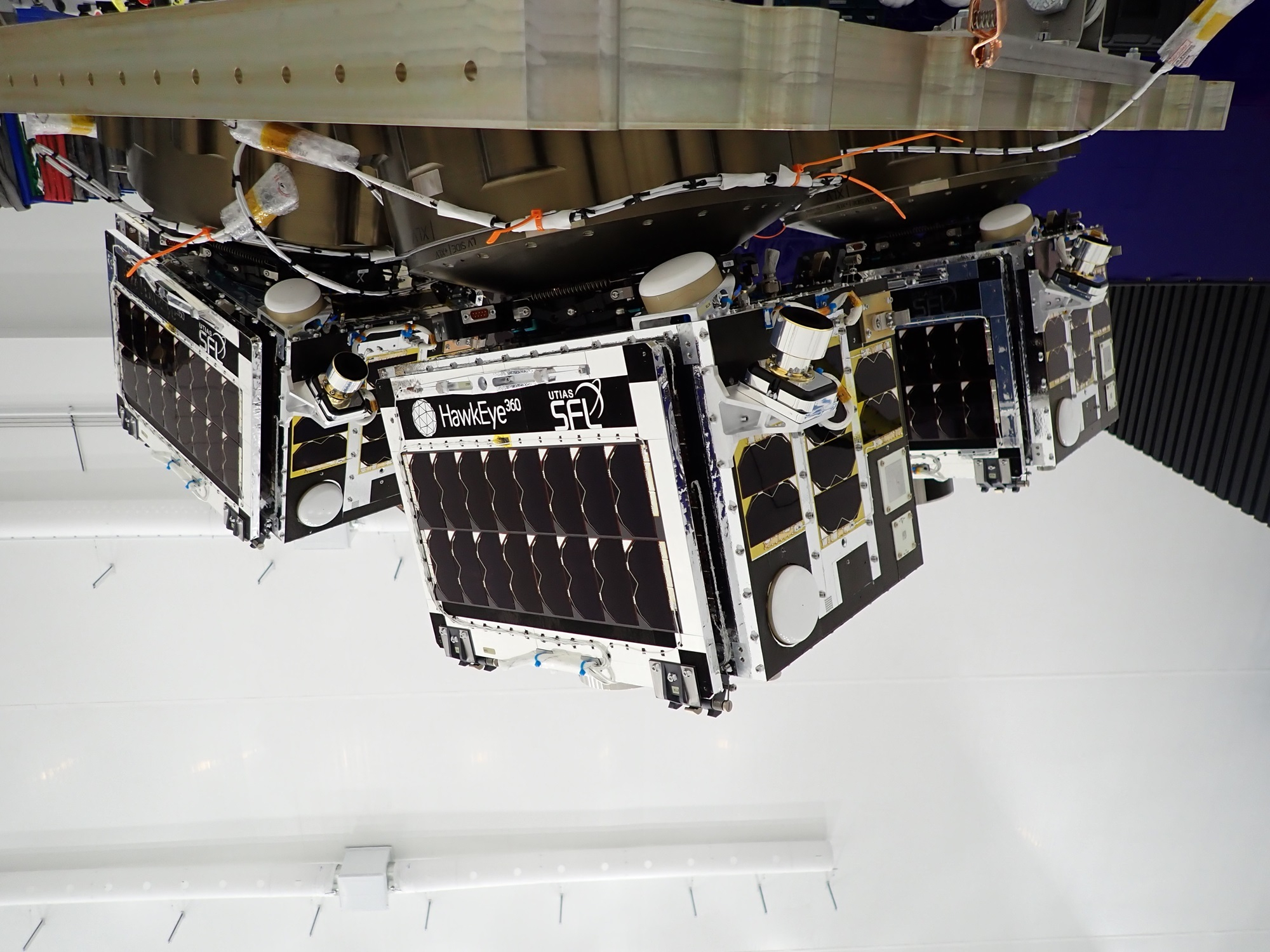
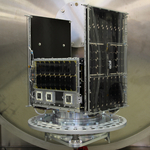
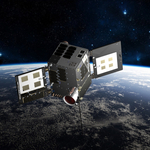
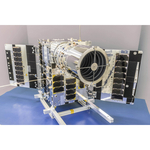
TORONTO--(BUSINESS WIRE)--Space Flight Laboratory (SFL) confirmed that HawkEye 360 Cluster 10 has been successfully launched and deployed in orbit. Cluster 10 brings to 30 the total number of radio frequency geolocation microsatellites developed for HawkEye 360 by SFL and is the third Cluster integrated at HawkEye 360’s Virginia facility under the SFL Flex Production Program.
Cluster 10 launched on August 16, 2024, at 2:56 p.m. EDT from Vandenberg Space Force Base, Calif., aboard the Transporter-11 Rideshare mission with SpaceX via launch integrator Exolaunch. All three microsatellites have communicated with ground control.
Based in Herndon, Va., HawkEye 360 is the global leader in radio frequency (RF) signal analysis and the first to use formation-flying microsatellites for terrestrial RF signal detection. This data is analyzed for many commercial applications including maritime situational awareness, emergency response, national security, and spectrum mapping.
Attitude control and formation flying by multiple spacecraft in orbit are a necessity for accurate RF signal geolocation, a primary consideration in HawkEye 360’s selection of SFL as its satellite provider. The acknowledged leader in small spacecraft stability, SFL has innovated compact, low-cost formation-flying technology at a maturity and price point unmatched in the microspace industry today.
All HawkEye 360 satellites developed by SFL are still in operation. SFL built the Pathfinder (Cluster 1) satellites on its 15-kg NEMO platform, launched in 2018. Subsequent clusters have been developed on the larger 30-kg SFL DEFIANT bus. For Pathfinder, Clusters 2-6 and 9, SFL handled the entire development process, including integration and testing, at its Toronto facility. Cluster 12 will incorporate technology updates and will also be integrated by SFL.
An early adopter of Flex Production, HawkEye 360 performed integration of the RF signal tracking payload with the DEFIANT bus for Clusters 7, 8 and 10 at its own plant with technical guidance from SFL. Clusters 11 and 13, now in development, will be integrated by HawkEye 360 in Virginia as well.
“SFL created Flex Production with NewSpace companies in mind, so they can leverage SFL’s microspace expertise while satisfying the financial requirements of an often-aggressive NewSpace business model,” said SFL Director Dr. Robert E. Zee. “NewSpace companies can mass produce satellites in-house at a price point that works for them under our flexible program.”
Flex Production gives customers the option of contracting SFL to completely develop the first satellite, or satellite cluster, at its Toronto facility. SFL can then assist the customer in setting up subsequent mass production at their own, or third-party, site for development of a large constellation of spacecraft. However, development can shift back to SFL when a new spacecraft design or technology update is requested.
Established in 1998, SFL has developed 79 operationally successful smaller satellite missions totaling more than 327 cumulative years in orbit. Another 30 missions are now under development by SFL, which offers a complete suite of nano-, micro- and small satellites – including high-performance, low-cost CubeSats – that satisfy the needs of a broad range of mission types from 3 to 500 kilograms. For a comprehensive list of SFL high-performance satellite platforms, please visit https://www.utias-sfl.net/satellite-platforms/overview/.
About Space Flight Laboratory (SFL) (www.utias-sfl.net)
SFL generates bigger returns from smaller, lower cost satellites. Small satellites built by SFL consistently push the performance envelope and disrupt the traditional cost paradigm. We build quality small satellites at low cost that work the first time and enable NewSpace companies to mass produce through our Flex Production program. Satellites are built with advanced power systems, stringent attitude control and high-volume data capacity that are striking relative to the budget. SFL arranges launches globally and maintains a mission control center accessing ground stations worldwide. The pioneering and barrier-breaking work of SFL is a key enabler to tomorrow’s cost-aggressive satellites and constellations.
(www.utias-sfl.net)
Contacts
Dr. Robert E. Zee
SFL Director
1-416-667-7400
info@utias-sfl.net
Follow SFL on Twitter @SFL_SmallerSats