Kioxia Develops Broadband SSD with Optical Interface for Next-Generation Green Data Centers
Kioxia Develops Broadband SSD with Optical Interface for Next-Generation Green Data Centers
Technology demonstration at the Future of Memory and Storage conference at Kioxia booth #307
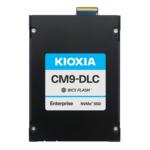
TOKYO--(BUSINESS WIRE)--Kioxia Corporation, a world leader in memory solutions, will showcase a prototype of broadband SSD with an optical interface for next-generation data centers at the “FMS: the Future of Memory and Storage” conference, being held in Santa Clara, CA from August 6 to August 8. By replacing the electrical wiring interface with optical, this SSD technology significantly increases the physical distance between the compute and storage devices, slims down wiring, while maintaining energy efficiency and high signal quality. It also brings high flexibility to data center system design and applications.
By adopting an optical interface, it becomes possible to aggregate individual components that make up systems, such as SSDs and CPUs, and seamlessly interconnect them. This furthers the evolution of a "disaggregated computing system" that can efficiently utilize resources according to a specific workload. Additionally, with its high signal integrity, the optical interface may enhance high-performance compute environments, such as outer space.
This accomplishment is the result of the Japanese "Next Generation Green Data Center Technology Development" project, JPNP21029, subsidized by the New Energy and Industrial Technology Development Organization (NEDO), which is under the "Green Innovation Fund Project: Construction of Next Generation Digital Infrastructure." In this grant project, next generation technologies are being developed with the goal of achieving more than 40% energy savings compared to current data centers. As a part of this project, Kioxia is developing broadband SSDs with optical interface for data storage in next-generation green data centers.
*Company names, product names, and service names may be trademarks of third-party companies.
About Kioxia
Kioxia is a world leader in memory solutions, dedicated to the development, production and sale of flash memory and solid-state drives (SSDs). In April 2017, its predecessor Toshiba Memory was spun off from Toshiba Corporation, the company that invented NAND flash memory in 1987. Kioxia is committed to uplifting the world with “memory” by offering products, services and systems that create choice for customers and memory-based value for society. Kioxia's innovative 3D flash memory technology, BiCS FLASH™, is shaping the future of storage in high-density applications, including advanced smartphones, PCs, SSDs, automotive and data centers.
*Information in this document, including product prices and specifications, content of services and contact information, is correct on the date of the announcement but is subject to change without prior notice.
Contacts
Media Inquiries:
Kioxia Corporation
Sales Strategic Planning Division
Satoshi Shindo
Tel: +81-3-6478-2404