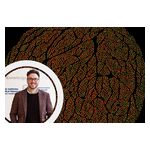
Sex and Gender Identity Are Linked to Human Brain Activity, Feinstein Institutes Research
Sex and Gender Identity Are Linked to Human Brain Activity, Feinstein Institutes Research
The findings were recently published in Science Advances

MANHASSET, N.Y.--(BUSINESS WIRE)--Discussion about gender identity has become a mainstream topic, with questions surrounding how the brain is wired and how behavior is influenced by someone’s sex or gender. New research from The Feinstein Institutes for Medical Research published today in Science Advances shows neurobiological underpinnings of sex and gender in children to better understand how sex (assigned at birth) and gender (identity and expression) influence the brain, and ultimately a person’s health.
Led by Elvisha Dhamala, PhD, assistant professor in the Institute of Behavioral Sciences at the Feinstein Institutes, and in collaboration with Dani Bassett, PhD, professor at the University of Pennsylvania, Thomas Yeo, PhD, associate professor at the National University of Singapore, and Avram Holmes, PhD, associate professor of psychiatry at Rutgers University, the study analyzed data from nearly 4,800 children from the Adolescent Brain Cognitive Development (ABCD) Study – the largest long-term study of brain development and child health in the United States. The study finds that sex and gender have unique and overlapping associations with brain functional connections. Specifically, sex is primarily linked to connectivity within motor, visual, control and limbic networks, while gender-related networks are more widely distributed throughout the brain. These sex and gender differences in brain connectivity might contribute to differences in brain-related illnesses.
“Sex and gender have traditionally been conflated in research when they should have been studied separately,” said Dr. Dhamala. “This research sheds light on the complex and nuanced ways in which biological and environmental factors influence brain organization and shows the need to consider a person’s sex and gender to fully understand health and disease across the human lifespan.”
Over the last 20 years, scientists have studied how sex and neurobiology interact with behavior. Many of these studies have had differing results and have been hard to reproduce, suggesting there might be misunderstandings or biases in this research area. The focus on assigned sex, without consideration for gender, in the past, may have further limited the research.
Using machine learning to predict sex and gender based on brain connectivity, Dr. Dhamala determined that the two are linked to different parts of the brain. This underscores that sex and gender are distinct from one another. Previous research in the biomedical sciences has primarily focused on sex, but these findings highlight the importance of accounting for gender as well.
Prior studies have found that people assigned female at birth are more likely to experience mood and anxiety disorders while people assigned male at birth are more likely to be diagnosed with substance use or attention deficit disorders. The present study shows that while sex is linked to specific brain networks, gender’s influence spreads more widely across the brain. Many of the brain networks shown to be related to sex and gender in this study are implicated in brain disorders. These findings that sex and gender have unique effects on brain connectivity might explain sex and gender differences in brain-related illnesses.
“Understanding how sex and gender affect the brain can help develop better therapies to treat mental health and other conditions,” said Anil K. Malhotra, MD, co-director of the Institute of Behavioral Science at the Feinstein Institutes. “Dr. Dhamala’s findings are a step towards understanding the brain’s inner connections and impact on one’s overall health.”
About the Feinstein Institutes
The Feinstein Institutes for Medical Research is the home of the research institutes of Northwell Health, the largest health care provider and private employer in New York State. Encompassing 50 research labs, 3,000 clinical research studies and 5,000 researchers and staff, the Feinstein Institutes raises the standard of medical innovation through its five institutes of behavioral science, bioelectronic medicine, cancer, health system science, and molecular medicine. We make breakthroughs in genetics, oncology, brain research, mental health, autoimmunity, and are the global scientific leader in bioelectronic medicine – a new field of science that has the potential to revolutionize medicine. For more information about how we produce knowledge to cure disease, visit http://feinstein.northwell.edu and follow us on LinkedIn.
Contacts
Julianne Mosher Allen
516-880-4824
jmosherallen@northwell.edu