Feinstein Institutes’ Haichao Wang named president-elect of Shock Society
Feinstein Institutes’ Haichao Wang named president-elect of Shock Society
Dr. Wang officially took the role of president-elect after the 47th Annual Conference on Shock in Palm Beach Gardens, Florida
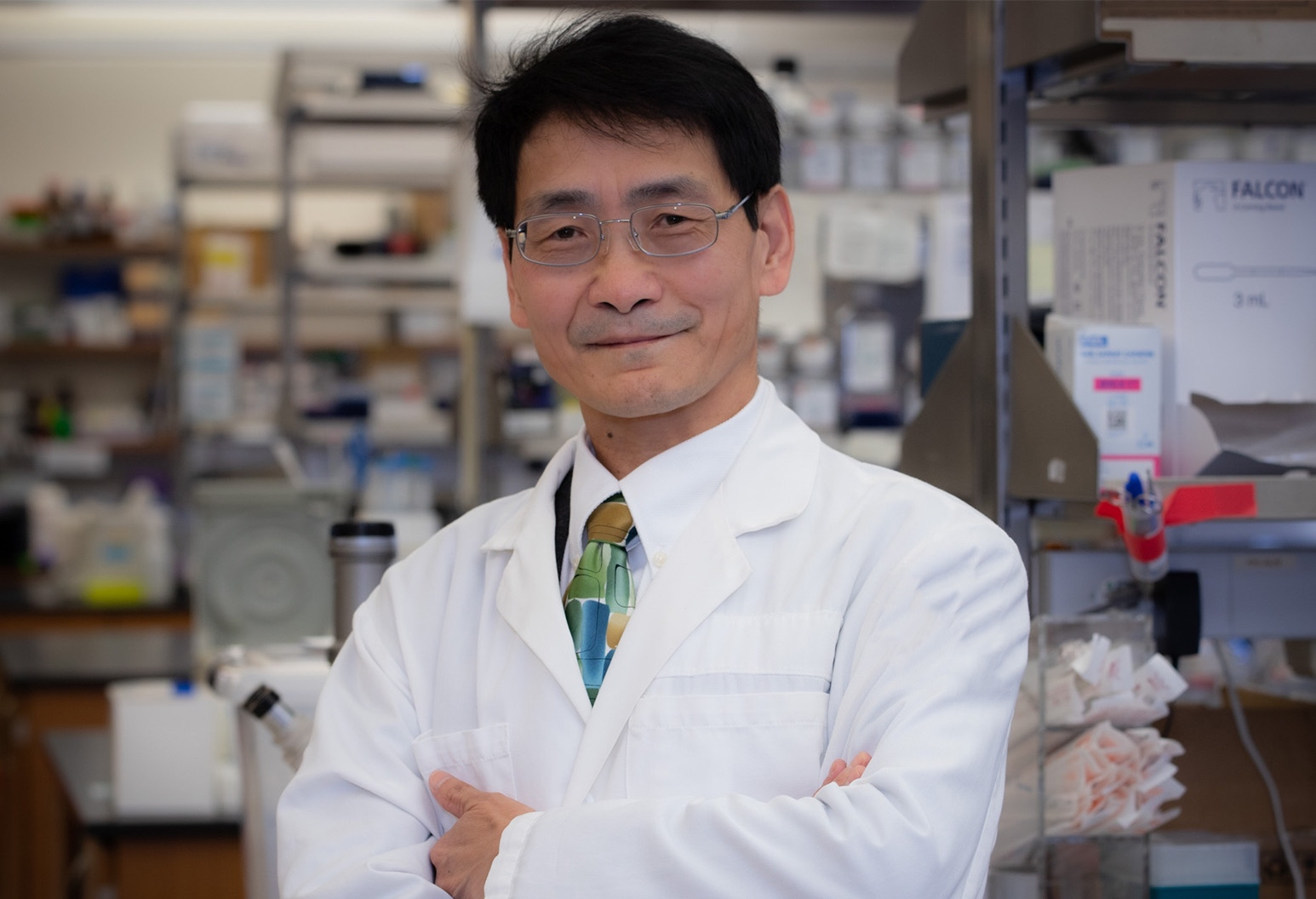
MANHASSET, N.Y.--(BUSINESS WIRE)--Sepsis, a silent killer that can cause shock and multiple organ failure, makes up almost a quarter of deaths worldwide. For his dedication to sepsis research and finding new therapies, Haichao Wang, PhD, professor in the Institute of Molecular Medicine at The Feinstein Institutes for Medical Research, has been named president-elect of the Shock Society.
The Shock Society was founded in 1978 by a group of dedicated clinicians and researchers whose mission is to improve the care of victims of trauma, shock and sepsis by promoting clinically relevant research, providing a multidisciplinary forum to integrate and disseminate new knowledge, and promoting the education and mentoring of the next generation of investigators in the field.
Sepsis is a complex clinical syndrome, but previous failures of many sepsis trials targeting early inflammatory mediators have taught us to be more resilient and innovative. Dr. Wang has dedicated his career to studying the body's natural immune system, with a specific focus on identifying late-acting mediators of dysregulated immune responses to severe infections with relatively wider therapeutic windows. His research involves investigating how various natural immune system regulators function in septic patients, employing both genetic and drug-based methods to gain insights into these processes. He has worked on creating new treatments to manage dysregulated inflammation – the leading cause of sepsis.
“It is an honor and privilege to be chosen as the president-elect of the Shock Society and to help lead this dedicated group of professionals in advancing sepsis research,” said Dr. Wang. “Instead of being deterred by previous failures of sepsis trials, we should embrace them as opportunities for learning and transformative power for innovation. In this role, I aim to promote both preclinical investigations of complex sepsis pathophysiology and the clinical development of innovative therapies for this devastating disease.”
Dr. Wang received his PhD in microbiology from Louisiana State University in 1992 and subsequently finished a three-year postdoctoral fellowship in cell biology at the University of North Carolina-Chapel Hill. Since joining the Feinstein Institutes in 1995, Dr. Wang has published more than 200 research and review articles in the field of inflammation and sepsis with a total citation of more than 60,000 times.
"Dr. Wang's pioneering research in identifying molecular targets for sepsis and shock has paved the way for discovering new treatment mechanisms," said Kevin J. Tracey, MD, president and CEO of the Feinstein Institutes and Karches Family Distinguished Chair in Medical Research. "His new role as president-elect of the Shock Society is a well-deserved recognition of his dedication and groundbreaking contributions."
Last year, Dr. Wang published in Science Advances the findings of a novel protein that could be a potential therapeutic target for lethal sepsis and other infectious diseases, including COVID-19.
About the Feinstein Institutes
The Feinstein Institutes for Medical Research is the home of the research institutes of Northwell Health, the largest health care provider and private employer in New York State. Encompassing 50 research labs, 3,000 clinical research studies and 5,000 researchers and staff, the Feinstein Institutes raises the standard of medical innovation through its five institutes of behavioral science, bioelectronic medicine, cancer, health system science, and molecular medicine. We make breakthroughs in genetics, oncology, brain research, mental health, autoimmunity, and are the global scientific leader in bioelectronic medicine – a new field of science that has the potential to revolutionize medicine. For more information about how we produce knowledge to cure disease, visit http://feinstein.northwell.edu and follow us on LinkedIn.
Contacts
Julianne Mosher Allen
516-880-4824
jmosherallen@northwell.edu