Stimulation of Sensory Neurons Increases Antibody Responses
Stimulation of Sensory Neurons Increases Antibody Responses
The new research published in the journal Bioelectronic Medicine
MANHASSET, N.Y.--(BUSINESS WIRE)--One of the major functions of the immune system is to – through antibodies – fight infections. New findings from The Feinstein Institutes for Medical Research bioelectronic medicine scientists show that neurons that help sense pain and prevent illness, called sensory neurons, play an important role in regulating the production of antibodies.
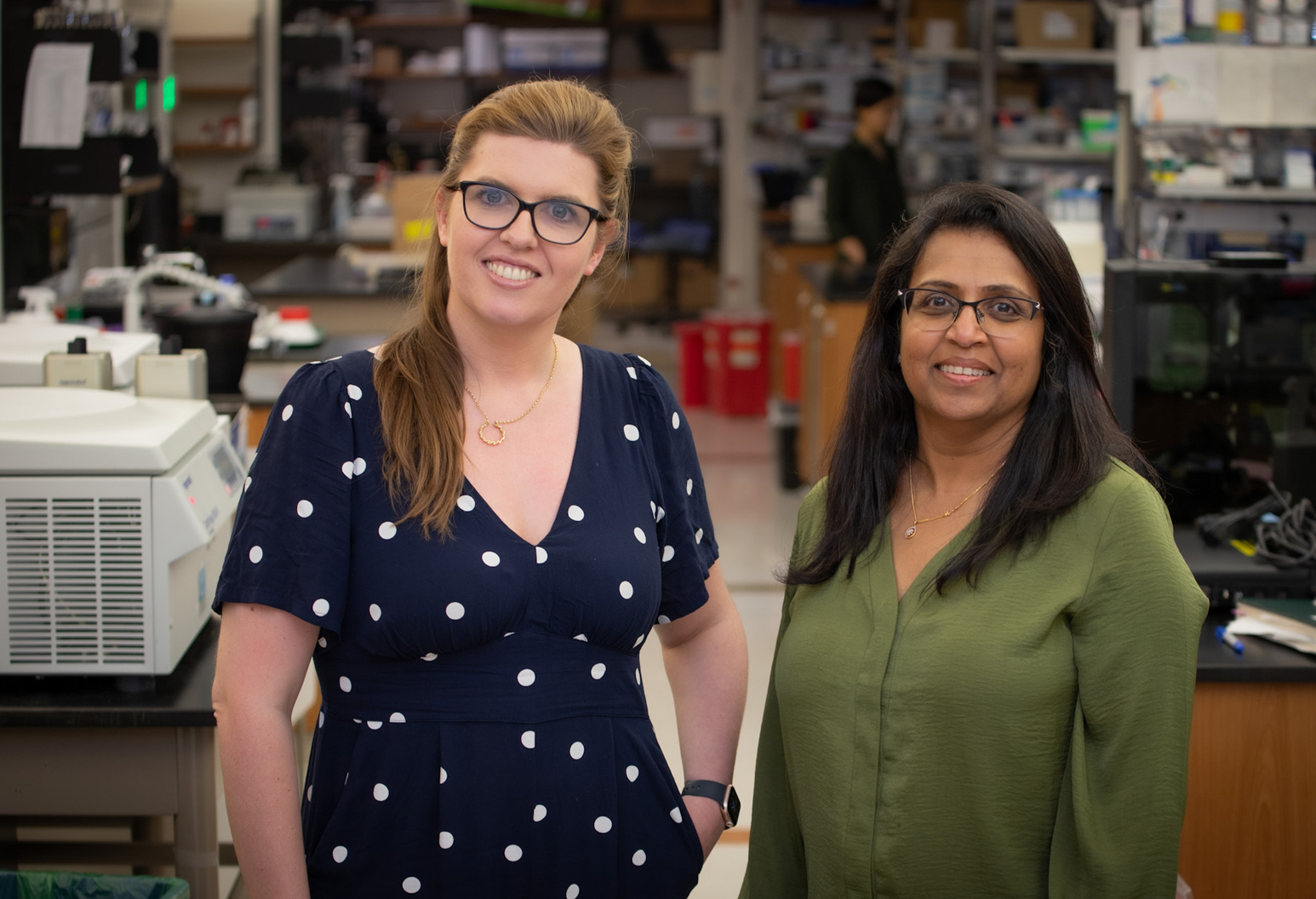
The study published today in the journal Bioelectronic Medicine — an open-access journal and part of BMC Springer Nature — reveals how activating specific nerves using light stimulation, known as optogenetic activation, results in increased antibody responses, and suggests the potential for neuromodulation to improve antibody responses to fight diseases. The preclinical study was led by Sangeeta Chavan, PhD, professor in the Feinstein Institutes’ Institute of Bioelectronic Medicine, in collaboration with Kevin Tracey, MD, president and CEO of the Feinstein Institutes, and Aisling Tynan, PhD, research scientist in the Feinstein Institutes’ Institute of Bioelectronic Medicine.
“While we know the brain-body connection that affects inflammation and infection, we are learning how to harness our nervous system to treat disease,” said Dr. Chavan. “Using technology and understanding how the body reacts to this stimulation could lead to new treatments for people with inflammatory diseases, like rheumatoid arthritis, lupus and even cancer.”
Their studies show that sensory neurons are necessary for the body to make specific antibodies when exposed to new antigens. When activated with light during immunization, the mice develop specific antibody responses. However, in the absence of these sensory neurons, these mice fail to mount an efficient antibody response.
“In order for clinicians to better treat today’s debilitating diseases, we must find new therapies that not only treat but also prevent illness from developing,” said Dr. Tynan. “By activating sensory neurons locally, we discovered this therapy could effectively increase antibody production to possibly help someone heal.”
The Feinstein Institutes for Medical Research is the global scientific home of bioelectronic medicine where medical researchers use modern technology to develop new device-based therapies to treat disease and injury.
Built on years of research in molecular mechanisms of disease and the link between the nervous and immune systems, our researchers discover neural targets that can be activated or inhibited with neuromodulation devices, like vagus nerve implants, to control the body’s immune response and inflammation. If inflammation is successfully controlled, diseases – such as arthritis, pulmonary hypertension, Crohn’s disease, inflammatory bowel diseases, diabetes, cancer and autoimmune diseases – can be treated more effectively.
Beyond inflammation, using novel brain-computer interfaces, Feinstein Institutes researchers developed techniques to bypass injuries of the nervous system so that people living with paralysis can regain sensation and use their limbs. By producing bioelectronic medicine knowledge, disease and injury, could one day be treated with our own nerves without costly and potentially harmful pharmaceuticals.
Last year, Dr. Chavan published results from a study that showed the effectiveness of using ultrasound technology to non-invasively reduce inflammation in the body – something that has traditionally only been done through the use of pharmaceutical drugs. She was also recently elected to The American Institute for Medical and Biological Engineering (AIMBE) for her contributions to the fields of medical and biological engineering, and particularly the field of bioelectronic medicine.
About the Feinstein Institutes
The Feinstein Institutes for Medical Research is the home of the research institutes of Northwell Health, the largest health care provider and private employer in New York State. Encompassing 50 research labs, 3,000 clinical research studies and 5,000 researchers and staff, the Feinstein Institutes raises the standard of medical innovation through its five institutes of behavioral science, bioelectronic medicine, cancer, health system science, and molecular medicine. We make breakthroughs in genetics, oncology, brain research, mental health, autoimmunity, and are the global scientific leader in bioelectronic medicine – a new field of science that has the potential to revolutionize medicine. For more information about how we produce knowledge to cure disease, visit http://feinstein.northwell.edu and follow us on LinkedIn
Contacts
Julianne Mosher Allen
516-880-4824
jmosherallen@northwell.edu