Feinstein Institutes AI researchers receive $3.1M NIH grant to develop hospital risk and prevention tools
Feinstein Institutes AI researchers receive $3.1M NIH grant to develop hospital risk and prevention tools
Study to help create new clinical support tools to monitor and predict outcomes of in-hospital patients using machine learning and artificial intelligence
MANHASSET, N.Y.--(BUSINESS WIRE)--Hospitalized adult patients whose medical conditions worsen after being admitted, requiring escalation of care, such as transfer to the intensive care unit (ICU) or intervention of a rapid response team, may benefit from monitoring by artificial intelligence (AI). Scientists at The Feinstein Institutes for Medical Research were recently awarded $3.1 million from the National Institutes of Health (NIH) to fund a new study that would harness AI and machine learning (ML) to help doctors and nurses monitor patients in busy medical and surgical wards to identify and prevent deterioration and ultimately improve patient outcomes.
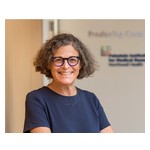
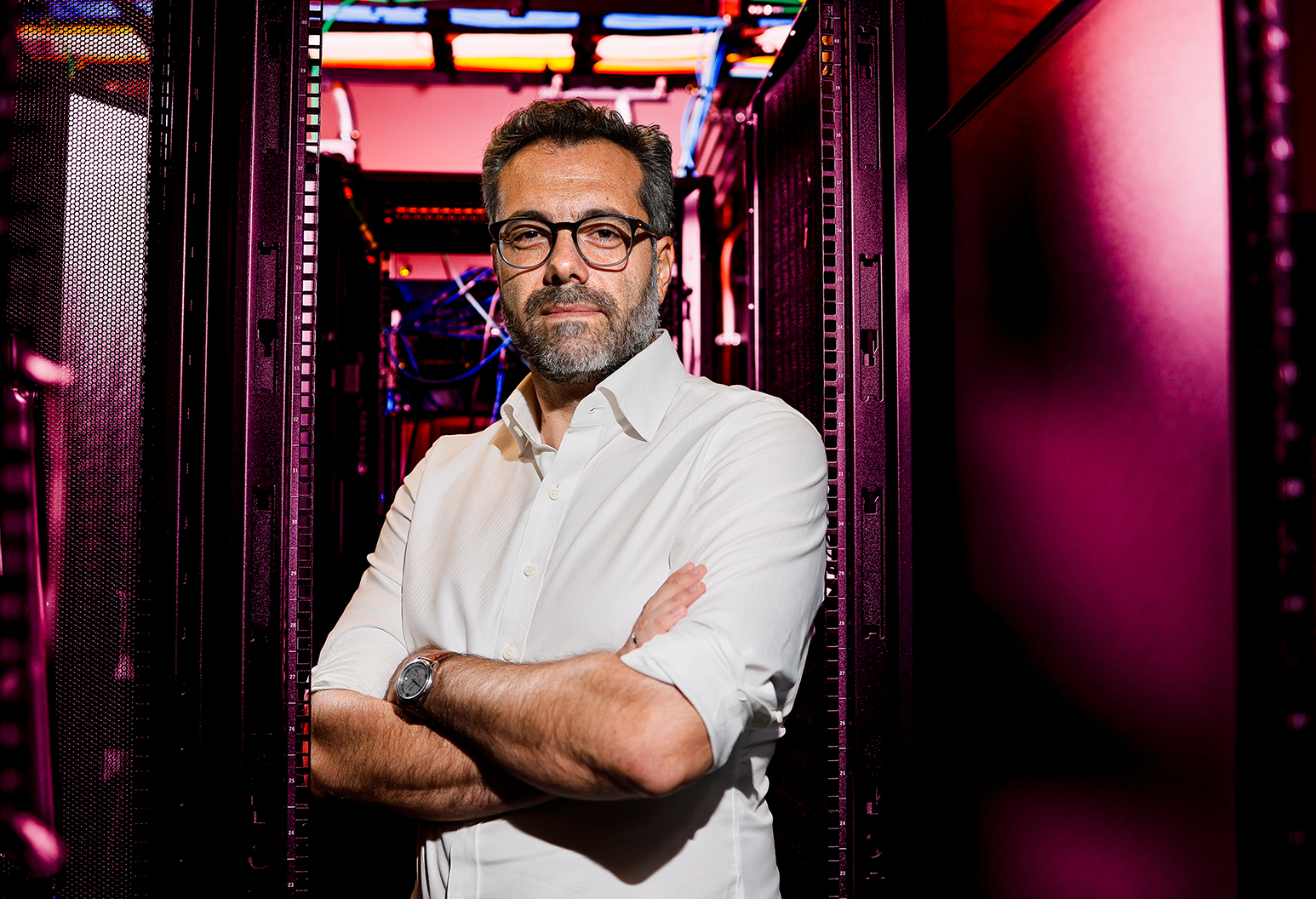
The study team is led by Theodoros Zanos, PhD, associate professor at the Feinstein’s Institute of Health System Science and Institute of Bioelectronic Medicine, and includes Karina Davidson PhD, Michael Oppenheim MD, Alex Makhnevich MD, Beth Friedman RN, and others at the Feinstein Institutes and Northwell Health, New York’s largest health system. The group will develop and implement ML models with the goal of improving the monitoring of patients once they are admitted in order to identify who might undergo a rapid decline to address it sooner.
“Some patients who are admitted for one condition are not explicitly showing symptoms of other concerns, which can lead to their health deteriorating and even dying,” said Dr. Zanos. “This research will leverage vast patient data, new continuous monitoring technologies and AI to identify those often-unidentified risks and subtle early worrisome trends and enable life-saving interventions.”
Dr. Zanos and his team will turn to Northwell’s large, diverse clinical dataset using electronic health records (EHRs) from more than 2.4 million hospitalizations to generate ML predictive models. The clinical support tools will help clinicians and nurses identify in advance patients at risk of deterioration and clinical reasons to enable timely interventions. These tools also will identify those patients who are more stable. The study will collect and leverage patient data using a continuous monitoring (CM) device, the VitalConnect VitalPatch, that will be placed on patients upon admission to the hospital, to develop more accurate prediction models.
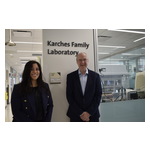
“Merging data and technology, researchers and clinicians can work together to develop new tools to improve patient outcomes,” said Kevin J. Tracey, MD, president and CEO of the Feinstein Institutes and Karches Family Distinguished Chair in Medical Research. “Dr. Zanos’ study will harness the use of artificial intelligence to better inform and deliver care.”
Dr. Zanos is a leader in health care AI. His research revolves around developing algorithms that will enable early diagnosis, disease severity assessment, personalization and adaptability of effective therapies. In 2020, he and his lab developed a digital tool that predicts a hospitalized patient’s overnight stability and determines whether they could be left undisturbed overnight to sleep, recover and discharge faster. This vital sign monitoring tool, called “Let Sleeping Patients Lie,” used a vast body of clinical data from the patient visits, including respiratory rate, heart rate, systolic blood pressure, body temperature and age.
Last year, Dr. Zanos published in Nature Communications results of a two-and-a-half-year-long study which used 35,000 COVID-19 diverse patients to develop a new digital clinical support tool that accurately predicts a patient’s outcomes and aids in clinical care decision-making.
The Feinstein Institutes continues to invest in the use of technology and artificial intelligence to help improve patient outcomes and bridge health disparities. Most recently, the Feinstein Institutes received a $10 million gift from Scott and Debby Rechler to create the Scott and Debby Rechler Center for Health Outcomes within the Institute of Health System Science.
About the Feinstein Institutes
The Feinstein Institutes for Medical Research is the home of the research institutes of Northwell Health, the largest health care provider and private employer in New York State. Encompassing 50 research labs, 3,000 clinical research studies and 5,000 researchers and staff, the Feinstein Institutes raises the standard of medical innovation through its five institutes of behavioral science, bioelectronic medicine, cancer, health system science, and molecular medicine. We make breakthroughs in genetics, oncology, brain research, mental health, autoimmunity, and are the global scientific leader in bioelectronic medicine – a new field of science that has the potential to revolutionize medicine. For more information about how we produce knowledge to cure disease, visit http://feinstein.northwell.edu and follow us on LinkedIn.
Contacts
Julianne Mosher Allen
516-880-4824
jmosherallen@northwell.edu