Kyocera Develops New “Contactless Intelligent Millimeter-Wave Sensing System”
Kyocera Develops New “Contactless Intelligent Millimeter-Wave Sensing System”
IoT sensor enables the detection of minute mechanical vibrations for wireless, non-contact identification of human heartbeat, respiratory fluctuations, and more

KYOTO, Japan--(BUSINESS WIRE)--Kyocera Corporation (President: Hideo Tanimoto) today announced it has developed a new “contactless intelligent millimeter-wave sensing system”. The system includes a high-precision, low-noise sensor that can detect minute vibrations (measured in microns) with no physical contact, and various software modules for comprehensive AI-based solutions for various applications.
Video of “Contactless Intelligent Millimeter-Wave Sensing System”:
https://www.youtube.com/watch?v=NP3bo_xRqI0
Contactless Intelligent Millimeter-Wave Sensing System (Prototype) Specifications |
|
Sensor System |
60GHz Bandwidth
|
Radio Wave Type /
|
F3N 60 5GHz |
Size (mm) |
64.5 x 63.0 x 23.82 |
Weight (g) |
94.0 |
Operating Temperature |
-40℃ to 60℃ |
Dustproof and Waterproof |
IP 6X |
Function |
Wireless, contact-free detection of minute physical vibrations with software module add-ons. |
Maximum Sensing Range |
5m (depending on vibration volume and analysis content) |
R&D Background
Japan’s current economic environment requires businesses to improve labor output efficiency to account for labor shortages caused by an aging workforce, declining birthrates, and other factors. As such, there is a growing demand for intelligent millimeter-wave systems to perform routine inspections for building safety and to support predictive maintenance of factory equipment. Also, since the beginning of the COVID-19 pandemic, many people have been experiencing stress in their daily lives because of decreased communication with family and friends and increased time at home, creating concern for daily healthcare needs. Both diagnosing people and collecting inspection data involve tremendous volumes of information, often obtained from minute vibrations.
Kyocera’s new Millimeter-Wave Sensing System is capable of non-contact, high-precision detection of micron-scale vibrations using a millimeter-wave signal, making it possible to accurately detect human heartbeat and respiratory fluctuations, as well as minute vibrations of machines and buildings, wirelessly and remotely.
This system can be applied in many routine healthcare diagnostics, efficient physical health monitoring, and for detecting anomalies in manufacturing equipment - contributing to healthcare and fulfilling societal needs for a more labor-saving workplace.
Features
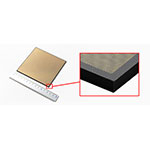
The system features low-loss millimeter-wave substrates made from Kyocera's proprietary materials, high-precision substrate manufacturing, and advanced statistical signal-processing technology developed for telecommunications equipment.
1. Contactless Detection of Minute Vibrations
Many systems that sense a person’s heartbeat or breathing require physical contact, which limits potential applications. To accurately detect minute vibrations with a contactless intelligent millimeter-wave sensor, a main technical challenge has involved improving the sensor’s signal-to-noise ratio.
Kyocera solved these problems by combining its original materials and signal processing technologies. Figure 1 compares a highly accurate Laser Doppler Vibrometer with Kyocera’s millimeter-wave sensor, confirming the high accuracy of Kyocera’s system.
2. Accurate Heartbeat Interval Sensing
Contactless sensing systems for heartbeat and respiration using ordinary radio waves*1 and ultrasonic waves have been unable to deliver highly accurate (high time resolution) data that can be applied to psychoemotional monitoring and other applications. Kyocera’s system enables more accurate measurement of heart rate variability because it can detect chest vibrations caused by a person’s heartbeat with high accuracy. In addition to daily healthcare measurement, this technique can also be applied to stress analysis, autonomic analysis, and other applications.
*1 Radio waves are a general term for electromagnetic waves in the millimeter-wave band, microwave band, etc.
Test Confirmation by Kyocera: Experimental Environment
- Heart rate interval (including HF band) error: within +/- 10 ms (see Fig. 2)
- Heart rate variability spectral error: +/- 10% or less (see Fig. 3)
3. AI Solutions and Software Modules for a Variety of Applications
The system's high-precision vibration detection capability not only detects and extracts human heartbeat and breathing, but also motion detection from building vibrations and manufacturing equipment in factories.
Kyocera is also proceeding with R&D into AI technologies that analyze and utilize millimeter-wave sensor data, and aims to provide solutions for a wide variety of applications by combining these technologies with various software modules (add-ons).
Kyocera’s Contactless Intelligent Millimeter-Wave Sensing System is not intended to be a stand-alone medical device at this stage.
About KYOCERA
Kyocera Corporation (TOKYO:6971, https://global.kyocera.com/), the parent and global headquarters of the Kyocera Group, was founded in 1959 as a producer of fine ceramics (also known as “advanced ceramics”). By combining these engineered materials with metals and integrating them with other technologies, Kyocera has become a leading supplier of industrial and automotive components, semiconductor packages, electronic devices, smart energy systems, printers, copiers, and mobile phones. During the year ended March 31, 2022, the company’s consolidated sales revenue totaled 1.8 trillion yen (approx. US$15.1 billion). Kyocera is ranked #665 on Forbes magazine’s 2022 “Global 2000” list of the world’s largest publicly traded companies, and has been named by The Wall Street Journal among “The World’s 100 Most Sustainably Managed Companies.”
Contacts
KYOCERA Corporation (Japan)
Corporate Communications
Miho Suzuki
Head Office TEL: +81-(0)75-604-3416
E-mail: webmaster.pressgl@kyocera.jp