Pancreatic Cancer Lab-Grown Human Organoids May Predict Effective Chemotherapy Treatment
Pancreatic Cancer Lab-Grown Human Organoids May Predict Effective Chemotherapy Treatment
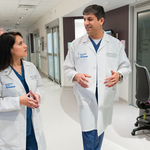
Dr. Matthew Weiss presents data on patient organoids & cancer care at the American Surgical Association annual meeting

MANHASSET, N.Y.--(BUSINESS WIRE)--Personalized medicine for cancer care has become a powerful approach to developing one-of-a-kind treatment plans. In the lab, scientists can now grow miniature tumors from donated tissue, known as patient-derived organoids, which show promise for the future of precision care in pancreatic cancers. During a scientific session presentation at the American Surgical Association’s (ASA) 142nd annual meeting in Chicago, Illinois, The Feinstein Institutes for Medical Research’s Matthew Weiss, MD, shared the results of a new scientific paper on diverse patient-derived organoids.
The data in the study, done in collaboration with David Tuveson, MD, PhD and his team of scientists at Cold Spring Harbor Laboratory and with support from the Lustgarten Foundation, stems from the largest single-institution pancreatic cancer patient-derived organoid biobank. It shows the ability to generate organoids from patients, regardless of tumor stage/progression or if the patient had already received chemotherapy. The findings suggest that lab testing of organoids may help predict chemotherapy effectiveness and enable patient-specific therapy plans.
“We are seeing real-time, precision cancer care thanks to significant scientific advancements,” said Dr. Weiss, professor in the Institute of Cancer Research at the Feinstein Institutes and the deputy physician-in-chief and surgical director in the Cancer Institute at Northwell Health. “Presenting this promising data to my colleagues at the ASA is an important step in advancing this research, adding a powerful new tool in our fight against pancreatic cancer.”
While pancreatic cancer accounts for three percent of all cancers in the United States, it is responsible for seven percent of all cancer deaths. The study collected 136 tumor samples from 117 patients with pancreatic cancer, including 32 percent of organoids derived from minority populations. Organoid generation was seen in more than 70 percent across all tissue samples, regardless of whether the patient had previously received chemotherapy. The organoids were grown in a 3D gel matrix in a small petri-dish, where scientists then studied the tumor's sensitivity to various chemotherapies.
“Dr. Weiss and collaborators at Cold Spring Harbor Lab are developing new methods to personalize and optimize cancer care,” said Kevin J. Tracey, MD, president and CEO of the Feinstein Institutes. “This important research adds hope to the fight against cancer.”
The complete manuscript of this study and its presentation is anticipated to be published in the Annals of Surgery pending editorial review.
About the Feinstein Institutes
The Feinstein Institutes for Medical Research is the home of the research institutes of Northwell Health, the largest health care provider and private employer in New York State. Encompassing 50 research labs, 3,000 clinical research studies and 5,000 researchers and staff, the Feinstein Institutes raises the standard of medical innovation through its five institutes of behavioral science, bioelectronic medicine, cancer, health system science, and molecular medicine. We make breakthroughs in genetics, oncology, brain research, mental health, autoimmunity, and are the global scientific leader in bioelectronic medicine – a new field of science that has the potential to revolutionize medicine. For more information about how we produce knowledge to cure disease, visit http://feinstein.northwell.edu and follow us on LinkedIn.
Contacts
Matthew Libassi
631-793-5325
mlibassi@northwell.edu