Feinstein Institutes Researchers Identify New Molecular Targets to Curb Obesity, Fatty Liver Diseases
Feinstein Institutes Researchers Identify New Molecular Targets to Curb Obesity, Fatty Liver Diseases
MANHASSET, N.Y.--(BUSINESS WIRE)--In one-third of the world’s population, obesity and other metabolic disorders lead to nonalcoholic fatty liver diseases (NAFLD) and nonalcoholic steatohepatitis (NASH) which can result in cancer. To address this issue and help reduce obesity and the development of fatty liver diseases, scientists at The Feinstein Institutes for Medical Research identified new molecular targets that could lead to future treatment.
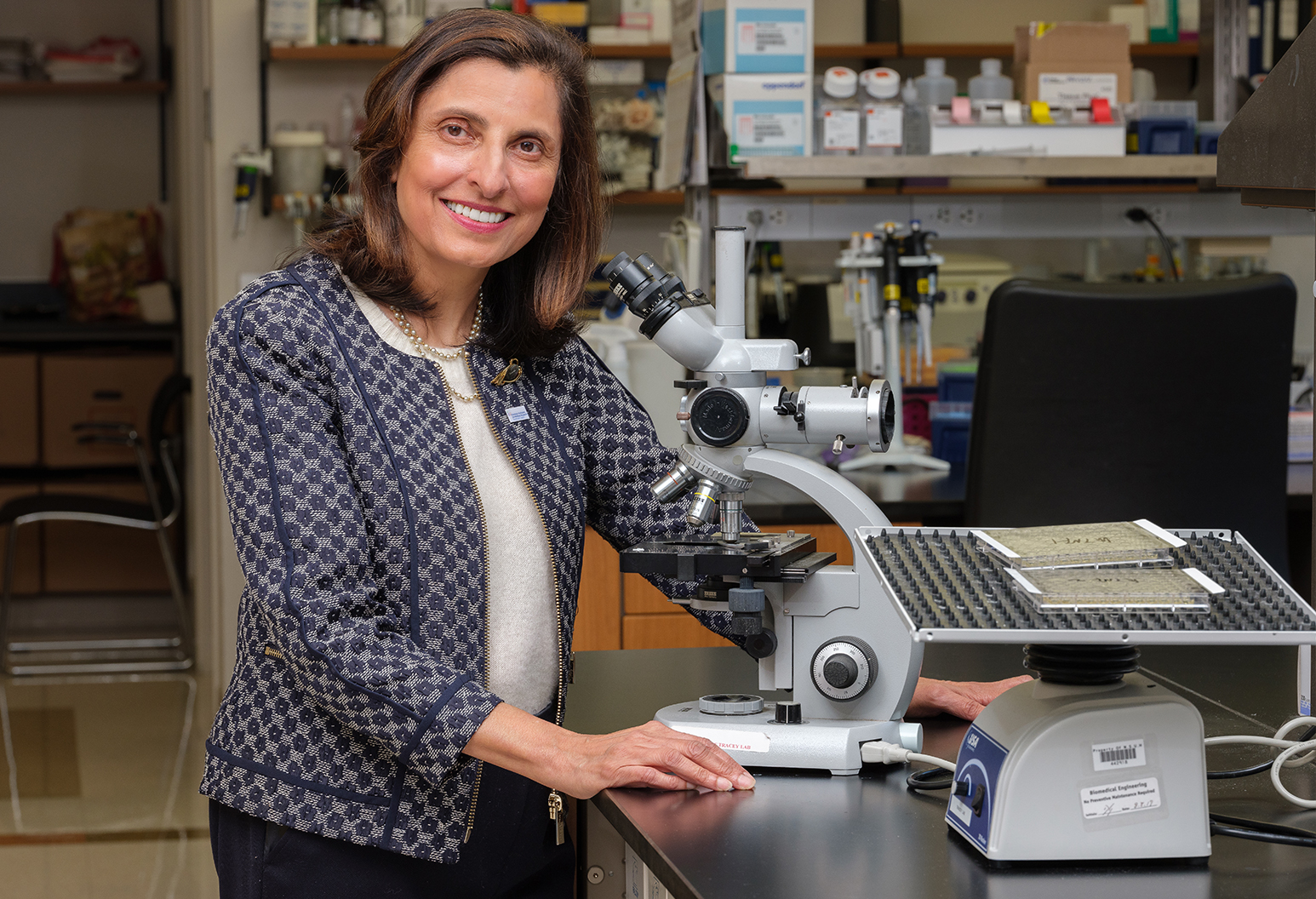
The research, led by Lopa Mishra, MD, co-director for the Institute of Bioelectronic Medicine at the Feinstein Institutes, was published in Science Translational Medicine. It reports that a protein called β2-spectrin (SPTBN1) helps promote unhealthy fibrosis and the accumulation of lipids in the body through the transforming growth factor β (TGF-β) pathway. The study showed that by removing SPTBN1 in mice models while feeding them a high-fat diet or Western diet (low in saturated fats, fruits, etc.), the subjects did not become obese or develop NASH or cancer.
“Obesity continues to increase worldwide and treatments to prevent fatty liver diseases related cancers are urgently needed,” said Dr. Mishra, the Susan and Herman Merinoff Distinguished Chair in Translational Medicine. “These encouraging results reveal a molecular focus for researchers to develop future therapies to prevent disease.”
Additionally, Dr. Mishra and her team observed that targeting SPTBN1 in mice that already had NASH helped reduce glucose levels and helped prevent disease progression, which shows a potential approach to help patients manage the severity of their disease. By also looking at human 3D genome models, the research supports honing in on SPTBN1 to reverse the body's ability to develop NASH.
“Before innovative new treatments can be developed, the scientist must first identify the molecules and mechanisms at the heart of the problem,” said Kevin J Tracey, MD, president and CEO of the Feinstein Institutes. “Dr. Mishra’s leadership in revealing basic molecular mechanisms of liver disease bridges the gap between her lab and a patient’s bedside.”
Dr. Mishra and her team hope to further the research in the coming year, initiating a proof-of-concept first-in-human clinical trial.
About the Feinstein Institutes
The Feinstein Institutes for Medical Research is the research arm of Northwell Health, the largest health care provider and private employer in New York State. Home to 50 research labs, 3,000 clinical research studies and 5,000 researchers and staff, the Feinstein Institutes raises the standard of medical innovation through its five institutes of behavioral science, bioelectronic medicine, cancer, health innovations and outcomes, and molecular medicine. We make breakthroughs in genetics, oncology, brain research, mental health, autoimmunity, and are the global scientific leader in bioelectronic medicine – a new field of science that has the potential to revolutionize medicine. For more information about how we produce knowledge to cure disease, visit http://feinstein.northwell.edu and follow us on LinkedIn.
Contacts
Matthew Libassi
631-793-5325
mlibassi@northwell.edu