Feinstein Institutes Receives $1.3M NIH Bioelectronic Medicine Grant to Study Neuro-Immune Signaling
Feinstein Institutes Receives $1.3M NIH Bioelectronic Medicine Grant to Study Neuro-Immune Signaling
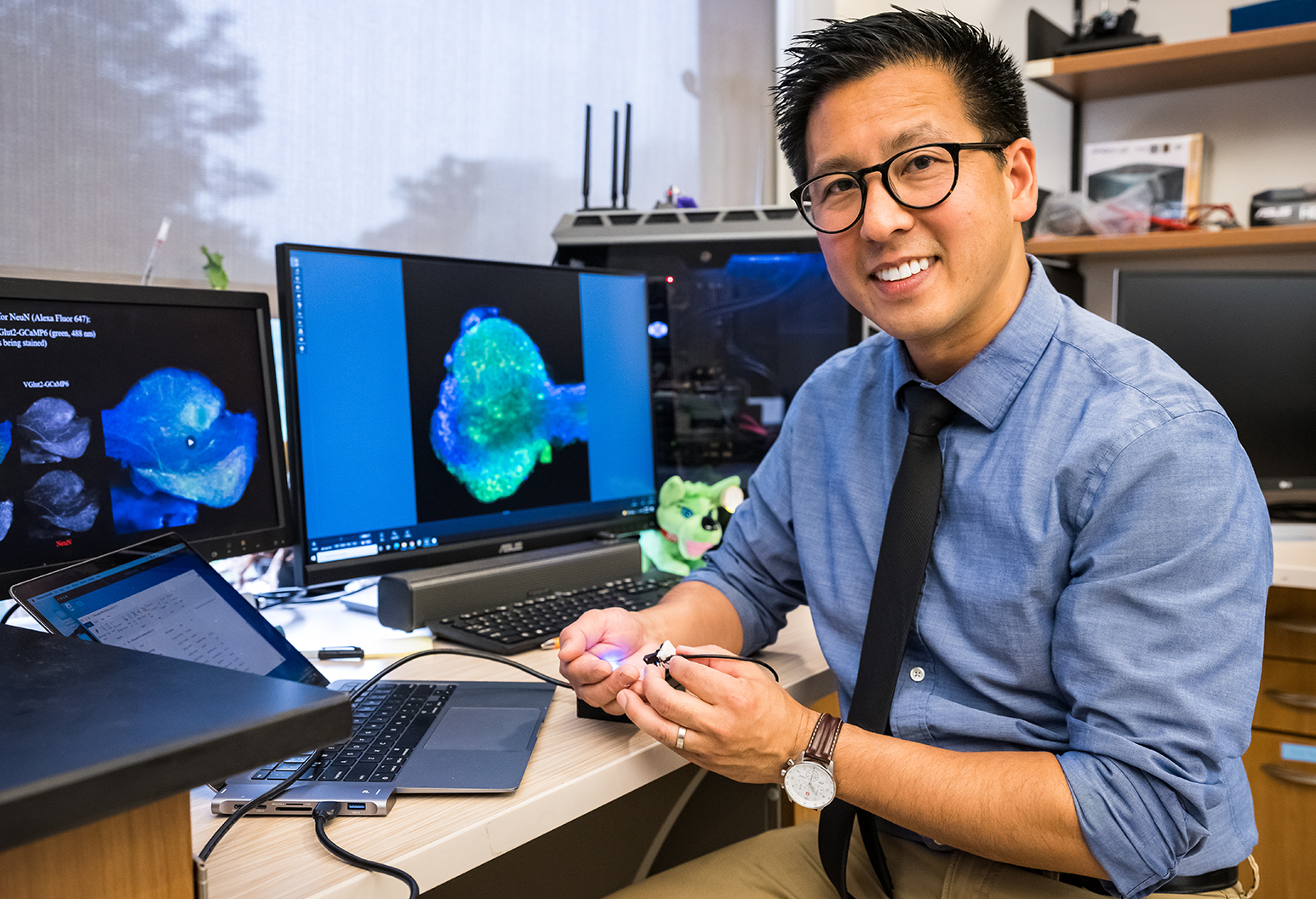
MANHASSET, N.Y.--(BUSINESS WIRE)--The Feinstein Institutes for Medical Research, the global scientific home of bioelectronic medicine, has been awarded a multi-year $1.3 million grant from the National Institutes of Health (NIH) to study how immune signals are transmitted to the brain through the vagus nerve. The study’s principal investigator, Eric H. Chang, PhD, will use novel calcium imaging technology to monitor neural activity in the hopes of discovering new clues into how the immune system communicates with the nervous system.
Inflammation is an important immune response, however if uncontrolled, it can lead to serious conditions such as Crohn’s disease, rheumatoid arthritis, and other chronic inflammatory disorders. The vagus nerve is a cranial nerve that connects the brain to many parts of the body and helps transmit immune response signals. In this new study, Feinstein Institutes’ bioelectronic medicine researchers hope to determine how sensory neurons encode and transmit these immune-related signals in the form of neural activity.
“One major goal of our research is to understand how electrical signals, transmitted along nerves, are involved in regulating the functions of our organs in both health and disease” said Dr. Chang, assistant professor in the Institute of Bioelectronic Medicine at the Feinstein Institutes. “As we start to decipher the neural code of these signals, we can use this information to create devices that modulate the vagus nerve to control the immune response and to treat diseases.”
This grant will fund the use of miniature epi-fluorescence microscopes to image vagal sensory neurons within mice as they respond to the immune mediators associated with inflammation. Performing this live imaging will allow researchers to directly investigate how vagal sensory neurons encode immune signals in the form of neuronal activity.
“Seeing is believing and through Dr. Chang’s research we will be able to visualize exactly how the brain and body communicate,” said Kevin J. Tracey, MD, president and CEO of the Feinstein Institutes. “Because the NIH is supporting this mechanistic work, the field of bioelectronic medicine is growing and expanding.”
Dr. Tracey is heralded as the founding father of bioelectronic medicine for his discovery of the inflammatory reflex. Bioelectronic medicine is the emerging scientific field exploring the use of electronic devices to treat diseases and injury instead of drugs while reducing the significant side effects associated with drugs. The goal of bioelectronic medicine is to identify neural targets that can be selectively activated or inhibited when needed and that, in turn, control the function of specific organs.
Dr. Tracey recently received a five-year $3.7M grant from the NIH to continue his impactful work and support molecular research in bioelectronic medicine.
About the Feinstein Institutes
The Feinstein Institutes for Medical Research is the research arm of Northwell Health, the largest health care provider and private employer in New York State. Home to 50 research labs, 3,000 clinical research studies and 5,000 researchers and staff, the Feinstein Institutes raises the standard of medical innovation through its five institutes of behavioral science, bioelectronic medicine, cancer, health system science, and molecular medicine. We make breakthroughs in genetics, oncology, brain research, mental health, autoimmunity, and are the global scientific leader in bioelectronic medicine – a new field of science that has the potential to revolutionize medicine. For more information about how we produce knowledge to cure disease, visit http://feinstein.northwell.edu and follow us on LinkedIn.
Contacts
Matthew Libassi
631-793-5325
mlibassi@northwell.edu