Rocket Lab to Launch NASA Funded Commercial Moon Mission From New Zealand
Rocket Lab to Launch NASA Funded Commercial Moon Mission From New Zealand
The CAPSTONE mission will be Rocket Lab’s first launch to the Moon
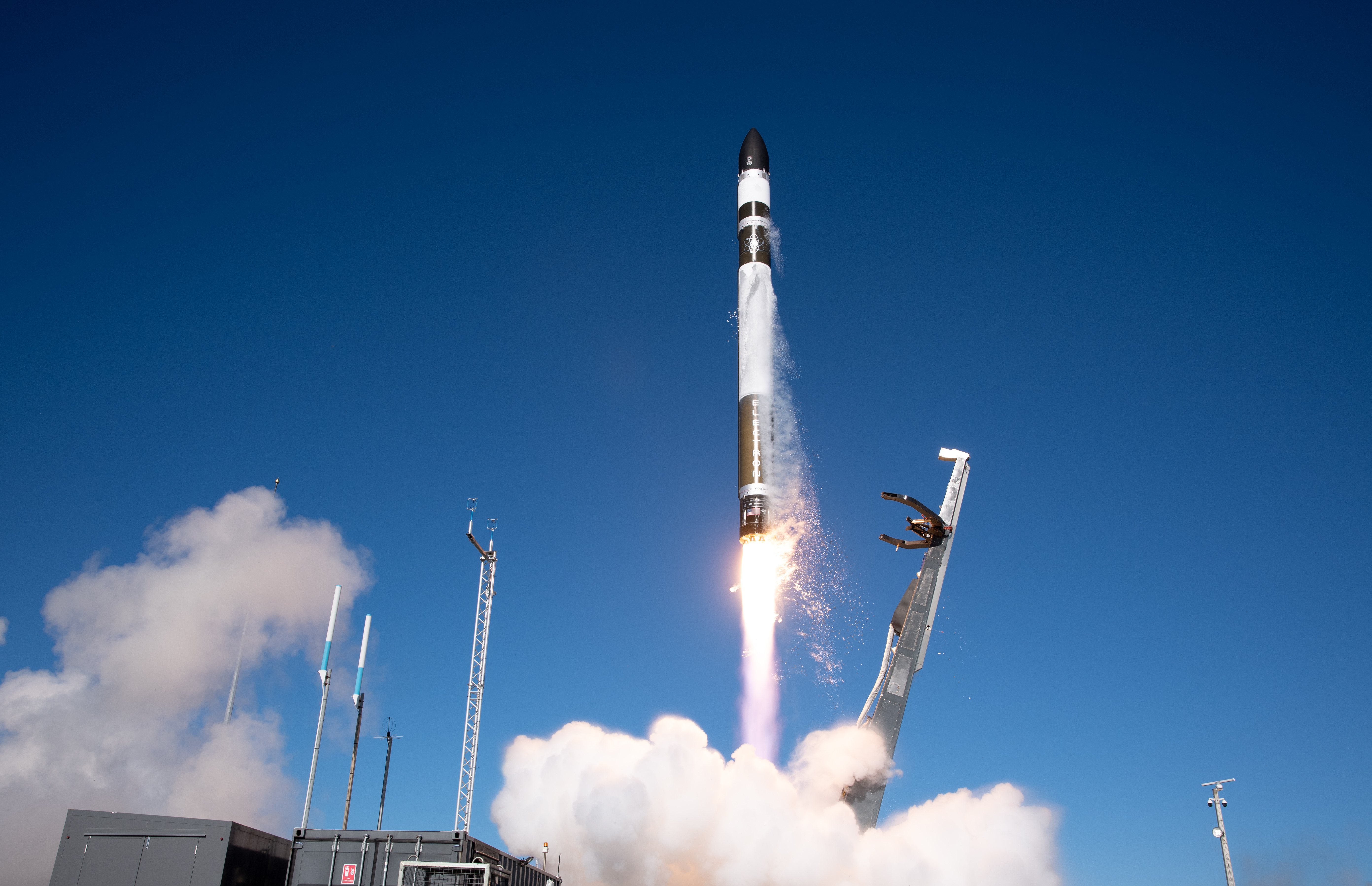
LONG BEACH, Calif.--(BUSINESS WIRE)--Rocket Lab, the leading launch and space systems company, today announced it will launch the CAPSTONE mission to the Moon from Launch Complex 1 in New Zealand from Q4 2021. It will be Rocket Lab’s first launch to the Moon. CAPSTONE (the Cislunar Autonomous Positioning System Technology Operations and Navigation Experiment) aids NASA’s Artemis program, which includes landing the first woman and the first person of color on the Moon and establishing a long-term presence there.
Launching on an Electron launch vehicle and deploying from Rocket Lab’s Photon spacecraft platform, CAPSTONE is a 55-pound satellite created by Advanced Space that will serve as the first spacecraft to test a unique, elliptical lunar orbit. As a precursor for Gateway and other Artemis elements, an international and commercial Moon-orbiting outpost that is part of NASA’s Artemis program, CAPSTONE will help reduce risk for future spacecraft by validating innovative navigation technologies and verifying the dynamics of this halo-shaped orbit.
The mission is the first time Rocket Lab will use its Photon spacecraft platform as a trans-lunar injection stage to place a satellite on a trajectory that will take it beyond Earth orbit to the Moon. After lifting off on Electron to an initial elliptical low Earth orbit, Photon will separate and use its 3D printed HyperCurie engine to provide in-space propulsion to allow CAPSTONE to break free of Earth’s gravity and set a course for the Moon. After deploying the CAPSTONE satellite, Photon will continue on its own trajectory to conduct a lunar fly-by, while CAPSTONE will use its own propulsion system to enter a cislunar orbit.
Following a three-to-four-month trip to the Moon, the CAPSTONE CubeSat will enter a near rectilinear halo orbit (NRHO), which is a highly elliptical orbit over the Moon’s poles. During its six-month primary mission in orbit around the Moon, CAPSTONE will validate the propulsion requirements for maintaining this type of orbit as predicted by models, reducing logistical uncertainties for future missions. It will also test the accuracy of innovative spacecraft-to-spacecraft navigation solutions as well as demonstrate capabilities for commercial support of future lunar missions. The NRHO provides the advantage of an unobstructed view of Earth in addition to coverage of the lunar South Pole.
Originally slated for lift-off from Rocket Lab’s Launch Complex 2 in Virginia, the CAPSTONE mission will now take place from Launch Complex 1 to support a Q4 launch window.
“Flexible isn’t a word usually used to describe lunar missions but operating two launch complexes gives us the freedom to select a site that best meets mission requirements and schedule,” said Rocket Lab Chief Executive Officer, Mr. Peter Beck. “Our team is immensely proud to be launching one of the first pathfinding missions to support NASA’s goal of delivering a sustainable and robust presence on the Moon. We’ve teamed up with the NASA Launch Services Program on previous Electron missions to low Earth orbit, so it’s exciting to be working with them again to go just a bit further than usual…some 380,000 km further.”
Advanced Space of Colorado, a leading commercial space solutions company, owns the satellite and operates the mission. CAPSTONE development is supported by NASA’s Space Technology Mission Directorate via the Small Spacecraft Technology Program at NASA’s Ames Research Center in California’s Silicon Valley. Advanced Exploration Systems within NASA’s Human Exploration and Operations Mission Directorate supports the launch and mission operations. NASA’s Launch Services Program at Kennedy Space Center in Florida is responsible for launch management.
Web Resources
www.nasa.gov/directorates/spacetech/small_spacecraft/capstone
advancedspace.com/missions/capstone/
Images and Video Content:
www.rocketlabusa.com/about-us/updates/link-to-rocket-lab-imagery-and-video/
Contacts
Rocket Lab Media Contact:
Morgan Bailey, Director of Communications
media@rocketlabusa.com
+64 27 538 9039