Teledyne’s Digital “Eyes” Enable NASA’s OSIRIS-REx Mission to See
Teledyne’s Digital “Eyes” Enable NASA’s OSIRIS-REx Mission to See
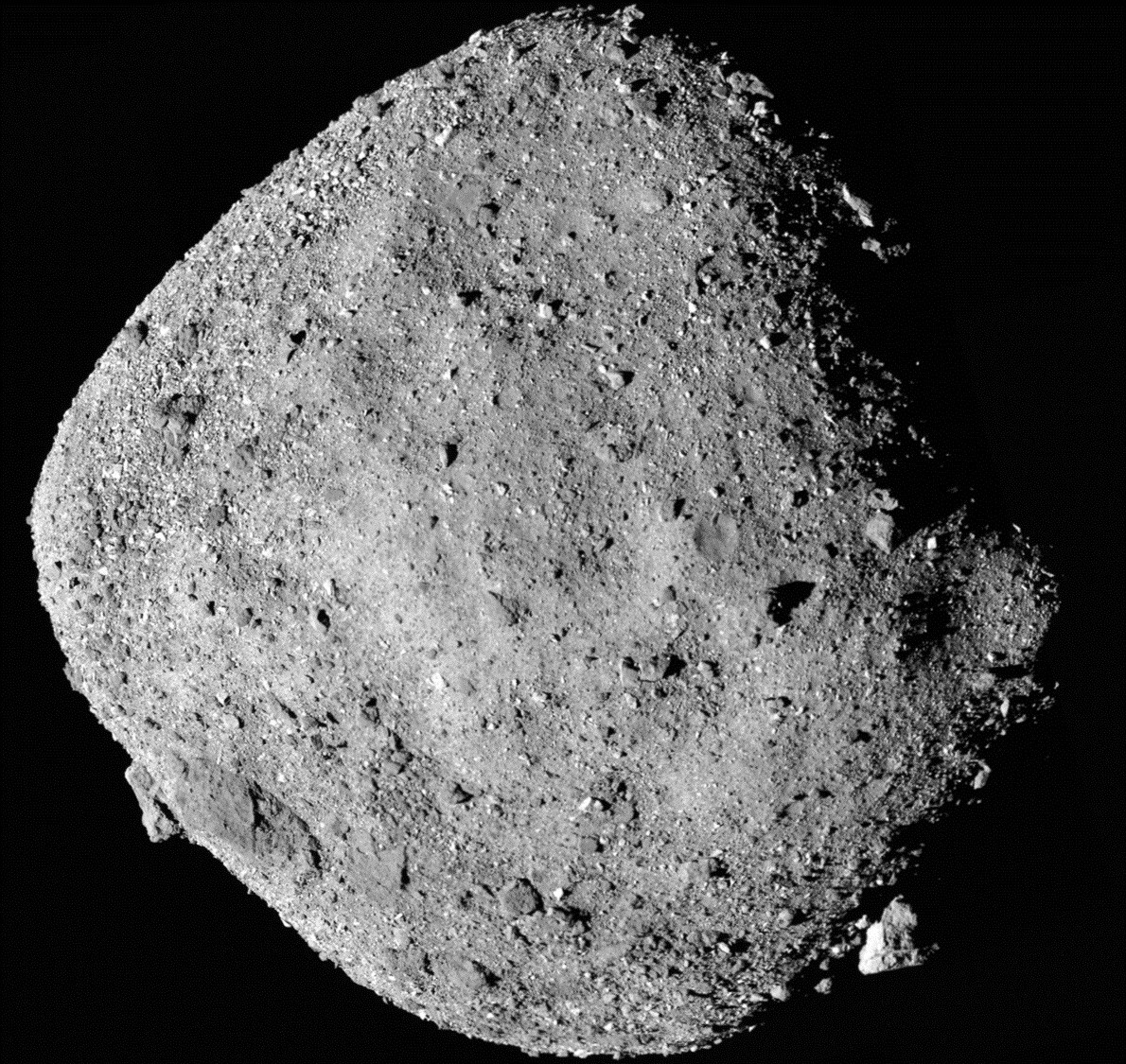
THOUSAND OAKS, Calif.--(BUSINESS WIRE)--Tomorrow, October 20, is an exciting day for planetary science. NASA’s ambitious OSIRIS-REx asteroid rendezvous mission will attempt to sample the surface of asteroid Bennu to retrieve material that will be returned to Earth in September 2023. A decade of preparation on the ground led to a September 2016 launch and December 2018 arrival at the near-Earth asteroid Bennu. For the past 20 months, the spacecraft has studied Bennu to determine where to take the sample and how to do it safely. Teledyne Technologies Incorporated (NYSE:TDY) provided the digital “eyes” that are critical for the mission. These imaging technologies have operated flawlessly during the entire mission, taking visible images, measuring surface topology, and using visible-infrared spectroscopy to assess surface material composition.
OSIRIS-REx is an acronym that incorporates the mission’s major concepts and goals: Origins, Spectral Interpretation, Resource Identification, Security and Regolith Explorer. The mission is helping scientists investigate how planets formed and how life began, as well as improving our understanding of asteroids that could impact Earth.
Visible images of the asteroid are taken with Teledyne CCD image sensors.
Bennu has a much more hazardous landscape than anyone envisioned. The 500-meter wide asteroid (a bit larger than the 433-meter tall Empire State building in New York City) has very large boulders on its surface; the largest is 58 meters wide and 22 meters tall! Any sizable boulder could damage the spacecraft as it approaches the surface. A vital instrument on the spacecraft is the lidar system that measured Bennu in three dimensions (3-D) to 10 cm accuracy and the landing site to 1 cm accuracy. Teledyne provided the two lidars that are on the OSIRIS-REx spacecraft.
But where to sample? Site selection depends on the composition of the surface material. Chemical composition is determined by spectroscopy that spreads visible and infrared light into hundreds of colors. Since every element, molecule, and mineral has a unique spectral “fingerprint”, the spectrometer assessed surface composition so that the most scientifically valuable site will be sampled. Teledyne’s visible-infrared image sensor detected the light in the spectrograph.
“Teledyne is proud to be a partner in the OSIRIS-REx mission with several imaging and spectroscopy technologies provided by our Digital Imaging segment,” said Robert Mehrabian, Executive Chairman of Teledyne. “Our contribution to this mission exemplifies Teledyne’s broad commitment to exploration and discovery, from the ocean floor to deep space.”
More information on the instruments and Teledyne image sensor technology is provided in the following paragraphs.
- The OSIRIS-REx Camera Suite (OCAMS) consists of three cameras that imaged Bennu in visible light, mapping the entire asteroid to help determine where to sample. These imagers will record the sampling event during the critical touch-and-go maneuver. The OCAMS use Teledyne DALSA CCD image sensors (Waterloo, Ontario and Bromont, Quebec, Canada) designed to be sensitive to the low light levels at Bennu and impervious to space radiation. The OCAMS have provided context for the other instruments as well as characterization of the surface.
- The entire asteroid was mapped in 3-D with the OSIRIS-REx Laser Altimeter (OLA) which is a scanning LIDAR (Light Detection and Ranging) instrument for measuring the asteroid topography to an accuracy of one centimeter at the sample site, an accuracy that is vital for a successful sampling touch-and-go maneuver. The two LIDAR sensors in the OLA, which were developed by Teledyne Optech (Toronto, Canada), have been optimized for the different aspects of the mission – a high-power LIDAR for mapping at a distance of 0.6 to 4.7 miles and a low-power LIDAR for distances less than 0.6 miles. The LIDAR is also used to support navigation and gravity analysis.
- The OSIRIS-REx Visible and Infrared Spectrometer (OVIRS) measures visible and infrared light from Bennu, and is sensitive to wavelengths from the blue (0.4 micron wavelength) to the mid-infrared (4.3 microns). OVIRS measures the spectrum of the asteroid surface by splitting the light into its component wavelengths. The spectral maps of Bennu enabled scientists to determine the mineral and organic material content of the surface, data that was key to determine where to collect the sample that is brought back to Earth. The visible-infrared detector in OVIRS was provided by Teledyne Imaging Sensors (Camarillo, California) and is similar to the detectors used in NASA’s Orbiting Carbon Observatories that accurately monitor the carbon dioxide in the Earth’s atmosphere.
About Teledyne Technologies
Teledyne Technologies is a leading provider of sophisticated instrumentation, digital imaging products and software, aerospace and defense electronics, and engineered systems. Teledyne Technologies’ operations are primarily located in the United States, Canada, the United Kingdom, and Western and Northern Europe. For more information, visit Teledyne Technologies’ website at www.teledyne.com.
Contacts
Investor Contact:
Jason VanWees
(805)373-4542