Ross Prize Awarded to Cold Spring Harbor Laboratory Professor
Ross Prize Awarded to Cold Spring Harbor Laboratory Professor
Dr. Adrian R. Krainer, pioneer in neuromuscular disease treatment to be honored at June 8 symposium in New York City
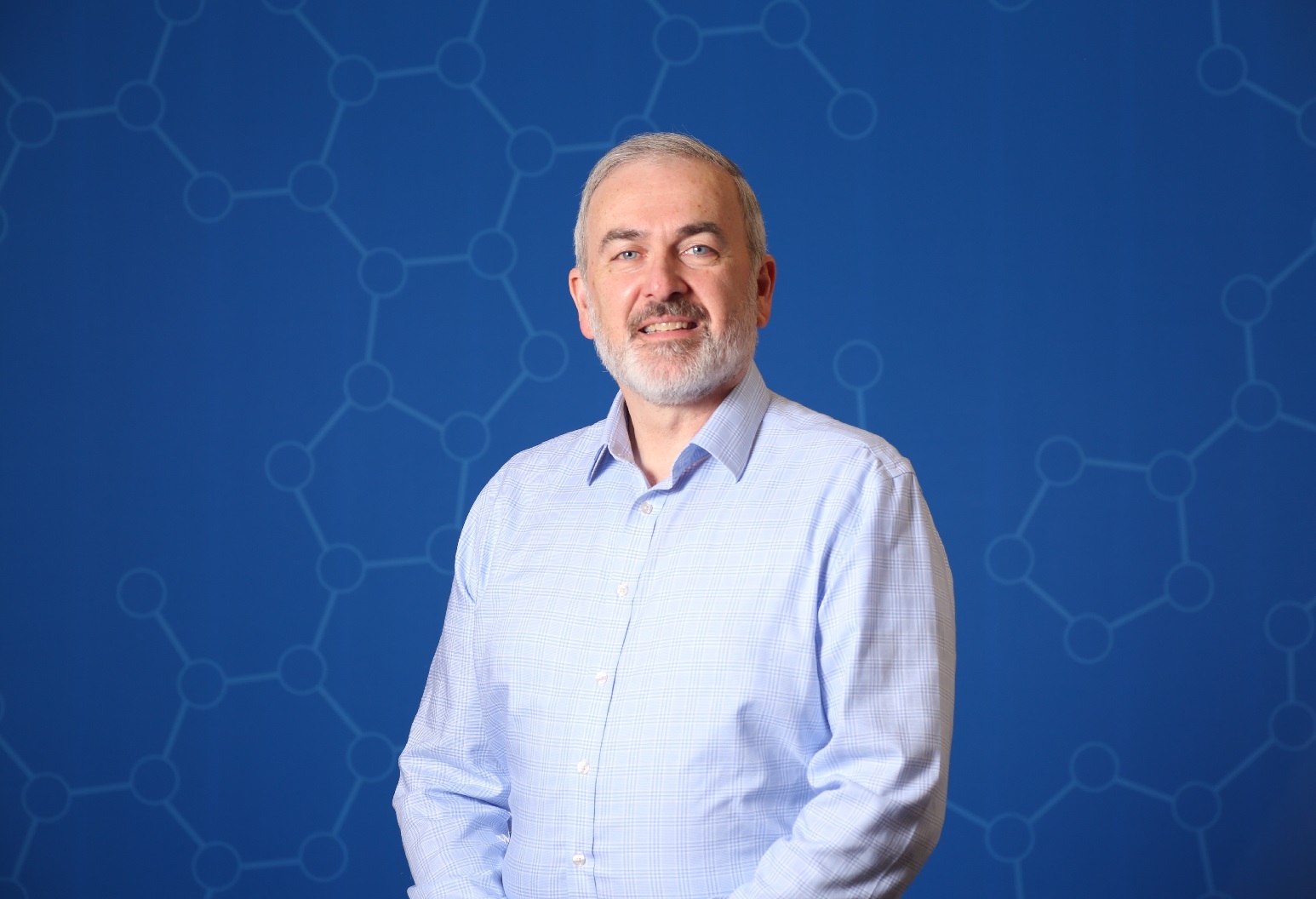
MANHASSET, N.Y.--(BUSINESS WIRE)--The Feinstein Institutes for Medical Research has selected Adrian R. Krainer, PhD, St. Giles Foundation Professor at Cold Spring Harbor Laboratory, as the eighth awardee of the Ross Prize in Molecular Medicine. The prize is awarded annually through the Feinstein Institutes’ peer-reviewed, open-access journal, Molecular Medicine, and includes a $50,000 award that will be presented to Dr. Krainer on June 8 at the New York Academy of Sciences (NYAS) in Manhattan.
The Ross Prize is made possible by the generosity of Feinstein Institutes board members Robin and Jack Ross. It is awarded to scientists who have made a demonstrable impact in the understanding of human disease pathogenesis and/or treatment and who hold significant promise for making even greater contributions to the general field of molecular medicine. Dr. Krainer is being recognized for his pioneering work in introducing antisense therapy in clinical use, and for its successful application to spinal muscular atrophy.
Dr. Krainer studies the mechanisms of RNA splicing, ways in which they go awry in disease, and the means by which faulty splicing can be corrected. Dr. Krainer’s research is focused in part on genes associated with spinal muscular atrophy (SMA), a neuromuscular disease that has been the leading genetic cause of death in infants. He worked on antisense approaches to correct mis-splicing, and in collaboration with Ionis Pharmaceuticals and Biogen, developed the first treatment for pediatric and adult SMA.
“I am very grateful and honored to receive this year’s Ross Prize,” said Dr. Krainer. “My trainees and I feel privileged that our research has helped SMA patients. In keeping with the intent of this generous award, we will redouble our efforts to explore new ways to address unmet medical needs.”
After a brief award presentation, a symposium will be held during which Dr. Krainer will discuss his research along with Michelle Hastings, PhD, director at Rosalind Franklin University of Medicine and Science, Edward Kaye, MD, CEO of Stoke Therapeutics, and Timothy Yu, MD, PhD, attending physician and assistant professor at Boston Children’s Hospital, who will discuss their latest research.
“Dr. Krainer’s remarkable discoveries have revolutionized the treatment of a devastating, crippling pediatric illness. His inventions are already giving children the ability to crawl, walk, and live their lives,” said Kevin J. Tracey, MD, president and CEO of the Feinstein Institutes and editor emeritus of Molecular Medicine.
Dr. Krainer and his lab have also worked to shed light on the role of splicing proteins in cancer, particularly breast cancer, and on fundamental mechanisms of splicing and its regulation.
Past recipients of the Ross Prize are: Daniel Kastner, MD, PhD, the National Institutes of Health’s (NIH) National Human Genome Research Institute (NHGRI) scientific director; Huda Y. Zoghbi, MD, professor, Departments of Pediatrics, Molecular and Human Genetics, Neurology and Neuroscience at Baylor College of Medicine; Jeffrey V. Ravetch, MD, PhD, the Theresa and Eugene M. Lang Professor and head of the Leonard Wagner Laboratory of Molecular Genetics and Immunology at The Rockefeller University; Charles N. Serhan, PhD, DSc, director of the Center for Experimental Therapeutics and Reperfusion Injury at Brigham and Women’s Hospital, the Simon Gelman Professor of Anaesthesia at Harvard Medical School and professor at Harvard School of Dental Medicine; Lewis C. Cantley, PhD, the Meyer Director of the Sandra and Edward Meyer Cancer Center at Weill Cornell Medical College and New York-Presbyterian Hospital; John J. O’Shea, MD, scientific director at the National Institute of Arthritis and Musculoskeletal and Skin Diseases (NIAMS); and Dan R. Littman, MD, PhD, the Helen L. and Martin S. Kimmel Professor of Molecular Immunology in the Skirball Institute of Biomolecular Medicine at New York University School of Medicine.
To learn more about the Ross Prize celebration and symposium, and to register for the event, please visit http://www.nyas.org/RossPrize2020. If you would like to nominate a candidate for the 2021 Ross Prize, please make a submission here.
About the Feinstein Institutes
The Feinstein Institutes for Medical Research is the research arm of Northwell Health, the largest health care provider and private employer in New York State. Home to 50 research labs, 2,500 clinical research studies and 5,000 researchers and staff, the Feinstein Institutes raises the standard of medical innovation through its five institutes of behavioral science, bioelectronic medicine, cancer, health innovations and outcomes, and molecular medicine. We make breakthroughs in genetics, oncology, brain research, mental health, autoimmunity, and are the global scientific leader in bioelectronic medicine – a new field of science that has the potential to revolutionize medicine. For more information about how we produce knowledge to cure disease, visit feinstein.northwell.edu.
About Molecular Medicine
Molecular Medicine sits at the forefront of its field, rapidly disseminating discovery in the genetic, molecular, and cellular basis of physiology and disease across a broad range of specialties. With over two decades of experience publishing to a multidisciplinary audience, and continually celebrating innovation through the ‘Ross Prize in Molecular Medicine’ and ‘Anthony Cerami Award in Translational Medicine’, the journal strives towards the design of better molecular tools for disease diagnosis, treatment, and prevention. Molecular Medicine is published by BMC, part of Springer/Nature, in partnership with The Feinstein Institutes for Medical Research.
About the New York Academy of Sciences
The New York Academy of Sciences is an independent, not-for-profit organization that since 1817 has been committed to advancing science, technology, and society worldwide. With more than 20,000 members in 100 countries around the world, the Academy is creating a global community of science for the benefit of humanity. The Academy's core mission is to advance scientific knowledge, positively impact the major global challenges of society with science-based solutions, and increase the number of scientifically informed individuals in society at large. Please visit us online at www.nyas.org.
About Cold Spring Harbor Laboratory
Founded in 1890, Cold Spring Harbor Laboratory (CSHL) has shaped contemporary biomedical research and education with programs in cancer, neuroscience, plant biology and quantitative biology. CSHL has been a National Cancer Institute designated Cancer Center since 1987. Home to eight Nobel Prize winners, the private, not-for-profit Laboratory employs 1,100 people, including 600 scientists, students and technicians. The Meetings & Courses Program annually hosts more than 12,000 scientists. The Laboratory’s education arm also includes an academic publishing house, a graduate school and the DNA Learning Center with programs for middle and high school students and teachers. For more information, visit www.cshl.edu
Contacts
Matthew Libassi
516-465-8325
mlibassi@northwell.edu