Press Release Quotes: Best Practices for Writing Quotes Journalists Use
Every press release tells a story, and the quote is where that story gains a human voice. A press release quote is a short, attributed statement from an executive, customer, partner, or expert that adds perspective and helps explain why the announcement matters. A thoughtful quote can reinforce key messages, provide context, and give journalists a statement they can easily reference. It also increasingly serves as source material for search engines and AI-powered experiences.
Whether you're announcing a product launch, earnings results, executive appointment, or partnership, writing an effective quote takes more than adding a few words from an executive.
From crafting a natural-sounding quote to navigating review and maximizing its reach, this article covers the key considerations for writing effective press release quotes.
Frequently Asked Questions About Press Release Quotes:
- What is the Purpose of a Press Release Quote?
- How Do You Write a Press Release Quote That Sounds Natural?
- How Long Should a Press Release Quote Be?
- How Should You Format and Attribute a Press Release Quote?
- Where Do You Place a Quote in Your Press Release?
- How Should You Use Quotes in Regulated News Releases?
- How Can You Streamline the Quote Review Process?
- How Can Quotes Extend the Reach of Your News?
- A Quick Quote Review Checklist
- Other Common Questions About Press Release Quotes
What Is the Purpose of a Press Release Quote?
A quote brings something to a press release that facts alone cannot. It adds a human perspective, provides context, and helps explain why the announcement matters. While the body of the release delivers the who, what, when, and where, the quote offers insight, perspective, or a point of view.
A simple way to evaluate a quote is to remove it from the release and read the announcement again. If the release still communicates everything it needs to, the quote may not be adding enough value. A strong quote should contribute something the facts alone cannot.
How Do You Write a Press Release Quote That Sounds Natural?
One of the most common pieces of feedback from journalists is that press release quotes often sound overly scripted or promotional. The strongest quotes sound like something the speaker would naturally say in an interview or conversation.
When drafting a quote:
- Use plain language. Replace generic phrases like "We are thrilled to announce" or "innovative solution" with language that is more specific and meaningful.
- Add perspective. Use the quote to explain why the news matters, share an insight, or communicate a point of view that expands on the announcement.
| INSTEAD OF | TRY THIS |
| "We are excited to announce this groundbreaking new feature, which offers our valued customers a robust suite of capabilities designed to drive efficiency across their organizations." | "This does in one click what used to take our customers an afternoon." |
The second example is shorter, more specific, and gives readers a clearer understanding of the value behind the announcement.

How Long Should a Press Release Quote Be?
Shorter quotes are easier for journalists to reference, easier for readers to understand, and more likely to retain their impact across different channels. While there is no required length, most effective press release quotes are concise, often one or two sentences that communicate a single clear idea.
A good rule of thumb:
- Aim for one strong thought rather than multiple messages.
- Keep quotes focused and avoid repeating information already covered in the release.
- If a quote runs longer than a few sentences, look for opportunities to simplify, split, or remove less essential language.
If you need to include additional context, consider leading with a concise, memorable statement followed by a second sentence that expands on the idea. This gives journalists flexibility to use the portion that best fits their story.
The same principle applies to the number of quotes in a release. One or two well-crafted quotes that each provide a distinct perspective are often more effective than several quotes repeating the same message. If multiple quotes make the same point, consider consolidating them into the strongest version.
How Should You Format and Attribute a Press Release Quote?
A well-written quote is only effective if it's easy to read, attribute, and reuse. Consistent formatting helps journalists quickly identify key statements while also improving readability across digital channels.
Follow these best practices when formatting quotes in a press release.
Use Proper Punctuation
In AP style, commas and periods belong inside the closing quotation mark.
"This changes how the industry works," said the CEO.
Include Full Attribution on First Reference
On first reference, attribute the quote using the speaker's full name, title, and company. On subsequent references, use only the speaker's last name: Smith said.
"We built this for small teams," said Sara Smith, chief executive officer of North Technologies.
Keep Attribution Simple
When a title is especially long, placing the attribution before the title often improves readability. Use said as the attribution verb whenever possible. It's familiar, neutral, and keeps the focus on the speaker rather than the attribution.
"Our newest release gives small teams more time to focus on their customers," said Michael Jones, chief technology officer and president of global operations at North Technologies.
Format for Readability
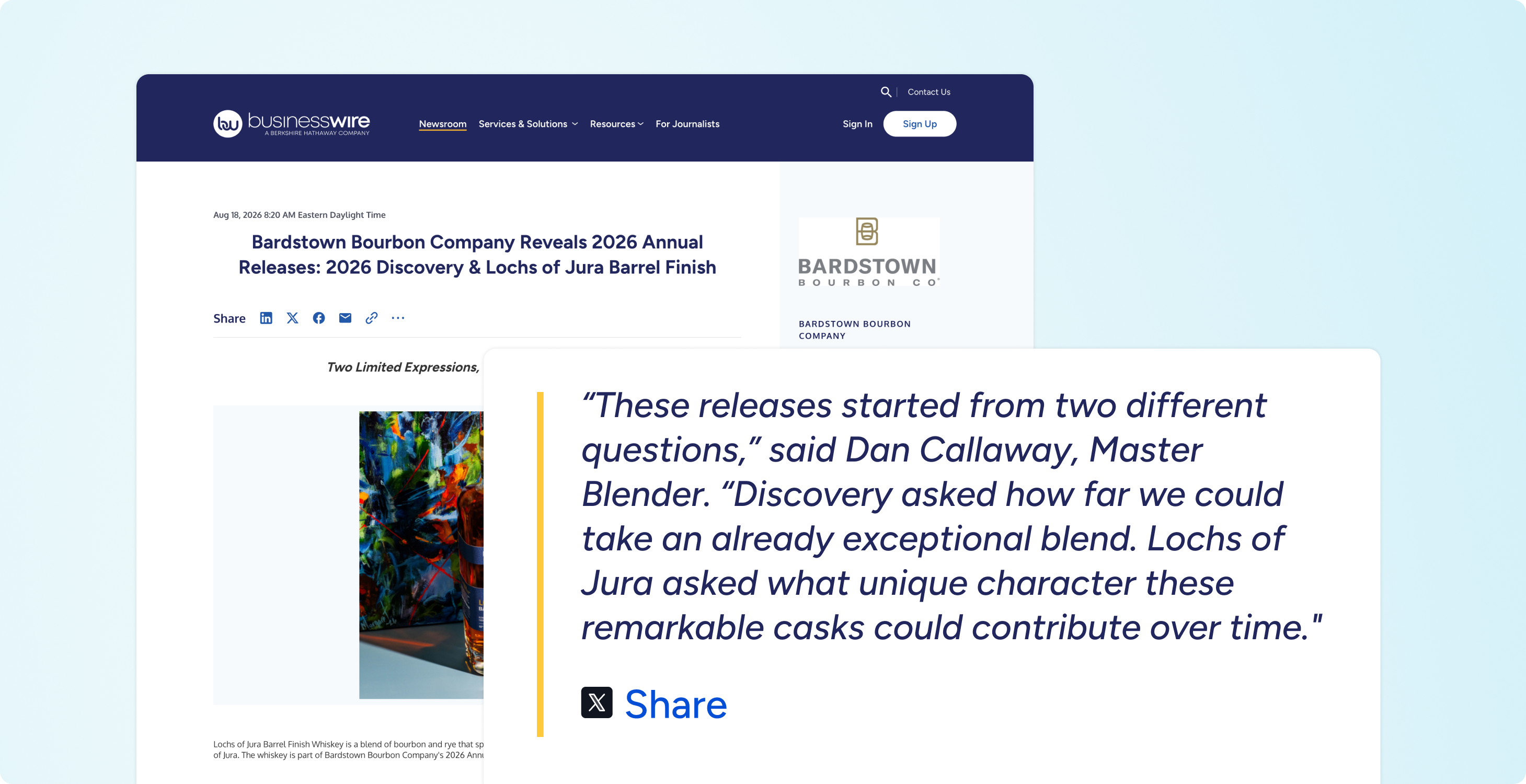
Quotes should appear in regular text with standard quotation marks, not italics.
If a quote contains multiple ideas, consider breaking it into two shorter statements with the attribution between them. For longer quotations, use paragraph breaks or block quote formatting when appropriate to improve readability.
"This is the biggest change to the product in five years," said Smith. "It came directly from what customers told us they were missing."
Keep Quotes as Text
Always include quotes as live text within the press release rather than embedding them in an image. Text-based quotes are easier for journalists to copy, accessible to screen readers, and more easily understood by search engines and AI platforms. If you create quote graphics for social media, include the full quote as text in the release as well.
Clear formatting doesn't just improve the reading experience; it also makes your content easier to scan, reference, and surface across the channels where your news is discovered.
Where Do You Place a Quote in Your Press Release?
The best location for a quote depends on the story you're telling. Place it where it adds the most value and helps reinforce the overall message.
Near the Beginning
For major announcements, such as mergers and acquisitions, executive appointments, significant partnerships, or product launches, a quote near the top of the release can help establish why the news matters and set the tone for the announcement.
Within the Body
Many press releases place the quote after the key facts have been introduced. By this point, readers understand the announcement, and the quote provides additional perspective, context, or insight.
Near the End
A closing quote works well when you want to reinforce a long-term vision, discuss what's next, or leave readers with a broader takeaway.
Most press releases only need one or two quotes. Focus on placing each quote where it strengthens the story rather than repeating information already covered elsewhere in the release.
How Should You Use Quotes in Regulated News Releases?
Press releases covering earnings, mergers and acquisitions, or other material disclosures require additional care. In these cases, quotes should balance authenticity with accuracy and regulatory compliance.
Keep these best practices in mind:
- Be thoughtful with forward-looking statements. Quotes discussing future performance, expectations, or projections should be reviewed carefully and accompanied by appropriate safe harbor language when applicable.
- Attribute material statements appropriately. Financial and regulatory announcements should generally be attributed to an authorized executive, such as the CEO or CFO.
- Write with the review process in mind. Clear, accurate, and measured language is more likely to move efficiently through legal and compliance review while preserving the speaker's intended voice.
Because disclosure requirements vary by company and jurisdiction, material announcements should always be reviewed by your legal and investor relations teams before distribution.
This information is provided for educational purposes and should not be considered legal advice.

How Can You Streamline the Quote Review Process?
Even a strong quote can change significantly during the review process. Input from executives, communications teams, legal, and other stakeholders is valuable, but multiple rounds of edits can sometimes make a quote longer, more formal, or less conversational.
These practices can help preserve clarity while moving efficiently through approvals.
Draft in the Speaker's Voice
Write the quote the way the executive would naturally communicate. Quotes that sound authentic are often easier to approve because they already reflect the speaker's style and perspective.
Offer Options
When appropriate, provide both a concise version and a slightly longer alternative. Giving reviewers a choice can make it easier to reach consensus while preserving the core message.
Explain the Purpose
Remind reviewers that the goal of a quote is to add perspective, not repeat the facts already covered in the release. Concise, meaningful quotes are easier for journalists to reference and easier for readers to understand.
Finalize Before Publishing
Once a quote has been reviewed and approved, avoid making additional changes unless necessary. Since quotes are attributed to a specific individual, accuracy and consistency are essential.

How Can Quotes Extend the Reach of Your News?
A press release reaches far beyond a journalist's inbox. Once published, it may be syndicated across news outlets, indexed by search engines, and referenced by AI-powered search and answer engines.
That's why every quote should be able to stand on its own. A clear, self-contained statement is easier for journalists to reference, easier for readers to understand, and more likely to retain its meaning wherever your news appears.
Whenever possible, write quotes that communicate a complete thought without relying on the surrounding paragraph for context. This improves readability and helps ensure the message remains clear across news stories, search results, and AI-generated summaries.
The same qualities that make a quote useful for journalists—clarity, specificity, and authenticity—also help it perform across today's digital discovery experiences.
A Quick Quote Review Checklist
Before publishing a quote, use these questions to make sure it adds value to your release:
- Does the quote add something new? If the release would say the same thing without it, consider revising the message.
- Is it concise and focused? Shorter quotes are often easier to understand and reference. Remove unnecessary words or split longer thoughts into separate statements.
- Does it sound natural? Read the quote aloud. If it doesn't sound like something the speaker would actually say, adjust the language.
- Can it stand on its own? A strong quote should communicate a complete thought without relying on the surrounding text for context.
- Is it formatted and attributed correctly? Confirm the speaker's full name, title, and company are included on first reference, and that punctuation follows standard style guidelines.
A strong quote needs to be clear, authentic, and meaningful, giving your audience a reason to pay attention.
Extend the Reach of Your News
Writing a strong quote is one part of creating a press release that delivers impact. Business Wire helps organizations share their news with global audiences through trusted distribution, expert editorial support, and features designed to improve visibility and engagement.
In addition to including quotes within the body of a release, Business Wire customers can highlight key messages through features like the Release Summary and Callout Feature. Available at no additional cost, these structured content elements help readers quickly understand the most important information in an announcement while making content easier for journalists, search engines, and AI-powered platforms to identify and reference.
Clear messaging, accurate attribution, and structured content all work together to help your news reach the audiences and platforms that matter.
Other Common Questions About Press Release Quotes
What is a quote in a press release?
A quote is a short, attributed statement from someone connected to the announcement, such as an executive, customer, partner, or industry expert. Quotes add perspective, provide a human voice, and help explain why the news matters.
Does every press release need a quote?
Not necessarily. A quote should add perspective or insight beyond the facts in the release. If it does not contribute something meaningful, the announcement may be stronger without one.
How do you write a good quote for a press release?
A good press release quote adds perspective beyond the facts, sounds natural, and communicates a clear point of view. Effective quotes avoid generic language, provide meaningful context, and are written in a way that can stand on their own.
How many quotes should a press release have?
Most press releases include one or two quotes. Include additional quotes only when they provide a distinct perspective or add meaningful context to the announcement.
Where should a quote go in a press release?
Quote placement depends on the story. Quotes can appear near the beginning to introduce the significance of major news, in the body to add context, or near the end to reinforce a broader vision or next step.
Are press release quotes italicized?
No. In AP style, quotes should appear in regular text within double quotation marks, not italics.
Download the Quote Toolkit Explore More Business Wire Features