As Healthcare Evolves, KI Highlights Four Considerations Shaping the Future of Healthcare Design
As Healthcare Evolves, KI Highlights Four Considerations Shaping the Future of Healthcare Design
Conversations at Healthcare Design Conference + Expo 2026 highlight the growing importance of movement, adaptability, evolving care models, and human-centered design in preparing healthcare environments for the future.
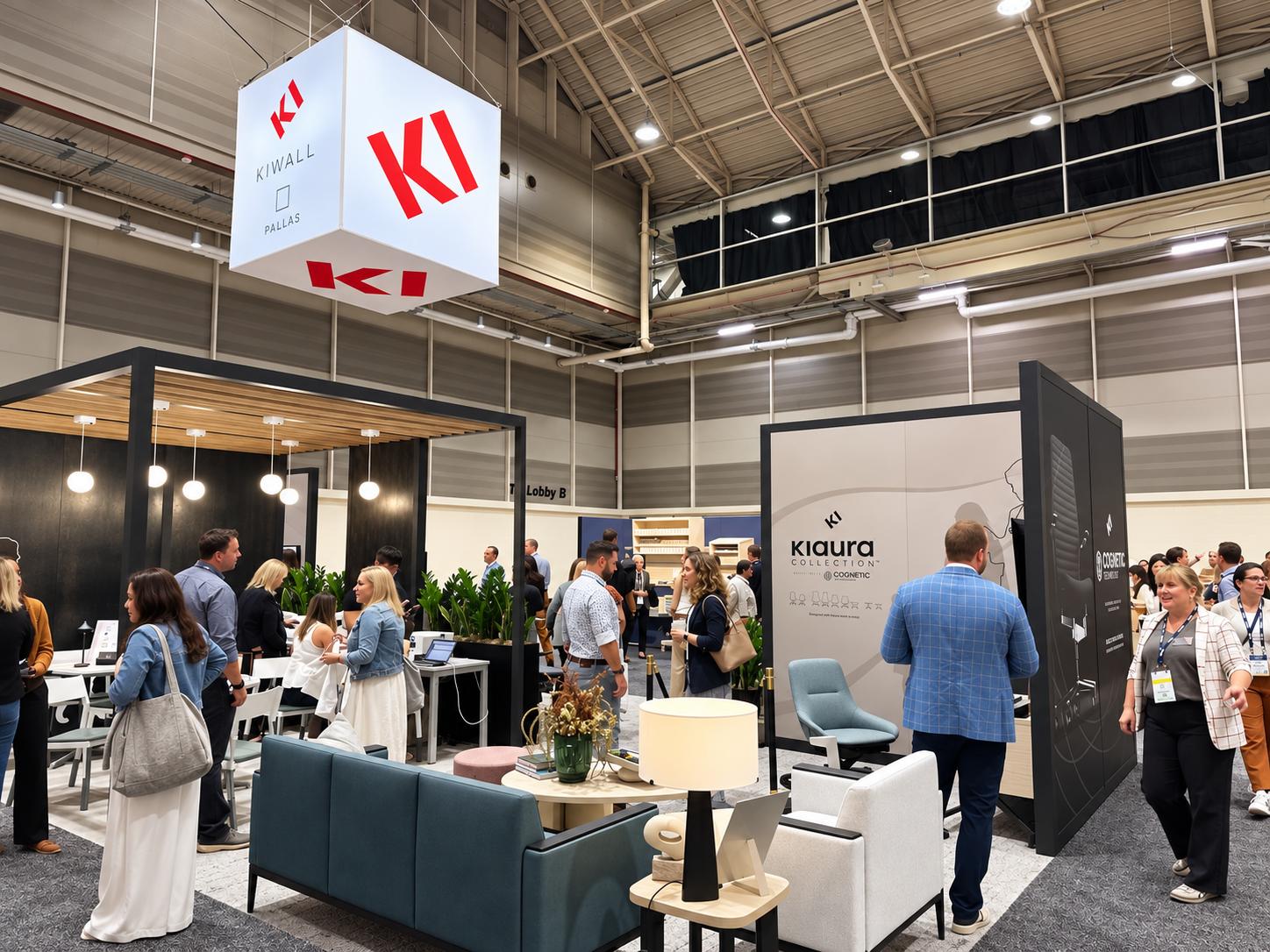
GREEN BAY, Wis.--(BUSINESS WIRE)--Healthcare environments are being asked to support increasingly complex needs as care delivery models, technology, workforce expectations, and patient expectations continue to evolve. At Healthcare Design Conference + Expo 2026, conversations with healthcare architects, interior designers, and industry leaders reinforced several considerations that KI, KI Wall, and Pallas Textiles brought to the show: the importance of movement, the need for adaptable environments, and the role restoration and materiality can play in the experience of care.
As healthcare delivery shifts and emerging technologies reshape how care is provided, these conversations also underscored a growing challenge: designing spaces that meet today's needs while remaining responsive to changes that may be difficult to predict even five years from now.
Together, these perspectives point toward a more intentional approach to healthcare design, one that considers how the physical environment can support the people who move, heal, work, recover, and connect within it.
1. Human performance includes more than the patient
Patients, families, clinicians, caregivers, and staff experience healthcare environments, each with different physical, cognitive, and emotional needs. This broader perspective encourages designers to think beyond the intended function of a room and consider how spaces support the people who use them throughout the care journey, which is a notable shift from restorative to predictive design.
“Rather than focusing solely on spaces where patients and caregivers can recover from stress, designers are exploring how thoughtful planning can prevent unnecessary stress in the first place,” said Trish Fedel, director of healthcare markets for KI. “Intuitive wayfinding, sensory considerations, reduced cognitive demands, and environments that anticipate human needs can contribute to a more supportive experience of care.”
The Kiaura Collection™, built with Cognetic Technology™, designed and invented by Aaron DeJule, brings movement into that conversation by supporting responsive movement across a range of seated experiences, from work and collaboration to care and respite.
This approach received significant industry recognition at HCD Expo, where Kiaura and Cognetic Technology earned 10 Nightingale Awards, including Best of Competition for Kiaura and Best of Innovation for Cognetic Technology. These honors underscore the growing importance of movement-centered design and its potential to support comfort and human performance across healthcare environments.
2. Adaptability is becoming a long-term value proposition
As healthcare delivery continues to shift from traditional inpatient environments toward outpatient and ambulatory care settings, the spaces needed to support care are changing alongside it. Healthcare organizations must consider not only where care happens today, but also how evolving treatment models, patient expectations, and operational requirements may influence their facilities in the years ahead.
Healthcare facilities cannot always stop operations when spaces need to change. As organizations renovate existing facilities, expand outpatient services, and adapt to changing operational models, designers are increasingly considering how environments can be modified without requiring major reconstruction or prolonged disruption.
That makes adaptability more than a design preference. It is becoming a long-term planning strategy.
“Healthcare organizations don't necessarily need us to predict exactly what their buildings will look like 10 years from now,” said Ryan Usiak, vice president of sales and operations for KI Wall. “They need environments that can respond when something changes. That's a different way of thinking about future-proofing.”
KI Wall's modular architectural solutions address that challenge by giving designers a way to consider future reconfiguration earlier in the planning process, helping organizations plan for change while maintaining the functionality and performance their spaces require today.
3. Materiality shapes how healthcare environments feel
Healthcare environments demand cleanability, durability, safety, and performance, but those requirements don't have to come at the expense of the human experience. Color, pattern, texture, and material selection can contribute to environments that feel comfortable, welcoming, and restorative when applied intentionally.
Pallas Textiles’ work in healthcare demonstrates the role textiles can play in that balance: creating visual and tactile interest while meeting the performance demands of commercial environments.
“Healthcare environments deserve the same level of design intention and consideration as any other space,” said Dean Lindsley, vice president at Pallas Textiles. “Color, pattern, and texture have the power to transform the experience of a space, bringing warmth, character, and creative expression to healthcare environments. Thoughtfully designed textiles unite design possibilities with the performance these environments demand.”
4. Designing for the unknown may be more valuable than predicting it
Across these conversations, one common theme emerged: healthcare designers are increasingly being asked to create environments that can accommodate uncertainty.
Artificial intelligence, emerging medical technologies, and changing models of care are accelerating that challenge. As these innovations influence how healthcare professionals work, how patients receive treatment, and how organizations deliver services, the physical spaces supporting those activities must be prepared to evolve as well.
“The care environments being designed today may look very different from those healthcare organizations will need just five years from now,” said Fedel. “As AI and technology continue to reshape care delivery, the industry is placing greater emphasis on designing spaces that can adapt to future needs, not just current requirements.”
The most resilient environments may therefore be those designed with enough flexibility to respond rather than those designed around a single prediction of what healthcare will look like years from now.
That requires greater collaboration among architects, interior designers, manufacturers, facilities teams, and healthcare leaders from the beginning of a project, with an emphasis on creating environments that can accommodate new technologies, evolving workflows, and changing human needs.
Designing the healthcare experience intentionally
The conversations at HCD Expo 2026 reinforced that high-performing healthcare environments are not created through any one product or design decision. Rather, they emerge when movement, adaptability, restoration, and materiality are considered together, and when the needs of patients, families, caregivers, and staff are part of the conversation from the beginning.
“Healthcare design is ultimately about people,” said Fedel. “Furniture, architecture, and materials are tools. Our opportunity is to bring those elements together intentionally to create environments that support how people move, heal, recover, and connect.”
As healthcare evolves, KI, KI Wall, and Pallas Textiles will keep exploring how thoughtful design can anticipate human needs, adapt to changing care models, and create environments where every interaction supports a more supportive healthcare experience.
Additional insights and downloadable resources from KI regarding healthcare design and the recent expo can be found at ki.com/healthcaredesign.
ABOUT KI
KI manufactures innovative furniture for education, healthcare, government, and corporate markets. The employee-owned company is headquartered in Green Bay, Wisconsin, with sales and manufacturing facilities worldwide. KI tailors products and service solutions to the specific needs of each customer through its unique design and manufacturing philosophy. For more information, visit ki.com.
ABOUT KI WALL
KI Wall is dedicated to transforming spaces with a seamless blend of elegance and functionality. With a focus on style that can be seen, felt, heard, and experienced, KI Wall fulfills its purpose by bringing design visions to life, reimagining every detail to advance the spaces where people work, learn, and heal. It’s walls, reimagined. For more information, visit kiwall.com.
ABOUT PALLAS TEXTILES
Pallas Textiles is a testament to artistry, innovation, and exquisite craftsmanship. With unwavering dedication to quality, we meticulously design textiles that capture timeless beauty. Our upholsteries, panel fabrics, and privacy curtains blend intricate textures, refined patterns, and nuanced details to create effortlessly sophisticated interiors. Rooted in tradition yet ever evolving, our textiles breathe life into spaces, transforming them with depth, elegance, and enduring inspiration. Pallas Textiles is headquartered in Green Bay, Wis. For more information, visit pallastextiles.com.
Contacts
MEDIA CONTACT
Stephanie Smith
262-290-7745
ssmith@n-s.com