Future Health Convenes Global Health Leaders at UNGA to Advance Health System Transformation at Scale
Future Health Convenes Global Health Leaders at UNGA to Advance Health System Transformation at Scale
High-level dialogue explored how predictive and preventive health systems can deliver better health outcomes worldwide.
- Ministers, senior government representatives, and health leaders from 15 countries shared approaches to building health systems that predict risk, prevent disease, and support earlier intervention at population scale.
- Participants identified population-level data, financing, and delivery capacity as essential to turning earlier insight into action.
- Trust, community reach, and inclusive design were recognised as critical to ensuring that earlier insight and intervention are delivered effectively and equitably
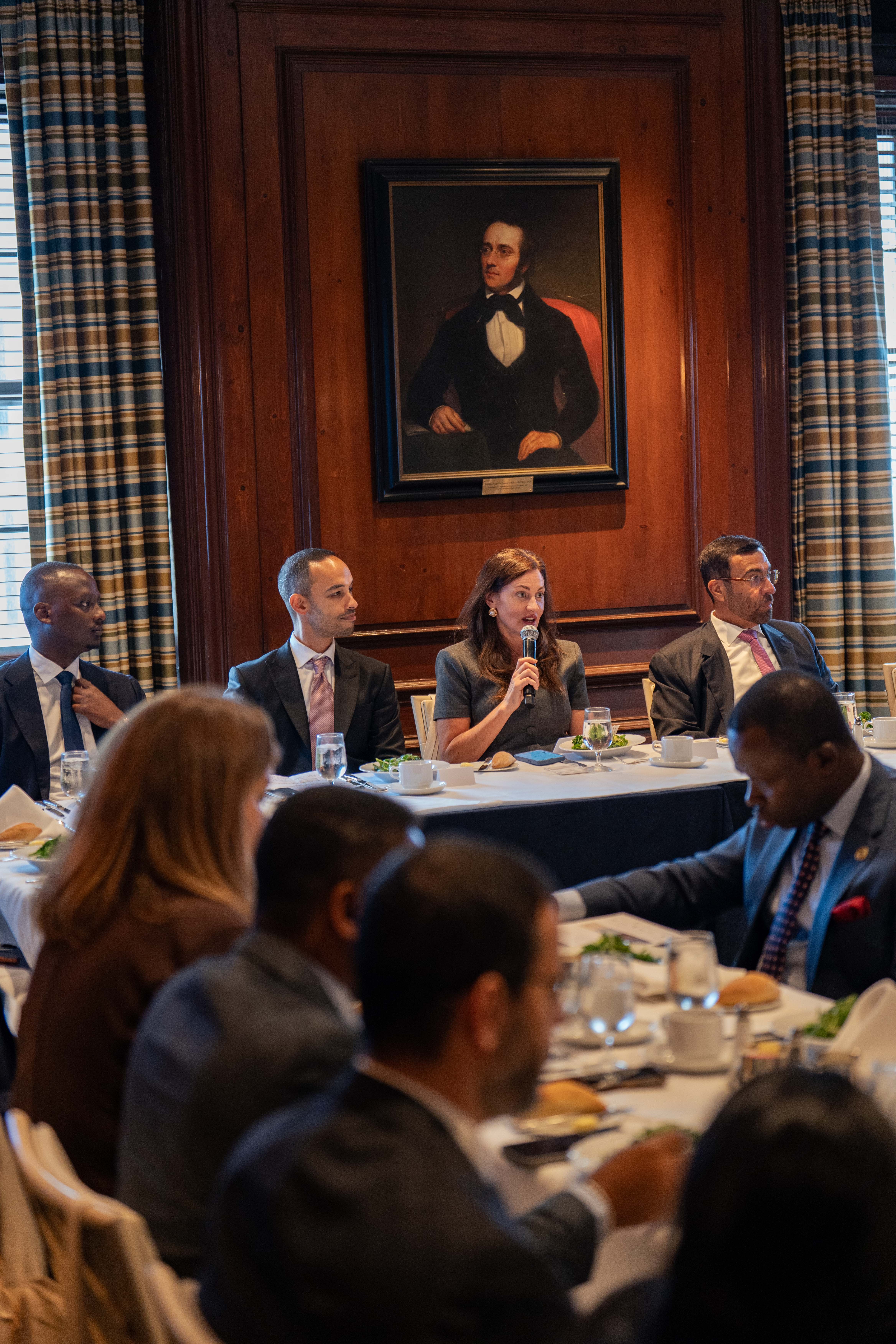
ABU DHABI, United Arab Emirates--(BUSINESS WIRE)--Future Health – A Global Initiative by Abu Dhabi convened Ministers, senior government representatives, and global health leaders in New York on the sidelines of the 81st Session of the United Nations General Assembly (UNGA 81). The high-level dialogue set out practical priorities for moving health systems from reactive treatment towards prediction, prevention, and earlier intervention.
Chaired by H.E. Ahmed Al Sayegh, Minister of Health and Prevention of the UAE, the dialogue brought together participants from Angola, Brazil, Ethiopia, Finland, Guyana, Indonesia, Madagascar, Mali, Nigeria, Rwanda, Sweden, UAE, UK, Tanzania and the USA.
Share
Chaired by H.E. Ahmed Al Sayegh, Minister of Health and Prevention of the United Arab Emirates, the dialogue brought together participants from Angola, Brazil, Ethiopia, Finland, Guyana, Indonesia, Madagascar, Mali, Nigeria, Rwanda, Sweden, the United Arab Emirates, the United Kingdom, the United Republic of Tanzania and the United States of America.
Across different national contexts, four connected requirements emerged: population data to identify risk earlier; financing and incentives for prevention; delivery capacity to turn insight into timely services; and trusted, inclusive systems that reach people where they live. Prevention was also recognised as an investment in human capital.
Examples included national life-course screening; integrated demographic, clinical, and genomic data; community health workers supported by digital records; decentralised care; and policy action on nutrition, affordability, and healthier behaviour.
FROM EARLIER INSIGHT TO PRACTICAL ACTION
H.E. Ahmed Al Sayegh, Minister of Health and Prevention of the United Arab Emirates, said: “Investing in prevention is an investment in people, and in the future of our societies. As science gives us a better understanding of risk, we must ensure that knowledge leads to earlier action and better health. The UAE remains committed to working with international partners, sharing experience, and strengthening cooperation to build health systems that ensure the health of our populations well into the future.”
Held under the theme ‘Redesigning Health Systems for Prediction, Prevention and Population Health Outcomes’, the discussion examined how health systems can best adopt scientific advances and move from pilots to population-scale delivery.
The dialogue reinforced that prevention depends on the environments in which people live and work, as well as trusted community infrastructure that supports everyday prevention and outbreak response. It also identified screening, referral, affordability and physical accessibility as barriers that must be addressed to ensure that earlier intervention benefits populations equitably.
ABU DHABI CONNECTS EARLIER INSIGHT WITH ACTION BEYOND HEALTHCARE
Representing the Department of Health – Abu Dhabi, H.E Dr Ahmed AlKhazraji, Executive Director of Healthy Living, shared how the emirate is putting prevention into practice through its Healthy Living Strategy. Abu Dhabi is combining its health data and life sciences capabilities with cross-sector initiatives in the everyday settings that shape choices, including communities, workplaces and schools.
H.E. Dr Ahmed AlKhazraji said: “The ability to identify risk earlier is a major advance, but insight alone will not improve health. We need to act on the factors that influence health long before someone enters a clinic. In Abu Dhabi, that means working across government and with the private sector to make healthier choices more accessible, from the food people encounter in supermarkets and restaurants to the opportunities for children to eat well and be active at school. This is how prevention moves from ambition to delivery at population scale.”
Abu Dhabi’s approach is also featured in Future Health's latest white paper, The Future of Healthy Living: A $16.4 Trillion Opportunity, which draws on research showing that 19 of the 23 drivers shaping health sit outside the formal healthcare system. The paper sets out five-step framework governments can use to turn healthy living ambitions into coordinated action.
A YEAR-ROUND PLATFORM FOR GLOBAL HEALTH COLLABORATION
Moderated by Hadley Gamble, Chief International Anchor at IMI, the dialogue explored Future Health's 2026 theme, 'To Sense is to Predict'.
Future Health is a year-round global platform bringing together governments, innovators, researchers, and investors to help develop and scale health solutions. The UNGA dialogue forms part of its global programme of convenings.
H.E. Dr Ahmed AlKhazraji added: “We invite leaders from across the global health ecosystem to continue this conversation at the Abu Dhabi Future Health Summit from 20-22 October 2026.”
NOTE TO EDITORS:
Ministers and senior government representatives included:
H.E. Budi Gunadi Sadikin, Minister of Health of Indonesia; H.E. Frank Anthony, Minister of Health of Guyana; and H.E. Col. Assa Badiallo Touré, Minister of Health and Social Development of Mali. Other senior government representatives included H.E. Dr. Maha Barakat, Assistant Minister at the Ministry of Foreign Affairs, UAE; H.E. Dr Yvan Butera, Minister of State for Health of Rwanda; Dr. Carlos Alberto Pinto de Sousa, Secretary of State for Public Health of Angola; Laura Rissanen, State Secretary to the Minister of Social Security of Finland; Petra Noreback, State Secretary for Health and Social Affairs of Sweden; and Mr. Rabeson Christian, Director of Cabinet, Ministry of Health, Madagascar.
Senior representatives from international organisations and the wider health ecosystem included:
Hon. Dr. Zeyana Abdallah Hamid (MP), Vice Chairperson of the Parliamentary Standing Committee on Health and HIV/AIDS and Member of the Inter-Parliamentary Union (IPU); Dr. Jarbas Barbosa, Director of the Pan American Health Organization; Dr. Raji Tajudeen, Acting Deputy Director General of Africa CDC; Valerie Boulet, Chief Development Officer of the WHO Foundation; Dr. Ola Abualghaib, Director of the UN Global Disability Fund; Greg Kuzmak, Director, Health at the Rockefeller Foundation; Dr. Awele Elumelu, Chairperson of Avon Healthcare Limited; and Dr. Shamsheer Vayalil, Chairman and CEO, Burjeel Holdings, UAE, and Associate Partner of Future Health.
ABOUT FUTURE HEALTH – A GLOBAL INITIATIVE BY ABU DHABI
Future Health is a year-round platform for global collaboration and transformative health innovation, held under the patronage of His Highness Sheikh Khaled bin Mohamed bin Zayed Al Nahyan, Crown Prince of Abu Dhabi and Chairman of the Abu Dhabi Executive Council.
Bringing together health researchers, policymakers, business leaders, investors and entrepreneurs from across disciplines and geographies, Future Health drives collective action to strengthen health systems and unlock longer, healthier lives for all.
Through a year-round programme of research insights, publications, impact initiatives, Challenges, R&D funding, and cross-sector convenings, Future Health advances progress across four focus areas: longevity and precision medicine, health systems and sustainability, digital health and AI, and investment in life sciences.
Future Health is curated and convened by the Department of Health – Abu Dhabi and its Founding Partners: PureHealth, M42, Institute for Healthier Living Abu Dhabi, and Mubadala Bio. Mediclinic Middle East serves as Strategic Partner and Burjeel Holdings as Associate Partner.
For more information, visit www.futurehealthinitiative.ae and follow Future Health on: X, Instagram, LinkedIn and Facebook.
Contacts
For media inquiries, please contact media@futurehealthinitiative.ae