Omdia: Weak Smartphone Demand Drives Record Growth in Display Shipments to Refurbished Phone Market
Omdia: Weak Smartphone Demand Drives Record Growth in Display Shipments to Refurbished Phone Market
LONDON--(BUSINESS WIRE)--Display panel shipments into the refurbished smartphone market are growing rapidly as panel makers redirect excess capacity away from slowing demand from smartphone manufacturers, according to Omdia’s latest Smartphone Display Intelligence Service.
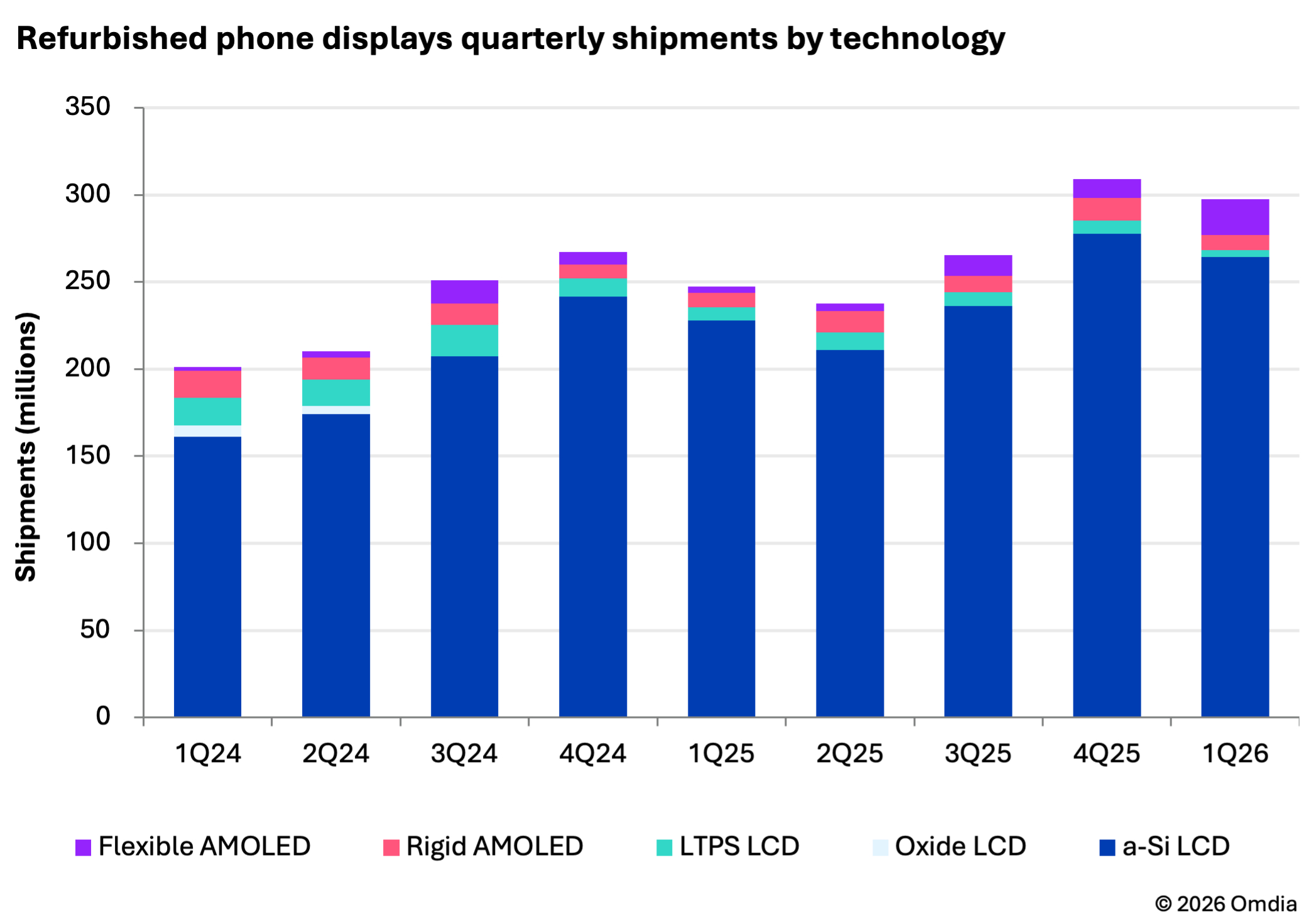
In the first quarter of 2026, display panel shipments into the refurbished smartphone market increased 20% year over year to 298 million units.
Share
Rising memory prices have prompted smartphone manufacturers to significantly reduce production plans, with Omdia forecasting demand for displays used in new smartphones will decline by 12% in 2026. At the same time, display panel shipments into the refurbished smartphone market continue to accelerate as suppliers seek alternative demand.
In the first quarter of 2026, display panel shipments into the refurbished smartphone market increased 20% year over year to 298 million units, surpassing display panel shipments to smartphone manufacturers, which totaled 289 million units during the same period.
The refurbished smartphone ecosystem includes display panels used for consumer repairs, professional refurbishment of recycled smartphones, and aftermarket replacement parts. While the complexity of the supply chain makes it difficult to measure final end demand precisely, the growth in panel shipments clearly reflects the rapid expansion of the refurbishment market.
The trend is being driven by both weaker demand for new smartphones and structural factors within the display industry. Panel manufacturing requires significant long-term investment, making it difficult for suppliers to quickly reduce production capacity when demand falls. Instead, panel makers are increasingly supplying displays into the refurbishment market to maintain factory utilization, absorb fixed costs, and reduce operational pressure.
“For panel makers, the refurbishment market acts like a reservoir that helps absorb fluctuations in demand from smartphone manufacturers, although no one knows exactly how large that reservoir is,” said Joy Guo, Senior Principal Analyst in Omdia’s Displays practice. “Higher memory prices have significantly reduced demand for both LCD and OLED displays from smartphone manufacturers, leading suppliers to redirect more panels into the refurbishment market. As a result, higher-quality OLED displays are becoming increasingly available for refurbished smartphones.”
The shift is particularly evident in OLED panels. In the first quarter of 2026, OLED accounted for 7% of display panel shipments into the refurbished smartphone market, up from 2% a year earlier, highlighting the increasing availability of premium replacement displays within the refurbishment ecosystem.
ABOUT OMDIA
Omdia, part of TechTarget, Inc. d/b/a Informa TechTarget (Nasdaq: TTGT), is a technology research and advisory group. Our deep knowledge of tech markets, grounded in real conversations with industry leaders and hundreds of thousands of data points, make our market intelligence our clients’ strategic advantage. From R&D to ROI, we identify the greatest opportunities and move the industry forward.
Contacts
Fasiha Khan: fasiha.khan@omdia.com
Eric Thoo: eric.thoo@omdia.com