Spectra Supercomputer at Sandia National Laboratories Achieves Full System Acceptance Under Vanguard Program
Spectra Supercomputer at Sandia National Laboratories Achieves Full System Acceptance Under Vanguard Program
NextSilicon's Maverick-2 meets all technical requirements at a national security computing facility, marking a key milestone in evaluating the technology for HPC deployments

TEL AVIV, Israel--(BUSINESS WIRE)--NextSilicon, a leader in next-generation computing solutions for AI and high-performance computing (HPC), announced that Spectra, the second system deployed under Sandia National Laboratories’ Vanguard program, has met all system acceptance requirements. This result demonstrates that NextSilicon's Maverick-2 runtime-reconfigurable accelerators can operate within the requirements of a national security HPC environment, executing mission-relevant workloads as part of Sandia's Vanguard evaluation process. Full system acceptance marks a significant milestone in Sandia's ongoing evaluation of Maverick-2 as a candidate architecture for future HPC deployments.
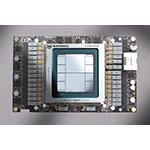
Spectra comprises 64 compute nodes equipped with 128 Maverick-2 dual-die accelerators. The system was built and deployed through a collaboration among Sandia National Laboratories, NextSilicon, and Penguin Solutions, and supports the National Nuclear Security Administration's Advanced Simulation and Computing (ASC) program. Vanguard is a multi-lab program that includes Lawrence Livermore National Laboratory and Los Alamos National Laboratory.
System Acceptance Under Vanguard Program Marks Key Milestone
To qualify for acceptance, Spectra demonstrated performance, stability, and application compatibility across workloads. Unlike conventional GPU accelerators, Maverick-2 adapts its computational resources to each application at runtime. During evaluation, Spectra executes HPCG, LAMMPS molecular dynamics, and SPARTA Monte Carlo simulations as part of the acceptance process.
"System acceptance at Sandia is not a checkbox. It means Maverick-2 ran mission-relevant workloads, demonstrated system stability, and showed the computational scientists at Sandia what this architecture can deliver,” said Elad Raz, Founder and CEO of NextSilicon. “This is a significant step toward what we have been building: an accelerator that delivers performance while reducing power consumption. For HPC organizations evaluating next-generation infrastructure, Spectra begins to show what Maverick-2 can do when put to the test."
How Sandia’s Vanguard Program Evaluates Emerging HPC Architectures
The Vanguard program serves as Sandia's primary mechanism for evaluating novel computing architectures against real mission workloads before any decision to scale into production. Spectra is only the second system ever fielded under this program, following Astra, which demonstrated the viability of Arm-based processors for HPC workloads in 2018. Vanguard acceptance evaluates performance, stability, and application behavior under real operational conditions.
“The Vanguard program exists to put new architectures through rigorous evaluation against workloads that are directly relevant to our mission,” said James H. Laros III, Senior Scientist and Vanguard Program Lead at Sandia National Laboratories. “Our partnership succeeded in executing all benchmarks and applications specified, meeting acceptance criteria we defined for this phase in the program. This outcome is exactly what our process is designed to test, and it gives us a solid basis for continued evaluation of this technology."
“Being selected to build the system with the capability of testing NextSilicon’s transformative accelerators at scale is a great opportunity, and Penguin Solutions is proud to be part of this groundbreaking project,” said Phil Pokorny, chief technology officer at Penguin Solutions. “Sandia's Vanguard program is designed to select new technologies and challenge them with the toughest problems faced by American science and engineering teams. The Spectra cluster will enable extensive research that may eventually demonstrate further acceleration of mixed physics and AI workloads.”
Maverick-2 is currently deployed at dozens of customer sites worldwide. Successful acceptance at Sandia extends that footprint to one of the most closely evaluated computing programs in the U.S. government. For commercial HPC buyers assessing alternatives to GPU-based infrastructure, Spectra offers a reference point grounded in rigorous evaluation against mission-critical workloads in an operational national security environment.
About NextSilicon
NextSilicon builds computing infrastructure for algorithmically complex workloads. The company's Maverick-2 accelerator uses a runtime reconfigurable dataflow architecture to deliver up to 10x performance over leading GPUs at less than half the power, with no requirement to rewrite existing applications. Maverick-2 is in production at customer sites across HPC, AI, and national security computing environments. NextSilicon is headquartered in Tel Aviv, Israel, with offices in Minneapolis, MN, in the United States.