T&E Report: Haneda & Narita Among Top CO₂ Emitters in Asia-Pacific — Japan's Aviation Sector Urgently Needs a Net-Zero Roadmap
T&E Report: Haneda & Narita Among Top CO₂ Emitters in Asia-Pacific — Japan's Aviation Sector Urgently Needs a Net-Zero Roadmap
2026 Airport Tracker: Asia-Pacific accounts for 32% of global aviation CO₂ — surpassing Latin America, the Middle East, and Africa combined
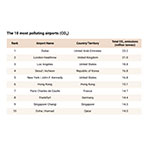
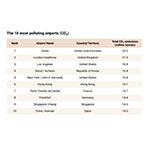
TOKYO--(BUSINESS WIRE)--Japan has set a national goal of achieving carbon neutrality by 2050. However, newly released data reveal that the aviation sector continues to pose a significant challenge to that ambition. Tokyo's Haneda Airport emitted 10.8 million tonnes of CO₂ in 2023, ranking 16th globally. When combined with Narita, which emitted 9 million tonnes, the greater Tokyo metropolitan area's total reaches 19.8 million tonnes — the 4th highest among urban areas worldwide. Japan as a whole generated 32 million tonnes, making it the world's 4th largest aviation emitter by country.
"Japan's aviation sector ranks 4th globally for carbon emissions. We are at a critical juncture: more rigorous emissions measurement and a transparent accountability framework are urgently needed."
Share
These findings are drawn from the 2026 Airport Tracker, published today by ODI Global in partnership with T&E (Transport & Environment), drawing on data from the International Council on Clean Transportation (ICCT). The updated tracker covers 1,300 airports worldwide and reveals that Asia-Pacific now accounts for 32% of global aviation CO₂ emissions — the highest of any region and more than Latin America, the Middle East, and Africa combined.
Globally, the top 100 airports are responsible for approximately two-thirds of all passenger aviation emissions, while just 2.3% of all airports have Scope 3 net-zero plans in place. Scope 3 emissions — those produced by aircraft operations themselves — account for over 90% of an airport's total climate impact.
STATEMENTS
Jude Lee, Regional Policy and Program Director, APAC, T&E (Transport & Environment), said, "Japan's aviation sector ranks 4th globally for carbon emissions. We are at a critical juncture: more rigorous emissions measurement and a transparent accountability framework are urgently needed. This means not only investing in sustainable aviation fuels (SAF), particularly e-fuels, but also establishing systematic measurement, reporting, and verification (MRV) mechanisms for actual emissions data from airports and airlines."
Sam Pickard, Research Associate, ODI Global, said, "Since the Paris Agreement, aviation emissions have risen steadily while other sectors have begun to decarbonise. A genuine strategy that includes demand management is sorely needed."
T&E website: https://www.transportenvironment.org/
Attachment: Policy Brief — Airports and Aviation Emissions (PDF)
Contacts
Crains for T&E
press@crains.co.kr