Students Report Needing Clarity Around School A.I. Policies, Better Screen Time Balance, & More in New Data Published by The Social Institute
Students Report Needing Clarity Around School A.I. Policies, Better Screen Time Balance, & More in New Data Published by The Social Institute
Additional Data Shows Nearly Half of Students Get Smartphones by Age 11, Voice Calls Rival Texting for High Schoolers, and YouTube is the Most Used App for All Grades Surveyed
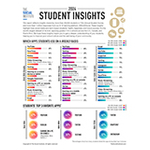
DURHAM, N.C.--(BUSINESS WIRE)--The Social Institute, the leader in equipping students, families, and educators to navigate technology and social media in positive ways to impact learning and well-being, today released its sixth annual Student Insights Report.
43% of high schoolers say their school has some rules around how students can use A.I., but those rules aren’t clear.
Share
Drawing from more than 53,000 students and one million anonymous responses spanning grades 3 - 12 across the U.S. and abroad, the report offers a comprehensive look at how students navigate everyday situations related to A.I., technology, and social media, and reveals sometimes unexpected trends in technology’s impact on how they learn, connect, communicate, and manage their online and offline lives.
Key Findings of this year’s report include:
- Students Report Confusion About School A.I. Policies: As A.I. tools become more prevalent in education, 43% of high schoolers say their school has some rules around how students can use A.I., but those rules aren’t clear. Only 10% report that their schools have established clear guidelines, revealing a significant gap in communication between students and educators.
- Nearly Half of Students Get Their First Smartphone by Age 11: 48% of students receive their first smartphone by age 11, underscoring the critical importance of early tech and social media education.
- YouTube Tops the Apps Lists: YouTube emerged as the most commonly used platform by students, with 76% of middle schoolers (6th-8th grade), 70% of high schoolers (9th-12th grade), and 64% of elementary students (3rd-5th grade) reporting weekly usage.
- High Schoolers Call as Much as They Text: In findings that may surprise many adults, 69% of high school students report making phone calls weekly, matching their texting usage. Middle schoolers show similar patterns, with 57% using phone calls and 58% using FaceTime weekly, nearly matching their texting rate of 61%. These numbers reveal that students are actively choosing voice and video to stay connected.
- Students’ Biggest Challenges: Social Media Time Management & Comparison: When asked about their top social media challenge, 51% of high schoolers and 35% of middle schoolers admit they spend too much time on social media. Their second biggest challenge was comparing themselves to others.
Across all grade levels, students were asked to consider skills they could improve when it comes to navigating social media and technology. The findings reveal clear opportunities for educators and families to provide targeted support in areas that students themselves had identified:
- 55% of 9th-12th graders seek "finding a better balance between screen time and other priorities."
- 47% of 6th-8th graders want to improve at "standing up when someone is treated unfairly online or in a group chat."
- 53% of 3rd-5th graders identified "using technology the right way without getting in trouble" as a skill they could improve.
In 2025, over 30 states required schools to have policies restricting student cell phone use, and the new report explores how trends like these (and the debates surrounding them) impact students.
Among students surveyed about school cell phone policies, 24% feel very positive about their school's current policy, while 45% feel pretty positive but wish there were some changes. Students also report that the most important reason to have stricter rules about cell phones, smartwatches, or other devices is to help them focus in class and get better grades.
“This year's data reveals how rapidly the landscape is shifting for students. From navigating artificial intelligence and understanding deepfakes to adapting to new school cell phone policies, students are dealing with challenges that didn't exist even a few years ago,” said Laura Tierney, Founder and CEO of The Social Institute. “What's encouraging is that students are telling us exactly what they need, like help balancing screen time and clearer A.I. guidelines. Together, educators and parents can lock arms to empower and equip students with the skills needed to thrive in our increasingly tech-fueled world.”
To download the full 2026 Student Insights Report, visit https://hubs.ly/Q03-RlJ_0.
About The Social Institute
The Social Institute (TSI) is the leader in equipping students, families, and educators with modern life skills to impact learning, well-being, and students' futures. Through #WinAtSocial, our interactive, peer-to-peer learning platform, we integrate teacher PD, family resources, student voice insights, and more to empower entire school communities to make positive choices online and offline. #WinAtSocial Lessons teach essential skills while capturing student voice and actionable insights for educators. These insights help educators maintain a healthy school culture, foster high-impact teaching, and build meaningful relationships with families. Our unique, student-respected approach empowers and equips students authentically, enabling our solution to increase classroom participation and improve student-teacher relationships. Through our one-of-a-kind lesson development process, we create lessons for a variety of core and elective classes, incorporating timely topics such as social media, A.I., screen time, misinformation, and current events to help schools stay proactive in supporting student health, happiness, and academic success.
Contacts
Jill Dykes
919.749.8488
jill@jilldykespr.com