Feinstein Institutes’ Research Pinpoints Core Cause of Vascular Cognitive Impairment, Unlocking New Therapeutic Avenues for Cognitive Decline
Feinstein Institutes’ Research Pinpoints Core Cause of Vascular Cognitive Impairment, Unlocking New Therapeutic Avenues for Cognitive Decline
Findings were recently published in Alzheimer’s & Dementia
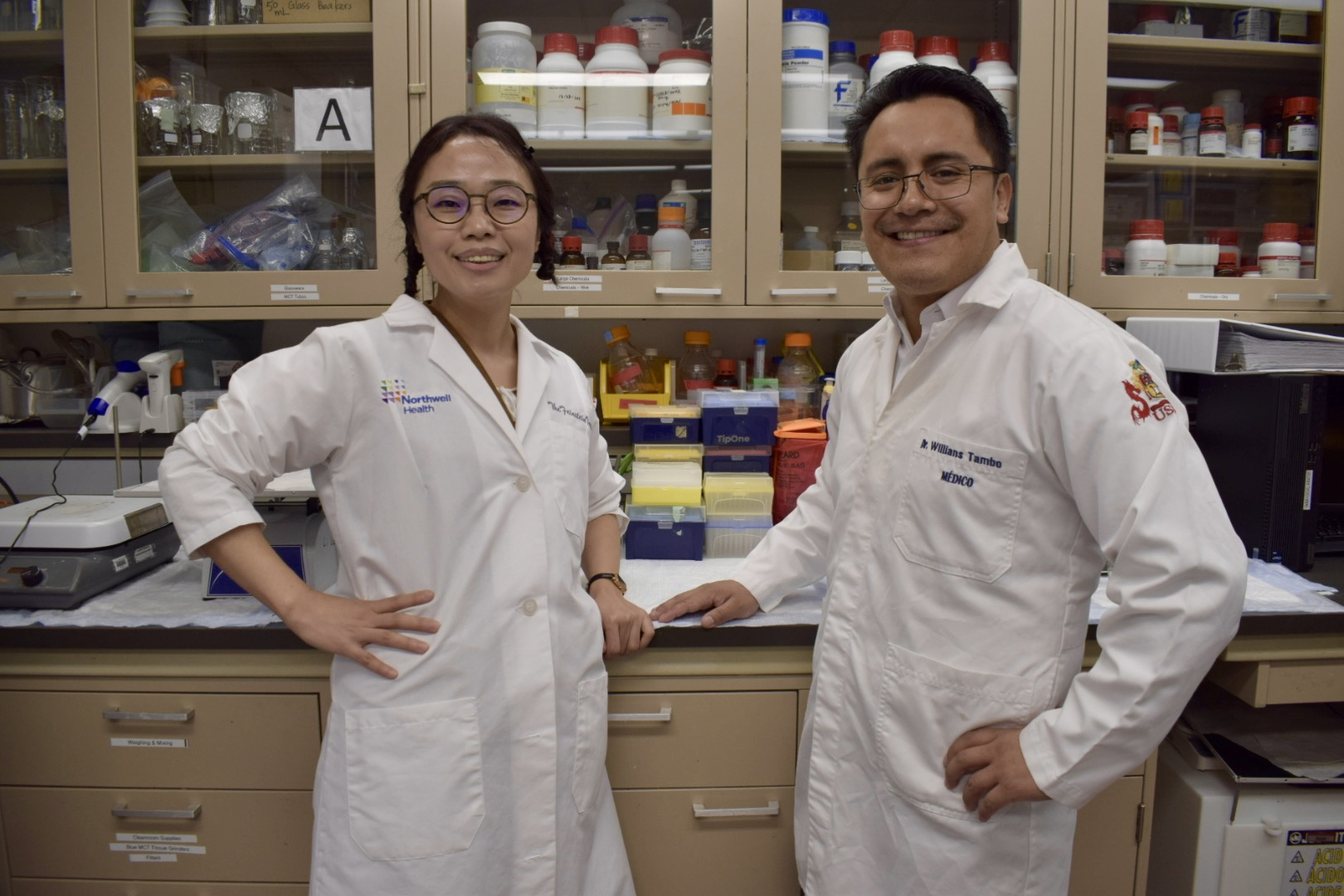
MANHASSET, N.Y.--(BUSINESS WIRE)--Scientists at Northwell Health’s Feinstein Institutes for Medical Research have uncovered a critical mechanism driving vascular cognitive impairment (VCI), the world’s second most common form of dementia after Alzheimer’s disease. Their findings, published this month in Alzheimer’s & Dementia, pinpoint the dysregulation of vasoactive neuropeptides, or key regulators of blood-vessel tone, as the root cause of microvascular dysfunction in VCI. This discovery opens an entirely new frontier for developing both pharmacological and non-pharmacological therapies.
Led by Chunyan Li, PhD, associate professor in the Institute of Bioelectronic Medicine at the Feinstein Institutes, and PhD student Willians Tambo of the Elmezzi Graduate School of Molecular Medicine, the research team employed extensive molecular profiling and behavioral testing in an animal model of chronic cerebral hypoperfusion (CCH), which mirrors the sustained reductions in brain blood flow seen in VCI patients. The team then evaluated two complementary interventions: administration of calcitonin gene–related peptide (CGRP), a powerful vasodilator, and activation of the natural diving reflex (or oxygen‐conserving reflex). Both approaches successfully restored balanced neuropeptide signaling, prevented persistent narrowing of cerebral micro vessels and significantly improved memory and learning in their preclinical model.
“Vascular cognitive impairment is a widespread, devastating condition for which no effective treatments currently exist,” said Dr. Li, the study’s lead investigator. “By uncovering neuropeptide imbalance as the primary driver of microvascular damage, we’ve not only revealed VCI’s underlying cause but also demonstrated two clear paths toward reversing it.”
These findings recast long-held assumptions that oxidative stress and inflammation are the initial sparks of VCI. Instead, the research shows that impaired neuropeptide control and vessel constriction arise first, setting the stage for downstream amyloid deposition and tissue injury. This work repositions oxidative stress and inflammation as consequences, rather than catalysts, of impaired cerebral blood flow.
Building on these insights, Dr. Li’s team is now developing a novel bioelectronic therapy: noninvasive trigeminal nerve stimulation to elicit the diving reflex. Supported by the U.S. Department of Defense and prize funding from the 2023 Northwell Health Innovation Challenge, this approach is being tested in models of traumatic brain injury and ischemic stroke, two conditions that significantly increase the risk of VCI.
“There is an urgent need for deeper understanding and better treatment options for VCI and related neurological disorders,” said Kevin J. Tracey, MD, president and CEO of the Feinstein Institutes and Karches Family Distinguished Chair in Medical Research. “Dr. Li and her colleagues have taken the crucial first step by showing how VCI begins, laying the groundwork for the next generation of targeted therapies.”
These results not only challenge prevailing theories about the origins of vascular dementia but also chart a clear course toward the first interventions designed to directly alter disease trajectory by restoring microvascular function and preserving cognitive integrity.
About the Feinstein Institutes
The Feinstein Institutes for Medical Research is the home of the research institutes of Northwell Health, the largest health care provider and private employer in New York State. Encompassing 50+ research labs, 3,000 clinical research studies and 5,000 researchers and staff, the Feinstein Institutes raises the standard of medical innovation through its six institutes of behavioral science, bioelectronic medicine, cancer, health system science, molecular medicine, and translational research. We are the global scientific leader in bioelectronic medicine – an innovative field of science that has the potential to revolutionize medicine. The Feinstein Institutes publishes two open-access, international peer-reviewed journals Molecular Medicine and Bioelectronic Medicine. Through the Elmezzi Graduate School of Molecular Medicine, we offer an accelerated PhD program. For more information about how we produce knowledge to cure disease, visit http://feinstein.northwell.edu and follow us on LinkedIn.
Contacts
Julianne Mosher Allen
516-880-4824
jmosherallen@northwell.edu