Joby Taps NVIDIA to Accelerate Next-Era Autonomous Flight; Named Launch Partner of IGX Thor Platform
Joby Taps NVIDIA to Accelerate Next-Era Autonomous Flight; Named Launch Partner of IGX Thor Platform
Collaboration accelerates development of certified aerospace autonomy capabilities for safety and performance
SANTA CRUZ, Calif.--(BUSINESS WIRE)--Joby Aviation, Inc. (NYSE:JOBY) today announced a collaboration with NVIDIA, marked by NVIDIA’s selection of Joby as the only aviation launch partner for the new NVIDIA IGX Thor platform. Powered by the NVIDIA Blackwell architecture, the industrial-grade platform is designed to power the next generation of physical AI applications. This unique collaboration will advance development of Joby’s autonomous flight technology Superpilot™ across military and civil platforms.
“The autonomous systems under development at Joby are poised to complement human intelligence by providing speed, precision, and stamina beyond what a person alone is capable of,” said Gregor Veble Mikić, Flight Research Lead at Joby. “To achieve this, an aircraft needs a powerful onboard computer that can interpret extraordinary amounts of information to make decisions in real-time. Combining NVIDIA’s compute power with our world-class aircraft design, certification and rigorous flight testing capabilities, we’re enabling a new era of safety-first autonomy in aviation.”
Joby is developing Superpilot™ to interact with the world through a continuum of autonomous functions. NVIDIA's support for industry recognized functional safety standards on the IGX Thor platform allows Joby to pursue certifiable autonomy for near-term defense and long-term civil applications as the Federal Aviation Administration advances the capabilities of national airspace.
Integrating this level of advanced compute can transform operational safety and mission capability, enabling real-time, on-board capabilities such as:
- Autonomous Mission Management: Enables the aircraft to determine, request and follow optimal flight paths, adapt to changes in weather, air traffic control instructions, or unexpected events, with intuitive human-machine teaming to ensure mission success.
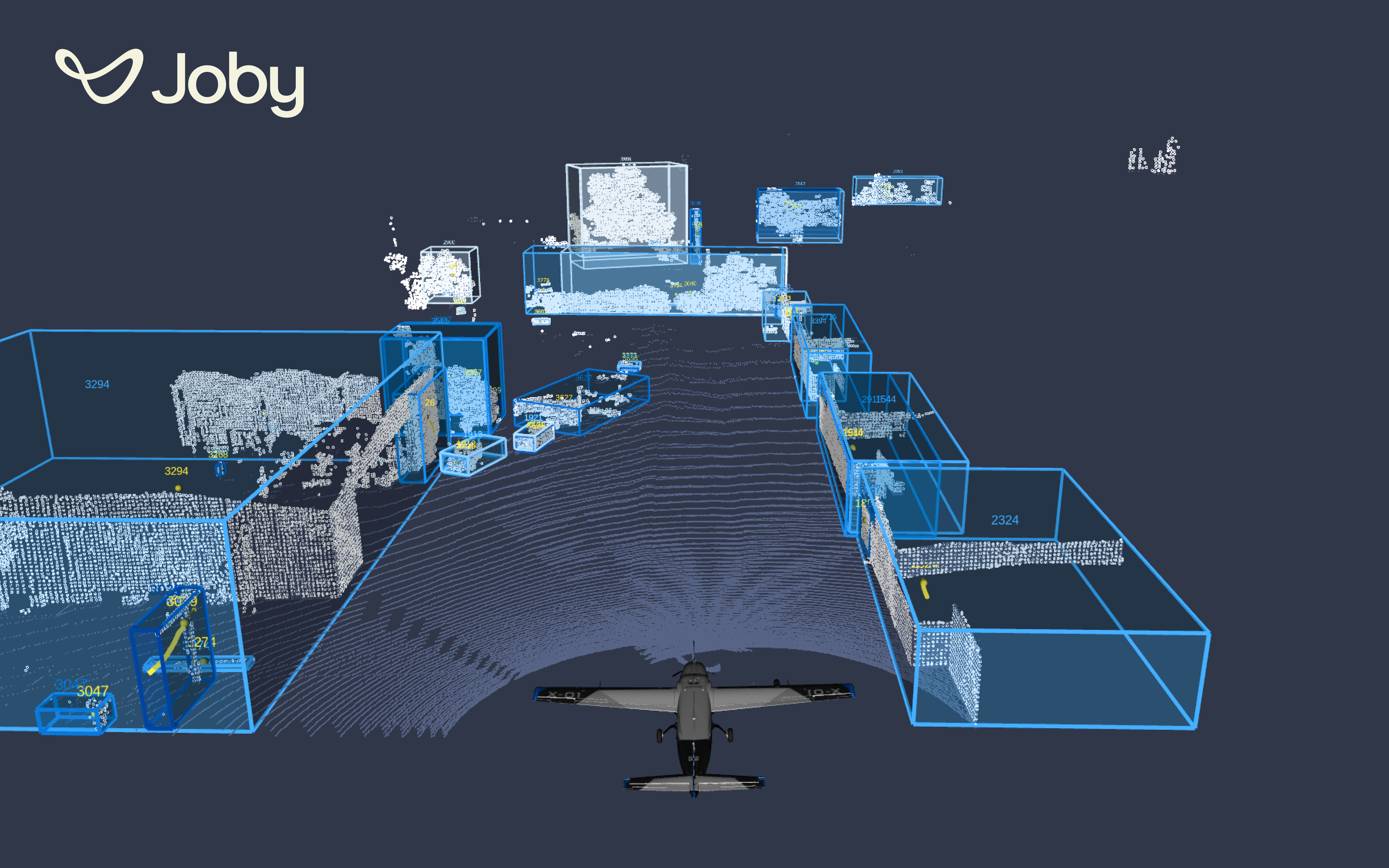
- Radar and Perception Processing: Onboard compute processes high-rate data from Radar, LiDAR and Vision sensors to achieve rich environmental awareness, precise object perception and localization to safely navigate the airspace in all conditions.
- Sensor Fusion: Integrated high-performance processing combines data from a diverse range of sensors to deliver reliable and accurate aircraft state estimation and situational awareness in the most challenging environments.
It also establishes a foundation to develop features that enhance operational insight, reliability and performance:
- Predictive System Health Monitoring: The aircraft will be capable of refining models of its own function and reliability, predicting when system components might need attention and alerting crew members before it becomes a problem.
- “Digital Twin” Modeling: With powerful and reliable compute capabilities, an aircraft can carry a “digital twin” model of itself, and the world, that gathers data from every flight to refine its fidelity. This information can then be integrated into mission control systems to optimize performance and efficiency.
Veble Mikić added: “Autonomous cars have showcased the ability to interpret large volumes of data to make split-second decisions. For an aircraft, the compute power needed for autonomy is similarly high, but also needs to meet even higher levels of design rigor to achieve certification for operation in controlled airspace. In aviation, every calculation must be perfect, and every decision infallible.”
About Joby
Joby Aviation, Inc. (NYSE:JOBY) is a California-based transportation company developing an all-electric, vertical take-off and landing air taxi. Joby intends to both operate its fast, quiet, and convenient air taxi service in cities around the world and sell its aircraft to other operators and partners. To learn more, visit www.jobyaviation.com.
Forward-Looking Statements
This release contains “forward-looking statements” within the meaning of the “safe harbor” provisions of the Private Securities Litigation Reform Act of 1995, including but not limited to, statements regarding the development and performance of our aircraft; expected benefits of our collaboration with NVIDIA; and expected capabilities of our Superpilot™ technology. You can identify forward-looking statements by the fact that they do not relate strictly to historical or current facts. These statements may include words such as “anticipate”, “estimate”, “expect”, “project”, “plan”, “intend”, “believe”, “may”, “will”, “should”, “can have”, “likely” and other words and terms of similar meaning in connection with any discussion of the timing or nature of future operating or financial performance or other events. All forward looking statements are subject to risks and uncertainties that may cause actual results to differ materially, including: our ability to produce aircraft that meet our performance expectations in the volumes and on the timelines that we project; the competitive environment in which we operate; our future capital needs; our ability to adequately protect and enforce our intellectual property rights; our ability to effectively respond to evolving regulations and standards relating to our aircraft; our reliance on third-party suppliers and service partners; uncertainties related to our estimates of the size of the market for our service and future revenue opportunities; and other important factors discussed in the section titled “Risk Factors” in our Annual Report on Form 10-K, filed with the Securities and Exchange Commission (the “SEC”) on February 27, 2025, our Quarterly Reports on Form 10-Q filed with the SEC on May 8, 2025 and August 7, 2025, and in future filings and other reports we file with or furnish to the SEC. Any such forward-looking statements represent management’s estimates and beliefs as of the date of this release. While we may elect to update such forward-looking statements at some point in the future, we disclaim any obligation to do so, even if subsequent events cause our views to change.
Contacts
Media:
Charles Stewart
press@jobyaviation.com
Investors:
investors@jobyaviation.com