Omdia: Satellite Connectivity Poised for Growth as a Key Component in Hybrid IoT Networks
Omdia: Satellite Connectivity Poised for Growth as a Key Component in Hybrid IoT Networks
LONDON--(BUSINESS WIRE)--Satellite technology is emerging as a critical complementary solution to terrestrial networks, enhancing coverage and resilience, according to new Omdia research Satellite IoT Market Landscape – 2025.
"10% of global IoT enterprises are interested in using satellite connectivity in their IoT deployments but have struggled with the cost and integration into existing deployments," notes John Canali, IoT Principal Analyst at Omdia.
Share
The new report indicates that technological advancements, standardization efforts, and decreasing costs are creating new opportunities for service providers in consumer, enterprise, and IoT markets. Satellite broadband and direct-to-device smartphone communication represent particularly promising services with both lucrative potential and transformative capabilities, especially in critical situations.
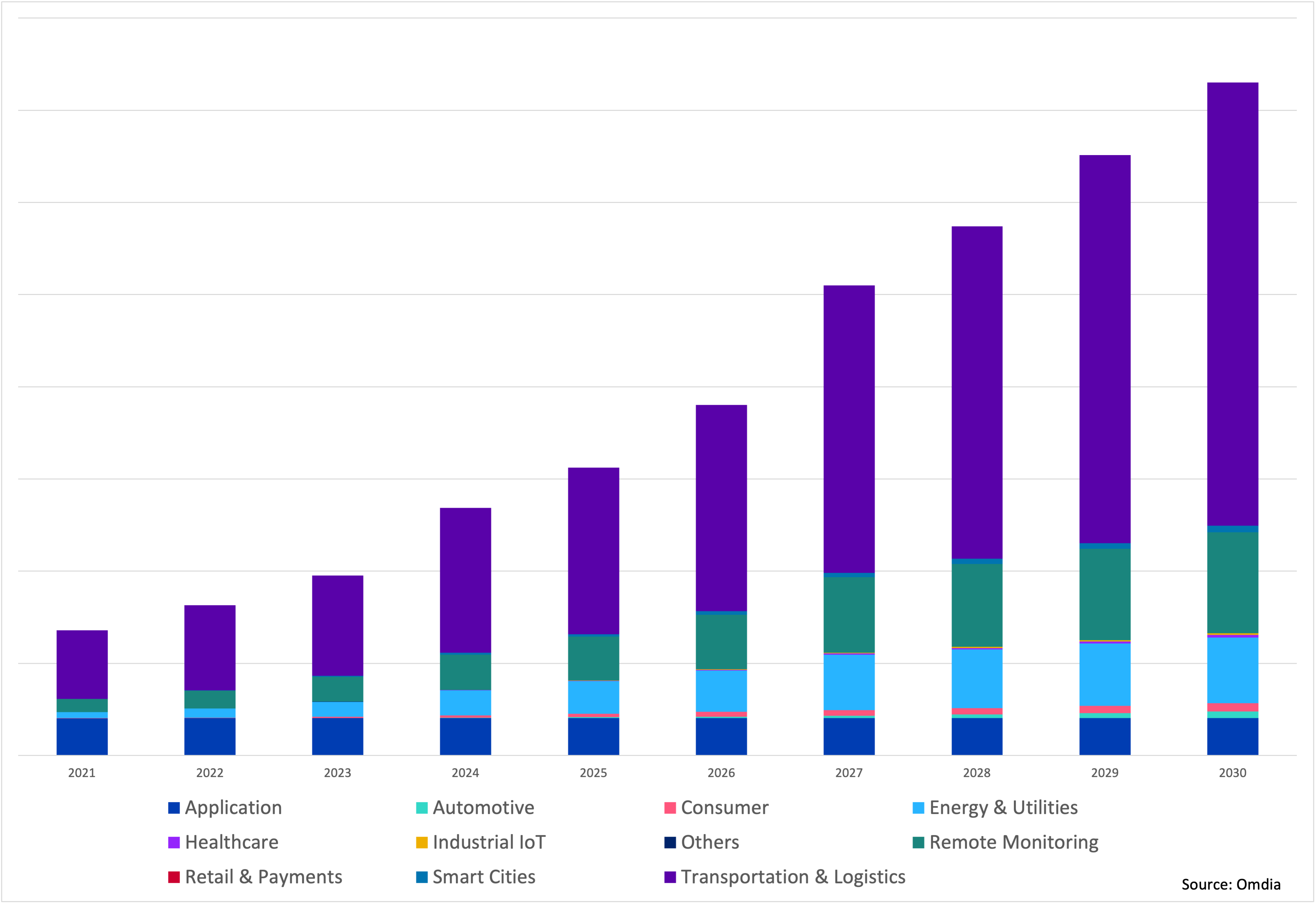
While satellite IoT revenues may be smaller compared to other markets, they remain significant with connections projected to grow at an impressive 23.8% CAGR between 2023 and 2030. This connectivity will be essential for enterprises deploying IoT devices in remote locations or across oceans where terrestrial coverage is limited or non-existent.
Global satellite IoT connections by vertical
"10% of global IoT enterprises are interested in using satellite connectivity in their IoT deployments but have struggled with the cost and integration into existing deployments," notes John Canali, IoT Principal Analyst at Omdia and author of the report. "With the cost barriers and integration falling rapidly, Omdia believes enterprises are poised to expand their deployments with satellite connectivity."
For many enterprises, effective tracking and monitoring of devices is business critical. The declining costs of hardware components like gateways, coupled with emerging standards, are making direct-to-IoT device satellite communication increasingly viable for enterprises collecting data from remote devices.
"Our research suggests that the satellite IoT market is primed for take-off," adds Andy Brown, IoT Practice Lead at Omdia. "Communications service providers (CSPs) and other key IoT stakeholders should prioritize forging partnerships with satellite operators that can supplement their connectivity offerings."
About Omdia
Omdia, part of Informa TechTarget, Inc. (Nasdaq: TTGT), is a technology research and advisory group. Our deep knowledge of tech markets grounded in real conversations with industry leaders and hundreds of thousands of data points, make our market intelligence our clients’ strategic advantage. From R&D to ROI, we identify the greatest opportunities and move the industry forward.
Contacts
Fasiha Khan: fasiha.khan@omdia.com