Feinstein Institutes’ Yousef Al-Abed Named 2024 National Academy of Inventors Fellow
Feinstein Institutes’ Yousef Al-Abed Named 2024 National Academy of Inventors Fellow
Dr. Al-Abed will be honored at the 14th Annual NAI Conference in Atlanta, Georgia in June, 2025
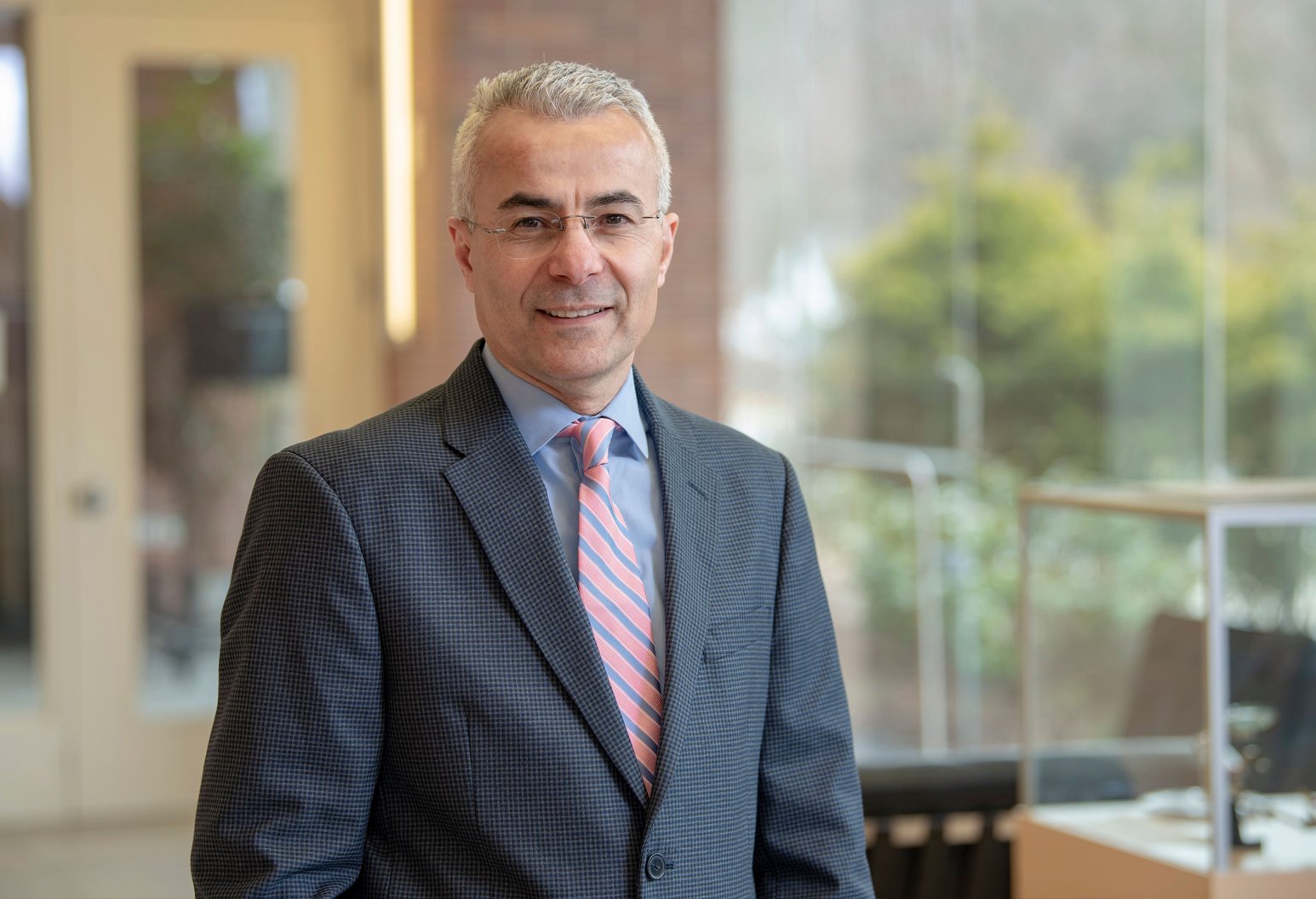
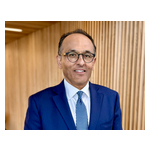
MANHASSET, N.Y.--(BUSINESS WIRE)--Yousef Al-Abed, PhD, co-director of, and professor in, the Institute of Bioelectronic Medicine at the Feinstein Institutes for Medical Research, has been awarded a fellowship in the 2024 class of the National Academy of Inventors (NAI). According to the NAI, the fellowship highlights academic inventors who have demonstrated a prolific spirit of innovation in creating or facilitating outstanding inventions which have made a significant impact on innovation, economic development and society’s welfare.
Dr. Al-Abed and his lab have discovered approaches and treatments for inflammatory, autoimmune and neurodegenerative diseases. An early discovery was that the molecule macrophage migration inhibitory factor (MIF) is a promising target for new drug therapies for sepsis, diabetes and cancer by improving survival rates and reducing tumor growth. From that discovery, the team invented ISO-1, a compound designed to target and block MIF, and other MIF-targeted therapeutics that, in animal models, have proven effective and have spurred significant investment from major pharmaceutical companies.
"Being recognized by the National Academy of Inventors for our work developing innovative therapies is truly inspiring,” said Dr. Al-Abed. “It fuels our commitment to continue pushing the boundaries of scientific discovery and improving health.”
Dr. Al-Abed and his team developed other promising new therapeutic candidates, including modified versions of a natural thyroid hormone (T4) to better control inflammation mediated by MIF. For lupus, they invented the compound FISLE-412 that neutralizes harmful self-directed antibodies, and found a potential new use for the drug semapimod to treat neurodegenerative diseases like Alzheimer's and Parkinson's. Currently, Dr. Al-Abed and his group are focused on developing and implementing new technology to more efficiently synthesize and screen stabilized peptide-based therapeutics using a novel proprietary azapeptide synthesis platform which has application in an unlimited number of diseases and conditions.
"Dr. Al-Abed’s innovative medicinal chemistry has produced new molecules being studied and developed for inflammation, diabetes, and other important conditions,” said Dr. Kevin J. Tracey, MD, president and CEO of the Feinstein Institutes and Karches Family Distinguished Chair in Medical Research. “His election as a fellow in the National Academy of Inventors is a celebration of his outstanding, honorific inventiveness.”
According to the NAI, the 2024 NAI fellows hail from 135 research universities, governmental and non-profit research institutions worldwide with work spanning various disciplines. Together they hold over 5,000 issued U.S. patents comprising innovations that will make significant tangible societal and economic impact now, and in the future. This year’s class represents 39 U.S. states and 12 countries. Founded in 2012, the NAI program has grown to include 2,068 researchers and innovators, who hold over 68,000 U.S. patents and 20,000 licensed technologies. NAI Fellows are known for the societal and economic impact of their inventions, contributing to major advancements in science and consumer technologies. Their innovations have generated over $3.2 trillion in revenue and generated 1.2 million jobs. The 2024 Class of Fellows will be honored and presented their medals by a senior official of the United States Patent and Trademark Office at the NAI 14th Annual Meeting on June 26, 2025 in Atlanta, Georgia.
The Feinstein Institutes for Medical Research is the global scientific home of bioelectronic medicine, which combines molecular medicine, neuroscience, and biomedical engineering. At the Feinstein Institutes, medical researchers use modern technology to develop new device-based therapies to treat disease and injury.
Building on years of research in molecular disease mechanisms and the link between the nervous and immune systems, our researchers discover neural targets that can be activated or inhibited with neuromodulation devices, like vagus nerve implants, to control the body's immune response and inflammation. If inflammation is successfully controlled, diseases – such as arthritis, pulmonary hypertension, Crohn's disease, inflammatory bowel diseases, diabetes, cancer and autoimmune diseases – can be treated more effectively.
Beyond inflammation, using novel brain-computer interfaces, Feinstein Institutes' researchers developed techniques to bypass injuries of the nervous system so that people living with paralysis can regain sensation and use their limbs. By producing bioelectronic medicine knowledge, disease and injury could one day be treated with our own nerves without costly and potentially harmful pharmaceuticals.
About the Feinstein Institutes
The Feinstein Institutes for Medical Research is the home of the research institutes of Northwell Health, the largest health care provider and private employer in New York State. Encompassing 50 research labs, 3,000 clinical research studies and 5,000 researchers and staff, the Feinstein Institutes raises the standard of medical innovation through its five institutes of behavioral science, bioelectronic medicine, cancer, health system science, and molecular medicine. We make breakthroughs in genetics, oncology, brain research, mental health, autoimmunity, and are the global scientific leader in bioelectronic medicine – a new field of science that has the potential to revolutionize medicine. For more information about how we produce knowledge to cure disease, visit http://feinstein.northwell.edu and follow us on LinkedIn.
Contacts
Julianne Mosher Allen
516-880-4824
jmosherallen@northwell.edu