City of Hope and Institute for Follicular Lymphoma Innovation (IFLI) Announce $2 Million Research Program in Follicular Lymphoma
City of Hope and Institute for Follicular Lymphoma Innovation (IFLI) Announce $2 Million Research Program in Follicular Lymphoma
Three-year research program will use patient data, DNA profiling and other advanced techniques to study why spontaneous remission in follicular lymphoma occurs

LOS ANGELES--(BUSINESS WIRE)--City of Hope®, one of the largest and most advanced cancer research and treatment organizations in the United States, and Institute for Follicular Lymphoma Innovation (IFLI) today announced a $2 million, three-year collaboration to study spontaneous remission in follicular lymphoma, the most common, slow-growing non-Hodgkin's lymphoma.
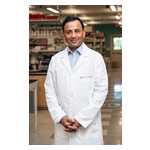
Raju K. Pillai, M.D., City of Hope associate clinical professor, Department of Pathology, and director, Pathology Research Services Core Laboratories, and Steven T. Rosen, M.D., executive vice president and director emeritus of City of Hope’s comprehensive cancer center and its Beckman Research Institute, professor, Department of Hematology & Hematopoietic Cell Transplantation, and Ted Schwartz Family Distinguished Chair in Hematologic Malignancies, will lead the research. The collaboration aims to understand the tumor microenvironment in patients whose follicular lymphoma goes into remission without any treatment while being monitored over time.
City of Hope will analyze patient samples of follicular lymphoma and spontaneous remission of follicular lymphoma with leading-edge technologies, such as spatial proteomics and transcriptomics, as well as machine learning techniques to help explain why spontaneous remission of follicular lymphoma occurs in a rare number of patients and not in others. The study aims to determine the most relevant prognostic genetic, transcriptomic and microenvironmental factors involved in spontaneous remission of follicular lymphoma.
“Spontaneous remission in follicular lymphoma is not understood and we are excited and humbled to collaborate and support City of Hope’s prestigious team to leverage their expertise and suite of technologies and assays to better understand this phenomenon,” said Michel Azoulay, M.D., M.B.A., IFLI’s chief medical officer. “IFLI is committed to funding innovative research projects, such as these important studies at City of Hope, to better understand follicular lymphoma and how we can improve treatments and outcomes for follicular lymphoma patients.”
“The clinical spectrum of follicular lymphoma, which ranges from spontaneous regression on one end to highly aggressive disease at the other end, is influenced by the immune microenvironment to a large extent,” Dr. Pillai said. “With IFLI’s support, we can study follicular lymphoma, leveraging City of Hope’s omics and spatial biology expertise to shed more light on why and how spontaneous remission occurs, with the goal that our discoveries will translate to advances in diagnostics and the next generation of therapies for patients with follicular lymphoma.”
“I have shared the joy of my patients who have spontaneously achieved remission, and I have shared the worry, anguish and frustration of my patients whose follicular lymphoma has progressed or transformed,” Dr. Rosen added. “I am thrilled to join with Dr. Pillai, IFLI and other collaborators to help answer the question ‘Why certain patients and not all?’”
About the Institute for Follicular Lymphoma Innovation
The Institute for Follicular Lymphoma Innovation (IFLI) is a global non-profit, private foundation dedicated to accelerating the development of innovative treatment options for patients with follicular lymphoma. IFLI supports cutting-edge research and technology to lead to the development and commercialization of novel therapeutics and/or biomarkers for the treatment of follicular lymphoma (FL), and to understand the biology of follicular lymphoma. The foundation deploys its budget across grants, project-based partnerships, and venture philanthropy investments to achieve its innovation goals. IFLI aims to promote data sharing among researchers and institutions working on different aspects of follicular lymphoma research, fostering collaboration, and enabling the exchange of knowledge and expertise. Learn more at IFLI - The Institute for Follicular Lymphoma Innovation (i-fli.org).
About City of Hope
City of Hope's mission is to make hope a reality for all touched by cancer and diabetes. Founded in 1913, City of Hope has grown into one of the largest cancer research and treatment organizations in the U.S. and one of the leading research centers for diabetes and other life-threatening illnesses. City of Hope research has been the basis for numerous breakthrough cancer medicines, as well as human synthetic insulin and monoclonal antibodies. With an independent, National Cancer Institute-designated comprehensive cancer center at its core, City of Hope’s uniquely integrated model spans cancer care, research and development, academics and training, and a broad philanthropy program that powers its work. City of Hope’s growing national system includes its Los Angeles campus, a network of clinical care locations across Southern California, a new cancer center in Orange County, California, and cancer treatment centers and outpatient facilities in the Atlanta, Chicago and Phoenix areas. City of Hope’s affiliated group of organizations includes Translational Genomics Research Institute and AccessHopeTM. For more information about City of Hope, follow us on Facebook, X, YouTube, Instagram and LinkedIn.
Contacts
Letisia Marquez
lemarquez@coh.org
626-476-7593
Beth Fordham-Meier
beth@i-fli.org