Privacy Budgets Expected to Decrease in 2024, New Research From ISACA Reveals
Privacy Budgets Expected to Decrease in 2024, New Research From ISACA Reveals
Ahead of Data Protection Day, just 10% of organisations are completely confident that they can ensure data privacy and comply with new privacy laws and regulations
LONDON--(BUSINESS WIRE)--Two in every five (41%) privacy professionals in Europe state their budgets are underfunded and over half (56%) expect them to decrease this year. That’s according to new research from ISACA, the leading global professional association helping individuals and organisations in their pursuit of digital trust.
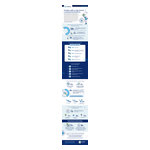
Privacy budgets expected to decrease in 2024, new research from ISACA reveals.
Share
Anticipated drops in privacy budgets come despite half (53%) of organisations reporting that their technical privacy teams are understaffed. Two in five (41%) businesses also state that they have trouble retaining qualified privacy professionals.
“Reducing Privacy budgets would be deemed normal if privacy operations where considered mature and mainstream vs the initial years of investment. This however is not the case based on the report, while the combination of reduced investments with lack of skills in an increasingly sophisticated cyberthreat landscape is the recipe for disaster. It is also proof that more holistic training at a board and privacy leader level needs to take place for both understanding and communicating the needs respectively.” says Chris Dimitriadis, Global Chief Strategy Officer at ISACA.
To combat some of the challenges they’re facing, organisations have been diligent about providing training to employees – 68% of privacy professionals say their company offers privacy training annually while 58% offer training when new hires are made. 71% of respondents say privacy training and awareness programs have had a positive impact on wider employee privacy awareness.
However, there is still a long way to go for businesses, as only 10% of respondents feel completely confident in their organisation's privacy team's ability to ensure data privacy and achieve compliance with new privacy laws and regulations.
It’s clear that a skills gap still prevails for core privacy staff. Experience with different types of technologies or applications (65%), technical expertise (50%) and IT operations knowledge (42%) are the biggest skills gaps privacy professionals are facing within their teams.
Reassuringly, organisations are taking steps to reduce that skills gap, with 52% offering training to allow non-privacy staff to move into privacy roles, while 39% are increasing the usage of contractors or external consultants.
“Organisations clearly crave expertise when it comes to managing privacy compliance and issues. This starts with putting the right resources towards privacy training and prioritisation. Only then can they protect their data, build trust with consumers, and preserve supplier relationships. Better privacy ultimately benefits us all,” adds Safia Kazi, ISACA principal, privacy professional practices.
For more information, read ISACA’s Privacy in Practice 2024 report here.
Notes to Editors
All figures are based on fieldwork conducted by ISACA between 13 and 31 October 2023 amongst a total of 305 privacy professionals in Europe. In total, ISACA surveyed more than 1,300 privacy professionals worldwide.
About ISACA
ISACA® (www.isaca.org) is a global community advancing individuals and organizations in their pursuit of digital trust. For more than 50 years, ISACA has equipped individuals and enterprises with the knowledge, credentials, education, training and community to progress their careers, transform their organizations, and build a more trusted and ethical digital world. ISACA is a global professional association and learning organization that leverages the expertise of its 170,000 members who work in digital trust fields such as information security, governance, assurance, risk, privacy and quality. It has a presence in 188 countries, including 225 chapters worldwide. ISACA's member base in Europe exceeds 30,000, and the organization has further strengthened its presence in the region by establishing a regional office in Dublin, Ireland, in 2022. Through its foundation One In Tech, ISACA supports IT education and career pathways for underresourced and underrepresented populations.
Twitter: www.twitter.com/ISACANews
LinkedIn: www.linkedin.com/company/isaca
Facebook: www.facebook.com/ISACAGlobal
Instagram: www.instagram.com/isacanews
Contacts
firstlight group
+44 7526 565 507, isacateam@firstlightgroup.io
ISACA
Esther Almendros, +34 692 669 772, ealmendros@isaca.org