Revolutionizing Hydrogen Production from Seawater: NTHU's Breakthrough with Crown Ether
Revolutionizing Hydrogen Production from Seawater: NTHU's Breakthrough with Crown Ether

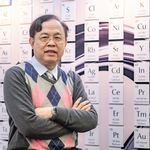
HSINCHU, Taiwan--(BUSINESS WIRE)--In a revolutionary advance in clean energy technology, a research team led by Professor Ho-Hsiu Chou from the Department of Chemical Engineering at National Tsing Hua University (NTHU) in Taiwan, has achieved a breakthrough in seawater hydrogen production. The team’s innovative use of Crown Ether (CE) to capture sodium ions in seawater has significantly improved both the rate and yield of hydrogen production, marking a significant advancement in the quest for green hydrogen.
This groundbreaking research has gained international recognition, with the work featured as the cover article in the prestigious energy journal Advanced Energy Materials.
Overcoming Challenges in Seawater Hydrogen Production
The use of photocatalysts for hydrogen production has faced a significant obstacle – the accumulation of sodium salts from seawater on the surface of the photocatalyst, which hinders the efficiency of hydrogen production. To address this, Professor Chou's team has pioneered a novel technology that incorporates CE into the structure of polymer photocatalysts. This groundbreaking approach effectively prevents salt-induced aggregation, enabling the electrons generated during photocatalysis to seamlessly combine with hydrogen ions, resulting in efficient hydrogen gas production.
The Role of Crown Ether
Initially, the research team used long-chain ether compounds to capture sodium ions. However, they soon discovered that the ring-shaped CE structure offered superior ion-capturing capabilities. One of the team members, Tse-Fu Huang, a Ph.D. candidate in the Department of Chemical Engineering, likened this improvement to a strategic game of "tag," where encircling the target proved more effective.
A Remarkable Increase in Hydrogen Production
Once the interference of salt was eliminated, the team observed a remarkable increase in the hydrogen production rate. The output rose from 15.5 millimoles of hydrogen per gram of catalyst per hour to 39.2 millimoles, exceeding the initial yield by more than 2.5 times.
Unlocking the Potential of Seawater for Sustainable Energy
Professor Chou emphasized the fact that 97% of the world's water resources are comprised of seawater, offering a virtually unlimited resource. The seawater used in their experiments was sourced from Nanliao Fishing Harbor in Hsinchu, Taiwan. As this technology continues to mature, there is the potential to locally harness seawater and sunlight to produce hydrogen in coastal areas, paving the way for zero carbon emissions. This promising development holds great potential for advancing clean energy and sustainable development.
Chou’s Dedicated Research Team
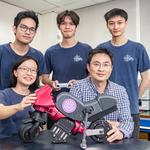
The research team, led by Professor Ho-Hsiu Chou, includes the doctoral students Tse-Fu Huang, Wei-Cheng Lin, Bing-Heng Li, and the master's students Yu-En Sun and Ying-Rang Zhuang, all from the Department of Chemical Engineering at NTHU.
Contacts
Holly Hsueh
NTHU
(886)3-5162006
hoyu@mx.nthu.edu.tw