Report from Morgan Stanley at Work Highlights Increasingly Strategic Role of Liquidity Events for Private Companies
Report from Morgan Stanley at Work Highlights Increasingly Strategic Role of Liquidity Events for Private Companies
- Liquidity Trends: Perspectives from Private Company Leaders shows demand for liquidity is growing even as private companies continue to remain private longer—creating opposing forces in which equity decision-makers must find innovative solutions to meet employee needs.
NEW YORK--(BUSINESS WIRE)--Morgan Stanley at Work today released its new report Liquidity Trends: Perspectives from Private Company Leaders, spotlighting how private markets are responding to the challenging macro environment by strategically evolving their equity and liquidity programs.
Data shows that 81% of private company decision makers are being influenced by the economy in executing liquidity events in their industries. However, with private companies choosing to stay private longer (37% now plan to stay private, while 34% are unsure or questioning next steps), the traditional liquidity path of going public is becoming more elusive. At the same time, there is heightened demand for liquidity to support talent attraction and retention efforts. These simultaneous pressures have pushed innovative liquidity solutions to the forefront as a business strategy to help private companies balance long-term goals with rewarding employees.
Specific takeaways from the report include:
- Increased demand for private market liquidity events is coming from all sides: Almost two thirds (59%) of private company decision-makers reported increased expectations for a liquidity event from investors, C-suite executives, and equity-holding employees. Additionally, nearly all (93%) said having a liquidity event is valuable to a prospect’s decision when considering a job offer.
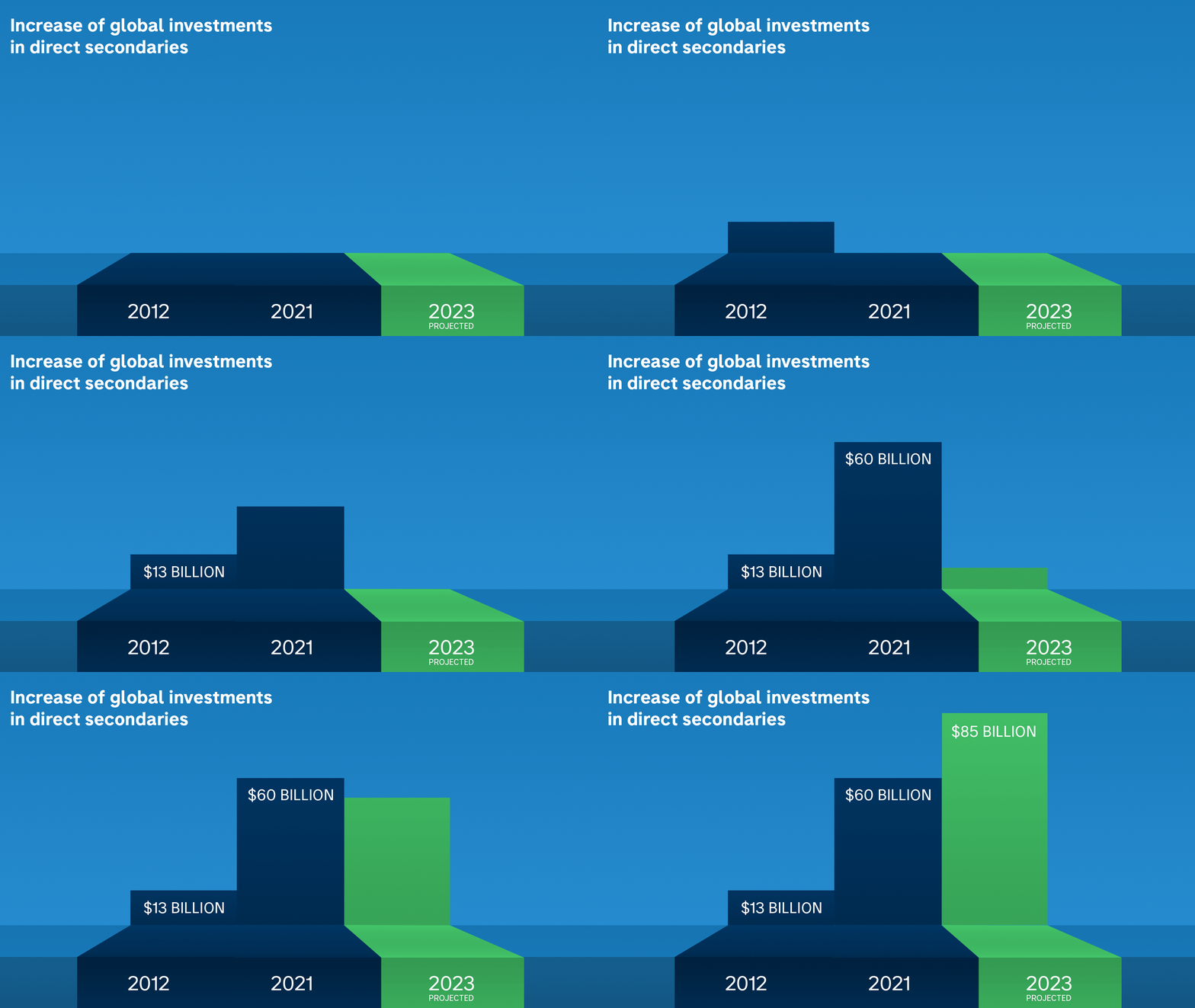
- Staying private longer creates opportunities for resilience and growth. By delaying IPOs, private companies maintain greater control amid market challenges while also nudging private capital markets to adapt for more tender offers and direct secondary sales—a trend that’s on track to continue. For example: From 2012 to 2021, global investments in direct secondaries across the venture market increased from $13 billion to $60 billion and are projected to reach $85 billion in 2023.
- Private market liquidity events must address myriad goals. Private companies reported the top reasons they leverage their equity plans are to validate employee performance (85%), align business/employee goals (84%), and other fiscal business-related objectives—indicating that private liquidity events must continue to evolve to help meet complex business needs beyond simply building personal wealth.
“Amid market uncertainty, this report underscores the message that liquidity events and innovative equity programs are imperative to stakeholders across the private markets, from initial founders and venture capitalists to entry-level employees and private investors,” said Jeremy Wright, Head of Private Markets at Morgan Stanley at Work. “Unlocking the potential of liquidity opportunities has become a business essential—both for the organizations and the individuals who make private capital markets tick. Clear-sighted solutions that balance possible future states against current challenges can deliver value and protect long-term vision during volatile times.”
The full findings of Morgan Stanley at Work’s Liquidity Trends: Perspectives from Private Company Leaders can be found here.
Methodology: The report was researched and authored by Rebel, a third-party research and strategy agency. The findings are based on a survey of 311 U.S.-based private company decision-makers. Participation was limited to private companies that currently offer an equity plan. In addition, qualifying companies had to meet at least one of the following criteria: a valuation of $400 million or more, completion of a fundraising round of a Series B or higher, or greater than 200 employees. All respondents reported that their job responsibilities included selecting the equity management platform or managing their company’s cap table and equity plan. The survey was written in English and delivered online to a United States audience in January 2023.
Morgan Stanley at Work services are provided by Morgan Stanley Smith Barney LLC, member SIPC, and/or its affiliates, all wholly owned subsidiaries of Morgan Stanley.
About Morgan Stanley at Work
Morgan Stanley at Work offers a suite of financial solutions, which spans Equity Compensation through Shareworks and E*TRADE Equity Edge Online, Retirement and Financial Wellness Solutions. Morgan Stanley at Work combines cutting-edge planning and Morgan Stanley intellectual capital and financial education delivered through multiple channels to enable employees to build a holistic plan to achieve their financial goals. Securities products and services are offered by E*TRADE Securities LLC, Member SIPC. In connection with stock plan solutions offered by Morgan Stanley at Work, E*TRADE Securities LLC and Morgan Stanley Smith Barney LLC provide brokerage services to stock plan participants. E*TRADE Financial Corporate Services, Inc. and E*TRADE Securities LLC are separate but affiliated subsidiaries of Morgan Stanley.
About Morgan Stanley Wealth Management
Morgan Stanley Wealth Management is a leading financial services firm that provides access to a wide range of products and services to individuals, businesses, and institutions, including brokerage and investment advisory services, financial and wealth planning, cash management and lending products and services, annuities and insurance, retirement, and trust services.
About Morgan Stanley
Morgan Stanley (NYSE: MS) is a leading global financial services firm providing a wide range of investment banking, securities, wealth management and investment management services. With offices in 42 countries, the Firm’s employees serve clients worldwide including corporations, governments, institutions and individuals. For further information about Morgan Stanley, please visit https://www.morganstanley.com/.
Morgan Stanley Wealth Management is the trade name of Morgan Stanley Smith Barney LLC, a registered broker-dealer in the United States.
© 2023 Morgan Stanley at Work and Shareworks services are provided by Morgan Stanley Smith Barney LLC, member SIPC, and its affiliates, all wholly owned subsidiaries of Morgan Stanley.
Contacts
Media Relations:
Lynn Cocchiola, Lynn.Cocchiola@morganstanley.com
Jeanne Joe Perrone, Jeanne.Perrone@morganstanley.com