Feinstein Institutes researcher discovers potential therapeutic target for lethal sepsis
Feinstein Institutes researcher discovers potential therapeutic target for lethal sepsis
The sepsis study, led by Haichao Wang, PhD, was recently published in the American Association for the Advancement of Science’s journal, Science Advances
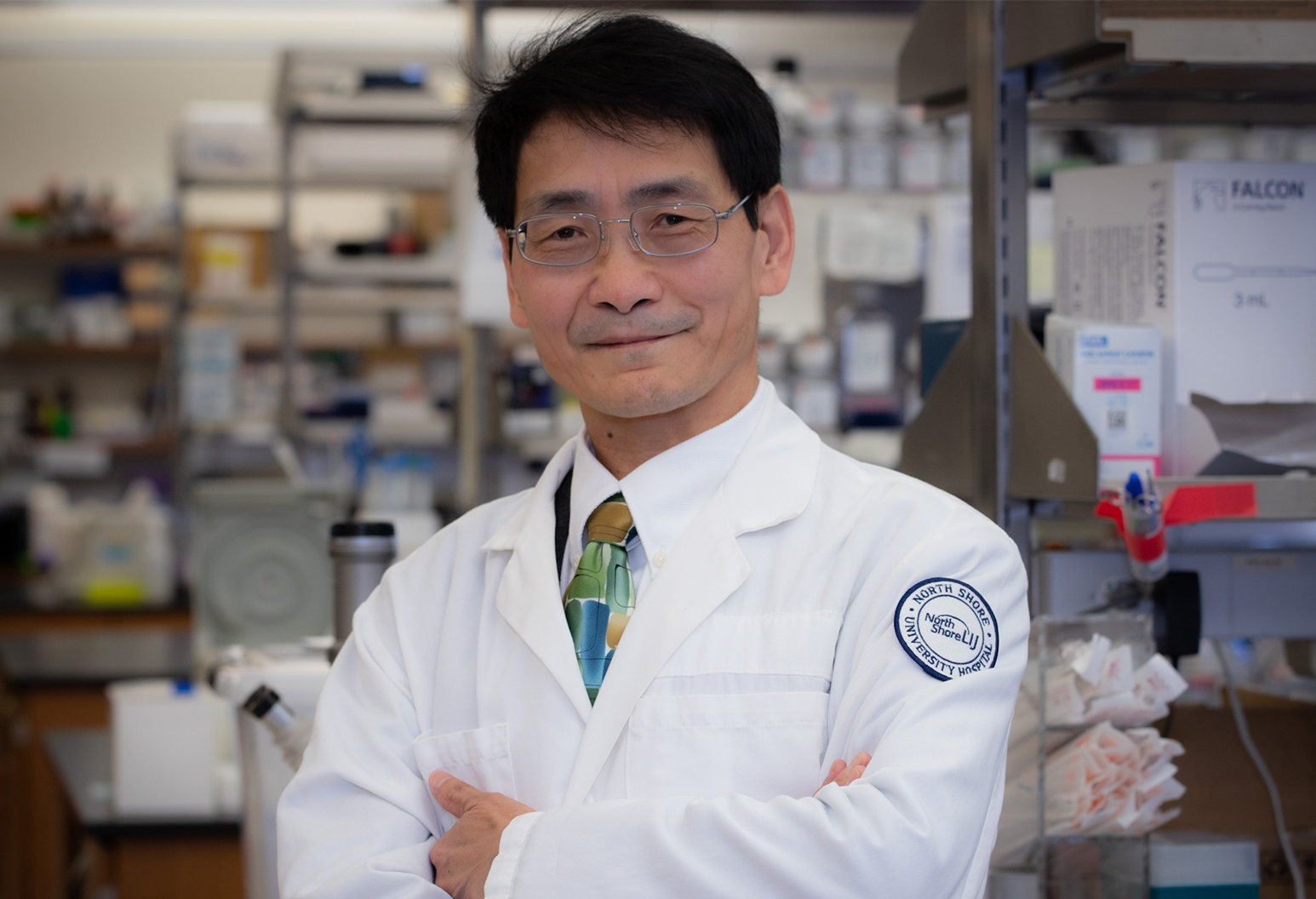
MANHASSET, N.Y.--(BUSINESS WIRE)--Sepsis is a silent and mysterious killer that makes up nearly a quarter of deaths worldwide. This disease often leads to shock and multiple organ failure, and because of its enigmatic features, researchers are looking at ways to combat it headfirst. Scientists from the Feinstein Institutes for Medical Research recently published in Science Advances the discovery of a novel protein that could be a potential therapeutic target for lethal sepsis.
Affecting nearly 50 million people worldwide, sepsis occurs when the body’s immune system triggers excessive inflammation in an attempt to help fight against infections. If out of control, this inflammatory response can also cause damage to multiple organ systems and often leads to death. Other than adjunctive use of antibiotics, fluid resuscitation and supportive care, effective therapies to treat sepsis are lacking.
The new study, led by Feinstein Institutes’ Haichao Wang, PhD, focuses on finding protein mediators that may contribute to uncontrolled immune responses to lethal infections. This research explores the identification of monoclonal antibodies that work against a pro-inflammatory protein mediator, procathepsin-L (pCTS-L), as the potential remedy. These anti-pCTS-L monoclonal antibodies may provide effective therapies for the clinical treatment of human sepsis and other infectious diseases, including COVID-19.
Dr. Wang and his team were able to generate a panel of pCTS-L-neutralizing monoclonal antibodies that effectively reduced pro-inflammatory activities of pCTS-L in human immune cell cultures, and rescued mice from lethal sepsis.
“Sepsis is a complex and fatal complication. Despite decades of research, there remains a lack of treatment,” said Dr. Wang, professor at the Institute of Molecular Medicine at the Feinstein Institutes. “The hope is that by identifying this new protein mediator to curb uncontrolled inflammation new drugs may be developed to prevent unnecessary death in septic patients.”
Septic patients often exhibit the simultaneous occurrence of pro-and anti-inflammatory pathways, which can lead them to suffer from immunosuppression, the inability to eradicate invading bacteria and eventually become susceptible to secondary infections. While additional research is needed, Dr. Wang’s findings set a clear path for translational clinical trials to test novel monoclonal antibody therapies that can be used by clinicians to treat patients.
“The first step in drug discovery is identifying molecular targets,” said Kevin J. Tracey, MD, president and CEO of the Feinstein Institutes, and Karches Family Distinguished Chair in Medical Research. “Dr. Wang’s research has done just that and opens new doors for exploring mechanisms to treat sepsis.”
Dr. Wang is an international research leader in sepsis. Last year, Dr. Wang earned the Shock Society’s 2021 Scientific Achievements Award for his years of commitment and contribution to sepsis research.
About the Feinstein Institutes
The Feinstein Institutes for Medical Research is the home of the research institutes of Northwell Health, the largest health care provider and private employer in New York State. Encompassing 50 research labs, 3,000 clinical research studies and 5,000 researchers and staff, the Feinstein Institutes raises the standard of medical innovation through its five institutes of behavioral science, bioelectronic medicine, cancer, health system science, and molecular medicine. We make breakthroughs in genetics, oncology, brain research, mental health, autoimmunity, and are the global scientific leader in bioelectronic medicine – a new field of science that has the potential to revolutionize medicine. For more information about how we produce knowledge to cure disease, visit http://feinstein.northwell.edu and follow us on LinkedIn.
Contacts
Julianne Mosher Allen
516-880-4824
jmosherallen@northwell.edu