Emulate Introduces the Second-Generation Zoë® Culture Module for Replicating Complex Human Biology and Drug Effect
Emulate Introduces the Second-Generation Zoë® Culture Module for Replicating Complex Human Biology and Drug Effect
Platform enhancements expand applications and reliability through remote operation, support, and ongoing software updates for researchers and drug developers
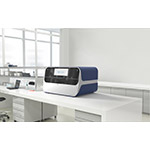
BOSTON--(BUSINESS WIRE)--Emulate, Inc., a leading provider of next generation in vitro models, today launched the Zoë-CM2™ Culture Module, a second-generation Zoë instrument that is at the core of their Human Emulation System®. Like its predecessor, Zoë-CM2 sustains the life of cells within Emulate Organ-Chips, automating the precise conditions needed to culture up to 12 chips. With the addition of internet connectivity for remote operation, support, and ongoing software updates, Zoë-CM2 now allows researchers greater convenience to remotely plan their studies, update experimental parameters, and pull historical flow and stretch data.
“Zoë-CM2 represents a pivotal advancement of our Human Emulation System and its capabilities for disease research and drug development,” said Chris Hinojosa, VP of Platform Development for Emulate. “By combining human-relevant cell sources and Zoë-CM2’s advanced replication of biological microenvironments, Emulate enables researchers to model complex human biology to uncover new discoveries in disease pathology and drug effect. This innovation reflects our continued dedication to evolving our Organ-Chip offerings and providing the scientific community with the most up-to-date human-relevant models.”
Traditional Organ-Chip setups rely on complex and manual syringe pump setups that not only require high technical expertise, but also result in high variability in experimental success and results. The Human Emulation System comprises Organ-Chip instruments, consumables, and software designed to make the technology more accessible, easier to use, and more reliable so researchers can generate more reproducible and robust insights into human biology. This complete Organ-on-a-Chip solution removes the need for complex and manual syringe pump setups, and proprietary technology reduces the risk of bubble formation.
For researchers seeking to reduce the high failure rates of drug development, the Human Emulation System more precisely predicts human response to drug candidates by combining human tissue and advanced replication of the complex biological microenvironment. It has been shown to support organ models with greater cellular complexity and allow for more control over the microenvironment, enabling users to create tissue models with in vivo like gene expression. As the Human Emulation System is an open platform and organ agnostic, it can be used for a myriad of research possibilities and organ models.
When used with the new Zoë Manager web application, academic researchers and drug developers will be able to remotely monitor and update their experiments, as well as streamline technical support. Zoë-CM2’s ongoing software updates will also enable the Human Emulation System to evolve over time to expand control of the cellular biological microenvironment, enabling new organ model and application development. These future updates will range from improved performance to advanced stretch and flow capabilities for greater experimental flexibility and ease of use.
Zoë-CM2 is available to ship in Q4’21; to learn more, visit go.emulatebio.com/zoe.
About Emulate, Inc.
Emulate is igniting a new era in human health with industry-leading Organ-on-a-Chip technology. The Human Emulation System provides a window into the inner workings of human biology and disease – offering researchers an innovative technology designed to predict human response with greater precision and detail than conventional cell culture or animal-based experimental testing. Pioneered at the Wyss Institute for Biologically Inspired Engineering at Harvard University and backed by Northpond Ventures, Founders Fund, and Perceptive Advisors, Organ-on-a-Chip technology is assisting researchers across academia, pharma, and government industries through its predictive power and ability to recreate true-to-life human biology. To learn more, visit emulatebio.com or follow us on LinkedIn and Twitter.
Contacts
Michael Sullivan for Emulate
emulate@teamseismic.com
+1 503-799-7520