NTHU Research Team Develops Self-Healing Quantum Emitter with Unprecedented Brightness
NTHU Research Team Develops Self-Healing Quantum Emitter with Unprecedented Brightness
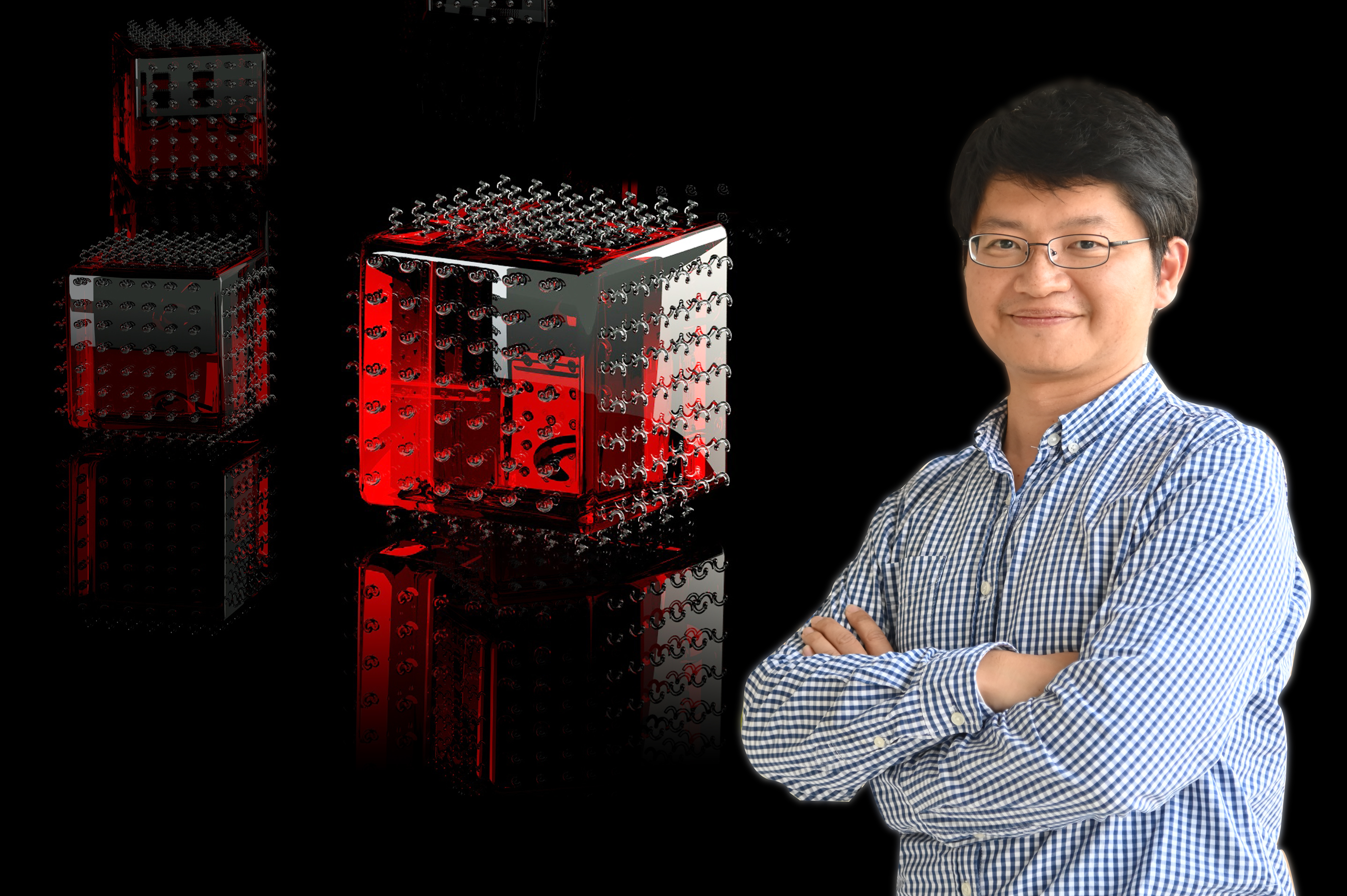
HSINCHU, Taiwan--(BUSINESS WIRE)--Although perovskite quantum dots (PQDs) are rising stars among quantum emitters, their inherent instability has limited their development. Now, Professor Hao-Wu Lin of the Department of Materials Science and Engineering, Professor Chih-Sung, Chuu of the Department of Physics, and Professor Richard D. Schaller of the Department of Chemistry at Northwestern University have jointly developed PQDs with high stability and self-healing ability by applying a simple and cost-effective procedure: spray synthesis. Their PQDs display unprecedented single-photon brightness; indeed, they have broken the world-record for the brightest room-temperature quantum emitter material—a major breakthrough for quantum information processing.
Lin says that, in contrast to other quantum emitters, PQDs can realize single-photon emission at room temperature with excellent optical properties, including high quantum yield and high single-photon purity, making them ideal for future quantum computing and quantum communications. In recent years, PQDs have attracted considerable attention from international researchers, who have been hoping to extend the stability of the materials to beyond only a few minutes under excitation.
The traditional method of preparing PQDs involves directly mixing two different solutions in a flask. Instead, Lin's research team employed a spray-synthesis method to greatly increase the contact area of the reactants and to grow a uniform protective organic layer on the surface of each PQD. The resulting PQDs retained their brightness even after 24 hours of continuous excitation under intense light—a dramatic improvement in stability.
A surprising finding is that these spray-synthesized PQDs have a unique self-healing ability. Although the PQDs experienced damage and decay when excited under light of extremely high intensity, they retrieved their original brightness after a break of several minutes. The team’s research appears in the prestigious international journal ACS Nano, gracing the cover of the most recent issue.
Lin compares the preparation of these quantum dots with making dumplings. Some have tried using different ingredients, others have tried using thicker wrappers, and still others have tried doubling the wrappers, but his team simply focused on perfecting the method of wrapping the dumplings.
The first author of the journal paper is Bo-Wei Hsu, a doctoral student at NTHU. Recalling the moment he discovered the self-healing of PQDs, Hsu said, “Following a period of strong excitation, the PQDs gradually dimmed, but after a short while they recovered their original brightness—and I could hardly believe my eyes!” Hsu performed the experiments repeatedly, eventually convincing himself that the PQDs did indeed possess this self-healing ability.
Lin notes that their spray-synthesized perovskite quantum emitter requires only about 1% of the excitation intensity needed by other quantum emitters, and provides a single-photon brightness exceeding 9 million photons per second—the new world record. In addition, the single-photon purity was quite high, reaching 98%. With such excellent performance—high single-photon brightness, high single-photon purity, and high stability—their perovskite quantum emitter is a promising material for future application in quantum computing and quantum communications.
Contacts
Holly Hsueh
NTHU
(886)3-5162006
hoyu@mx.nthu.edu.tw