

Doctors Group Demonstrates to Ask Government for ‘Beans Not Beef’ for Health of Planet and People
Doctors Group Demonstrates to Ask Government for ‘Beans Not Beef’ for Health of Planet and People
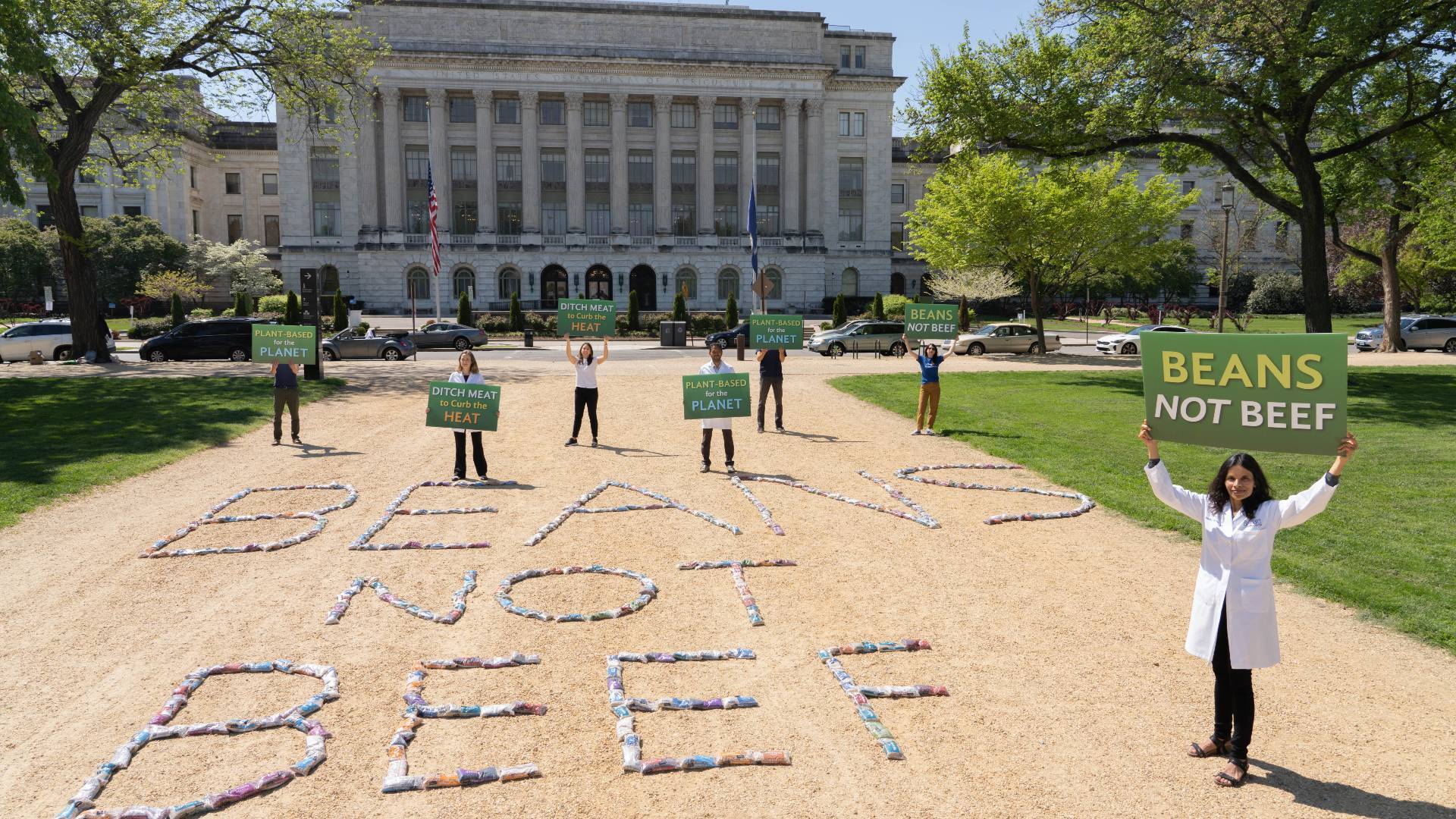
WASHINGTON--(BUSINESS WIRE)--“Beans Not Beef” is the Earth Day message the nonprofit Physicians Committee for Responsible Medicine recently spelled out with bags of beans on the National Mall. The message coincided with the White House’s climate summit. The doctors group recently petitioned the White House to update its executive order titled “Tackling the Climate Crisis at Home and Abroad” to recommend policy changes that could help alleviate the climate crisis and improve human health by cutting animal agriculture and promoting a plant-based diet.
The White House’s executive order creates a National Climate Task Force, which includes Secretary of Agriculture Tom Vilsack. The Physicians Committee’s petition requests that the White House update the executive order to include several directives aimed at the U.S. Department of Agriculture, including adding the climate benefits of a plant-based diet in the 2025-2030 Dietary Guidelines for Americans and proposing a strategy to shift subsidies for meat and dairy products to fruits, vegetables, grains, and beans meant for human consumption.
The Physicians Committee also wrote to the USDA in a letter dated April 20: “I am writing today out of concern for the environment, a concern I know you share. While we are pleased that the Biden administration has already taken initial steps in this important area, the role of dietary contributors to climate change remains neglected,” writes Susan Levin, MS, RD, CSSD, director of nutrition education for the Physicians Committee. “A report published in The Lancet in 2019 concluded that a dietary shift toward plant foods and away from animal products is vital for promoting the health of our planet.”
In 2015, the Dietary Guidelines Advisory Committee recommended a shift away from animal products toward plant-based diets for sustainability. The committee stated that “a dietary pattern that is higher in plant-based foods, such as vegetables, fruits, whole grains, legumes, nuts, and seeds, and lower in animal-based foods is more health promoting and is associated with lesser environmental impact (GHG emissions and energy, land, and water use) than is the current average U.S. diet.”
Swapping beef for beans could help the United States reach targeted greenhouse gas emission reductions. Researchers compared simulated net emissions of legume production, subtracted those from average beef production rates, and used U.S. reduction goals for 2020 as a reference. Based on the results, legume substitution could account for 46-74% of the required reductions.
Studies show that beans are also beneficial for cardiovascular disease, type 2 diabetes, and weight management, and satisfy hunger more than meat.
Additional information is available at PCRM.org/BeansNotBeef.
Contacts
Michael Keevican, mkeevican@pcrm.org, 202-527-7367
