Reshaping the Future of the Electric Grid Through Low-Cost, Long-Duration Discharge Batteries
Reshaping the Future of the Electric Grid Through Low-Cost, Long-Duration Discharge Batteries
LEMONT, Ill.--(BUSINESS WIRE)--A new era of energy provided by renewables may be close, thanks to research begun at the Joint Center for Energy Storage Research (JCESR), a U.S. Department of Energy (DOE) Energy Innovation Hub led by DOE’s Argonne National Laboratory, and continued at its spinoff company, Form Energy.
The challenge JCESR addressed is long-duration energy storage – stabilizing a renewable grid against several consecutive days of calm or overcast days when wind and solar generation is absent or severely limited. Today’s lithium-ion batteries can discharge at full power for 4-6 hours, enough to stabilize against most intra-day variations due to passing clouds or fluctuating winds, or to extend solar electricity a few hours past sunset to serve the evening demand peak, according to Yet-Ming Chiang, a JCESR member, co-founder of Form Energy, and professor of materials science at the Massachusetts Institute of Technology.
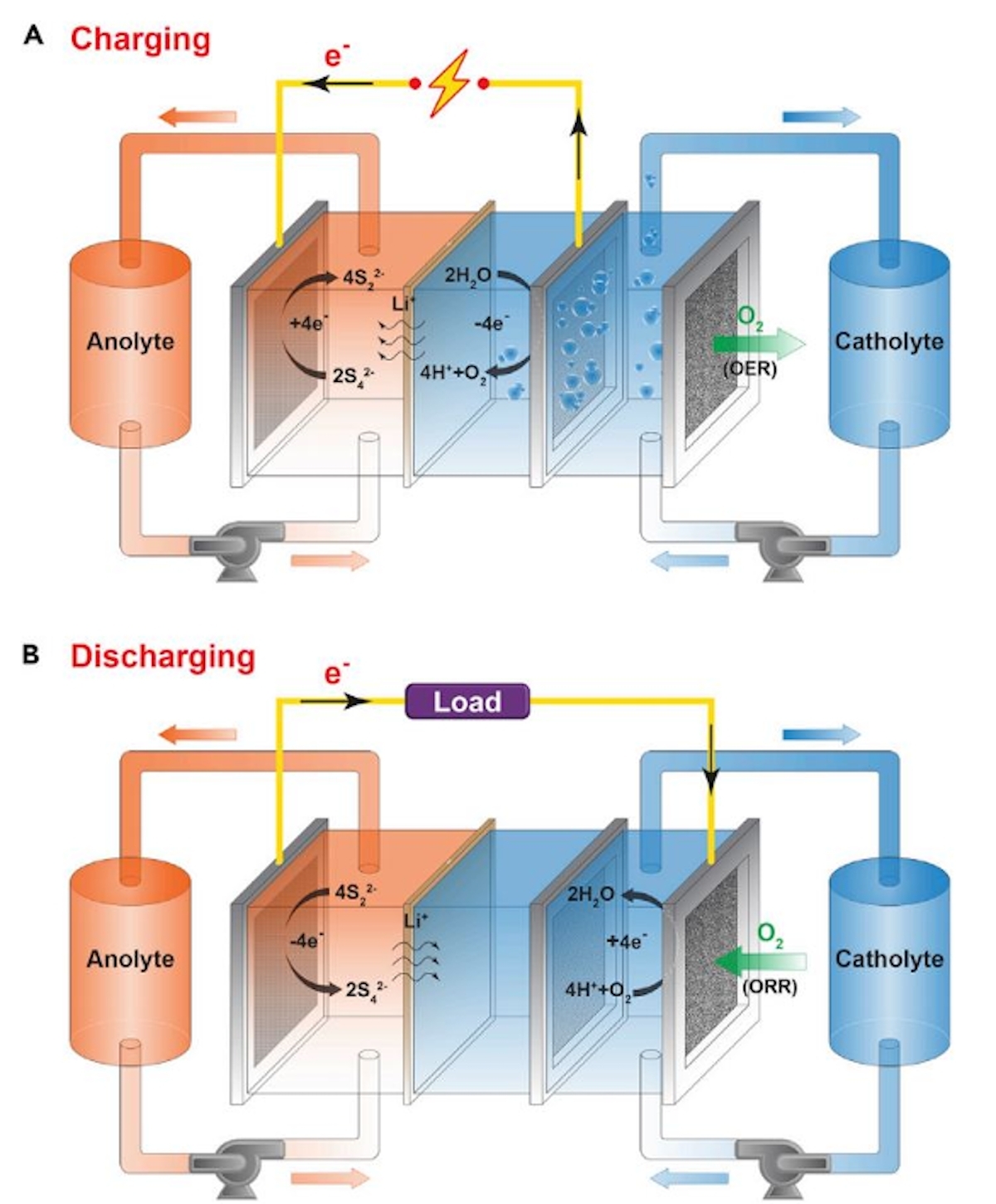
Pivotal JCESR research first laid out the case for an air-breathing aqueous sulfur chemistry in long-discharge applications, comparing this kind of battery against established technologies, such as Li-ion and pumped hydroelectric storage and other emerging technologies, such as underground compressed air storage. Later studies showed that renewable generation combined with storage, with very-low-cost new chemistries, could deliver electricity in many U.S. locations more cheaply than coal or nuclear power plants and cost-competitively with natural gas. Meanwhile, the Advanced Research Projects Agency–Energy (ARPA-E) at DOE also was looking to explore long-duration discharge storage in its program called Duration Addition to electricity Storage (DAYS).
In 2017, Chiang co-founded a startup company based on JCESR intellectual property with Boston-area colleagues Ted Wiley, Billy Woodford, and Marco Ferrara. The company was renamed Form Energy when it merged with a West Coast startup founded by Mateo Jaramillo, a former executive at Tesla and now Form Energy’s CEO.
“We are thrilled that Form Energy commercialized JCESR’s innovations for long-duration discharge batteries so quickly. This is a model for how the lab to market transition should work,” said George Crabtree, JCESR director.
In May 2020, Form Energy signed its first contract with Minnesota-based Great River Energy, one of the largest generation and transmission cooperatives nationwide. This pilot project will deliver a battery system, planned for 2023, designed to discharge over 150 hours at 1 megawatt power (equaling 150 MWh of capacity).
To date, Form Energy has secured about $120 million of private investment and U.S. government support through the ARPA-E DAYS project.
Contacts
Christopher J. Kramer
Head of Media Relations
Argonne National Laboratory
Office: 630.252.5580
media@anl.gov