Clinical Analysis of Video Recorded CPR Cases Improves Resuscitation Outcomes in Emergency Department
Clinical Analysis of Video Recorded CPR Cases Improves Resuscitation Outcomes in Emergency Department
Feinstein Institutes for Medical Research and North Shore University Hospital pioneer video recording and review process to improve live-saving CPR process

MANHASSET, N.Y.--(BUSINESS WIRE)--Less than 8 percent of people who suffer from cardiac arrest outside of the hospital survive the incident, according to the American Heart Association. To improve survivorship and better administer life-saving cardiopulmonary resuscitation (CPR), researchers and physicians at The Feinstein Institutes for Medical Research and North Shore University Hospital developed a novel approach called Mechanical, Team-Focused, Video-Reviewed Cardiopulmonary Resuscitation (MTV-CPR) to video record, review and reform practices to improve performance. Their research results published today in the Journal of the American Heart Association.
The first-of-its-kind study to be conducted nationally began in 2018 when emergency department (ED) staff at North Shore University Hospital (NSUH) began video recording the process and use of the mechanical chest compression device (MCCD) for cardiac arrest patients. The goal of the study was to increase the return of spontaneous circulation (ROSC) rate pre- and post- MTV-CPR intervention.
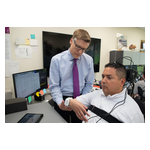
A new team-focused strategy was developed with nurse-led Advanced Cardiac Life Support (ACLS) and biweekly, multidisciplinary video review of the cardiac arrests were conducted. The research is spearheaded by Lance Becker, MD, professor in the Institute of Bioelectronic Medicine at the Feinstein Institutes, and Daniel Rolston, MD, MSHPM an Emergency Medicine and Critical Care physician at NSUH.
“It was a simple, yet powerful idea; use overhead video cameras to record and then later review the process of our staff administering mechanical CPR in our emergency rooms to improve outcomes,” said Dr. Becker, who is also the ED chair at Long Island Jewish Medical Center and NSUH. “Our data support the benefit of actively reviewing and improving on real-world CPR techniques to save peoples’ lives. When we saw a problem we developed new protocols to overcome each challenge.”
Four resuscitation rooms in the ED equipped with video review technology which monitored 151 cardiac arrest patients for the ROSC rate. Patients achieving ROSC improved from 26 percent before MTV-CPR intervention to 41 percent afterward.
Dr. Becker and his team of physicians, nurses and technicians gathered to watch video of the resuscitation and review processes, trying to find ways to make each incidence better. Through their analysis, the team implemented personalized feedback for those placing MCCD on patients, reduced chest compression interruptions, developed new assignment roles for an eight-person response team, and created new coordinated transition methods for technicians to go from manual to mechanical CPR.
“Dr. Becker and his team have led early, national efforts to put defibrillators in public spaces,” said Kevin J. Tracey, MD, president and CEO of the Feinstein Institutes. “Now they are leading this new effort to prevent sudden cardiac deaths in hospital emergency departments.”
The authors of the paper also include: Timmy Li, PhD; Casey Owens, MPH; Ghania Haddad, MD; Timothy J. Palmieri, MD; Veronika Blinder, DO; Jennifer L. Wolff, MD; Michael Cassara, DO; and Qiuping Zhou, DO.
About the Feinstein Institutes
The Feinstein Institutes for Medical Research is the research arm of Northwell Health, the largest health care provider and private employer in New York State. Home to 50 research labs, 2,500 clinical research studies and 5,000 researchers and staff, the Feinstein Institutes raises the standard of medical innovation through its five institutes of behavioral science, bioelectronic medicine, cancer, health innovations and outcomes, and molecular medicine. We make breakthroughs in genetics, oncology, brain research, mental health, autoimmunity, and are the global scientific leader in bioelectronic medicine – a new field of science that has the potential to revolutionize medicine. For more information about how we produce knowledge to cure disease, visit feinstein.northwell.edu.
Contacts
Matthew Libassi
516-465-8325
mlibassi@northwell.edu