Miami-Dade County Seeks Innovative Tech to Optimize Water and Sewer Operations and Turn Waste into Value
Miami-Dade County Seeks Innovative Tech to Optimize Water and Sewer Operations and Turn Waste into Value
Initiative to award $300,000 to early-to-growth stage companies focused on circular resource recovery and operational optimization in water and sewer systems
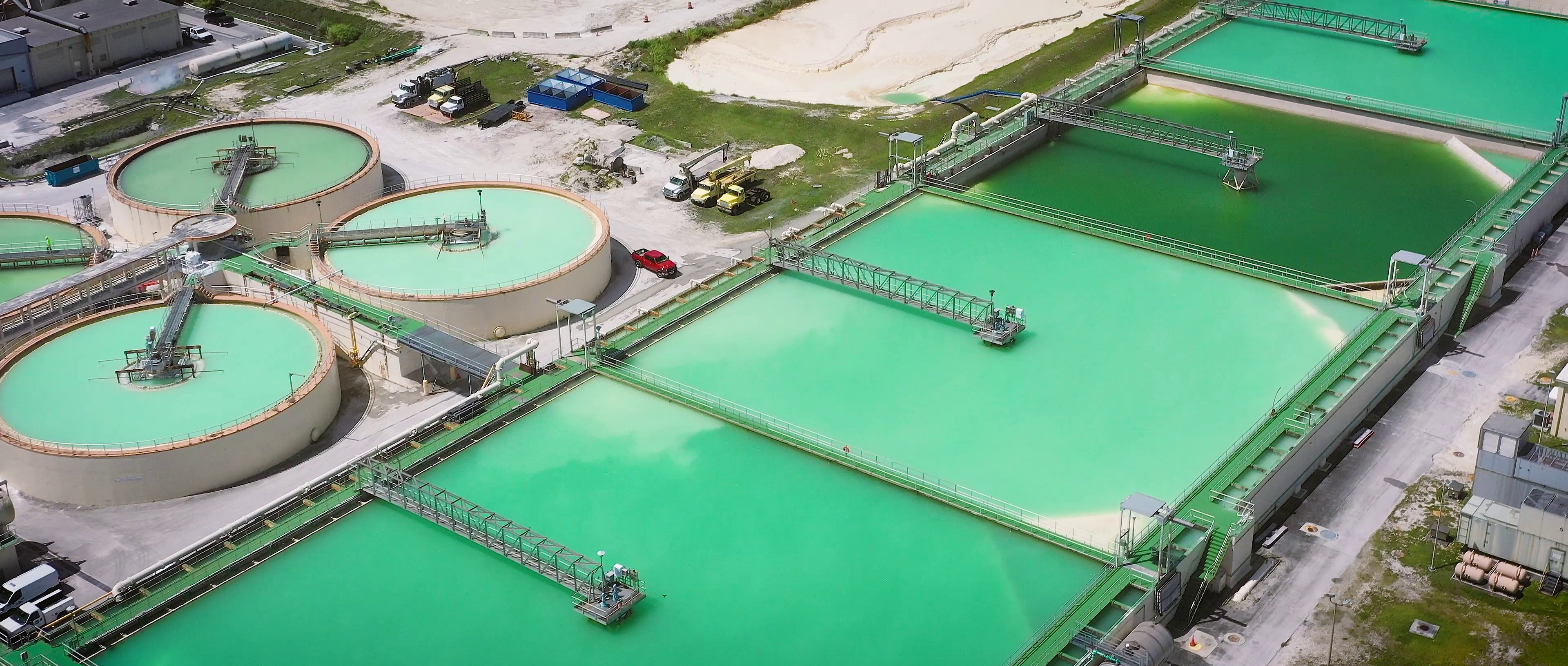
MIAMI--(BUSINESS WIRE)--The Miami-Dade Innovation Authority (MDIA), in collaboration with the Miami-Dade Water and Sewer Department (WASD), launched its eighth Public Innovation Challenge, committing up to $300,000 to accelerate the deployment of emerging technologies that could help the Department enhance water and sewer operations, reduce system disruptions and costs, and repurpose resources from waste streams.
Initiative to award $300,000 to early-to-growth stage companies focused on circular resource recovery and operational optimization in water and sewer systems.
Share
This challenge was also developed in partnership with the Miami-Dade County Department of Environmental Resource Management (DERM), and Florida International University (FIU) Department of Civil and Environmental Engineering.
Interested technology companies have until July 15th, 2026 to submit proposals through the official challenge website: https://mdia.miami/water. MDIA, in partnership with WASD, will select at least three technology companies, providing each with $100,000 in funding to test and validate their solutions.
“Water is not only a universal public asset, it is essential to quality of life. Yet, its delivery infrastructure remains some of the least adaptive. Cities across the country face the same pressures including aging structure, rising costs, and increasing environmental strain while continuing to operate in largely linear utility systems that were not designed for today’s demands,” said Leigh-Ann Buchanan, President and CEO of MDIA. “The reality is that we can’t afford to wait decades for large-scale upgrades. We need solutions that can be deployed today, tested safely in real-world environments, and scaled quickly. Through this challenge, Miami-Dade is creating a direct pathway for innovators to bring cutting-edge technologies into one of the largest water systems in the country and inspire change for other municipalities across the United States.”
The purpose of this challenge is to help bridge the gap between private innovators and the public sector to fast-track the adoption of emerging technologies that improve operational efficiency, enhance service delivery, and reduce costs. This challenge seeks innovative solutions that may include, but are not limited to:
- Solutions that capture or convert fats, oils and grease (FOG) from water and sewer infrastructure into renewable or circular economy products, such as biofuels.
- Solutions that help manage, recover, or repurpose water treatment byproducts, such as biogas, lime residuals, and recyclables.
- Digital tools that support water and sewer planning and maintenance, enhancing capacity to anticipate issues, plan infrastructure and asset maintenance, and respond to issues. Ideally, these tools should complement or integrate with existing sensor networks.
- Systems that centralize data or optimize workflows, modernize or replace outdated practices, and enhance existing operations with intelligent or predictive systems.
Miami-Dade County Mayor Daniella Levine Cava continues to champion innovation that advances her administration’s commitment to building a future-ready utility through resilient infrastructure and operational modernization.
“Reliable water and sewer service is essential to every resident and business in Miami-Dade County,” said Miami-Dade County Mayor Daniella Levine Cava. “By pairing our ongoing infrastructure investments with public innovation, we are taking a smarter approach to increasing resilience, protecting public health, reducing costs, increasing operational efficiency, and creating value from what would otherwise be considered waste."
Water and sewer utilities are among the most critical public systems. Across the country, utilities are navigating aging infrastructure, increased operational demands, rising costs, and changing environmental conditions. WASD is addressing these problems by pairing major infrastructure investments with targeted technology pilots that can increase the effectiveness, efficiency, reliability, and sustainability of its water and sewer operations.
For Miami-Dade, infrastructure reliability is an immediate priority. The County is home to nearly 3 million residents and welcomes more than 28 million visitors annually. WASD oversees more than 8,700 miles of water lines and more than 4,100 miles of sewer lines, directly serves more than 450,000 customer accounts, and conducts more than 150,000 drinking water quality tests annually to ensure regulatory compliance. The department is also executing an $8.9 billion Capital Improvement Program to modernize and future-proof its critical infrastructure including pipes, pump stations, and treatment plants.
A key focus of the challenge is circular resource recovery, shifting from a traditional “use, treat, dispose” model toward a smarter system that recovers, reuses, and regenerates value from wastewater and related byproducts. This includes opportunities to capture and repurpose fats, oils, and grease, known as FOG, which are a major driver of sewer blockages, backups, overflows, and maintenance costs nationwide. Miami-Dade spends millions of dollars each year clearing grease from pipes and addressing related disruptions.
Through controlled pilot testing, the challenge aims to test technologies to reduce emergency repairs, lower maintenance costs, extend the life of infrastructure assets, and improve operational coordination. The effort also aligns with WASD’s WAVE Plan, the department’s 2023–2028 strategic roadmap to build a more sustainable, resilient, efficient, and future-ready utility.
“At WASD, we’re committed to delivering reliable service every day,” said WASD Director Jay J. Fink, P.E. “This challenge allows us to work directly with companies that can help us improve our operations, enable circular resource recovery, and hopefully result in cost savings strategies for our rate payers.”
As the first Public Innovation Authority in the country, MDIA has worked closely with Miami-Dade County to validate its novel model and create a replicable model for municipalities across the United States. Thus far it has deployed more than $1 million in funding and attracted more than 580+ startups, from 65 different countries, amassing a company pipeline network which collectively represents $7 billion in revenue and $4 billion in funding raised.
Interested companies should submit their proposals through the official challenge website: https://mdia.miami/water
About Miami-Dade Innovation Authority (MDIA)
MDIA bridges gaps between private innovators and the public sector to fast-track the procurement of technology and innovation solutions that enable municipalities to more effectively and efficiently address pressing issues that impact resident quality of life in cities.
Through its signature Public Innovation Challenge, it identifies, invests in, and supports early-to-growth stage companies to pilot, test, and validate their technology in collaboration with the economic engines and local government. For more information, visit: www.mdia.miami
About the Miami-Dade Water and Sewer Department (WASD)
The Miami-Dade Water and Sewer Department (WASD) is one of the largest water and sewer utilities in the southeastern United States, serving more than 2.8 million residents each day. The Department manages more than 14,000 miles of water and sewer pipelines, more than 1,000 pump stations, six water and wastewater treatment plants, and additional critical facilities that require constant operational oversight to provide high quality and reliable drinking water and wastewater removal services. For more information, visit: www.miamidade.gov/water
Contacts
MEDIA CONTACT:
Leigh-Ann Buchanan
press@mdia.miami