Family Heart Foundation Teams Up with Former NFL Quarterback Matt Hasselbeck to Launch “Tackle Cholesterol™: Get into the LDL Safe Zone®”
Family Heart Foundation Teams Up with Former NFL Quarterback Matt Hasselbeck to Launch “Tackle Cholesterol™: Get into the LDL Safe Zone®”
National Campaign Highlights Pro-Bowler’s Journey with High Cholesterol, Raises Awareness and Promotes Screenings to Reduce Risk of Early Heart Disease
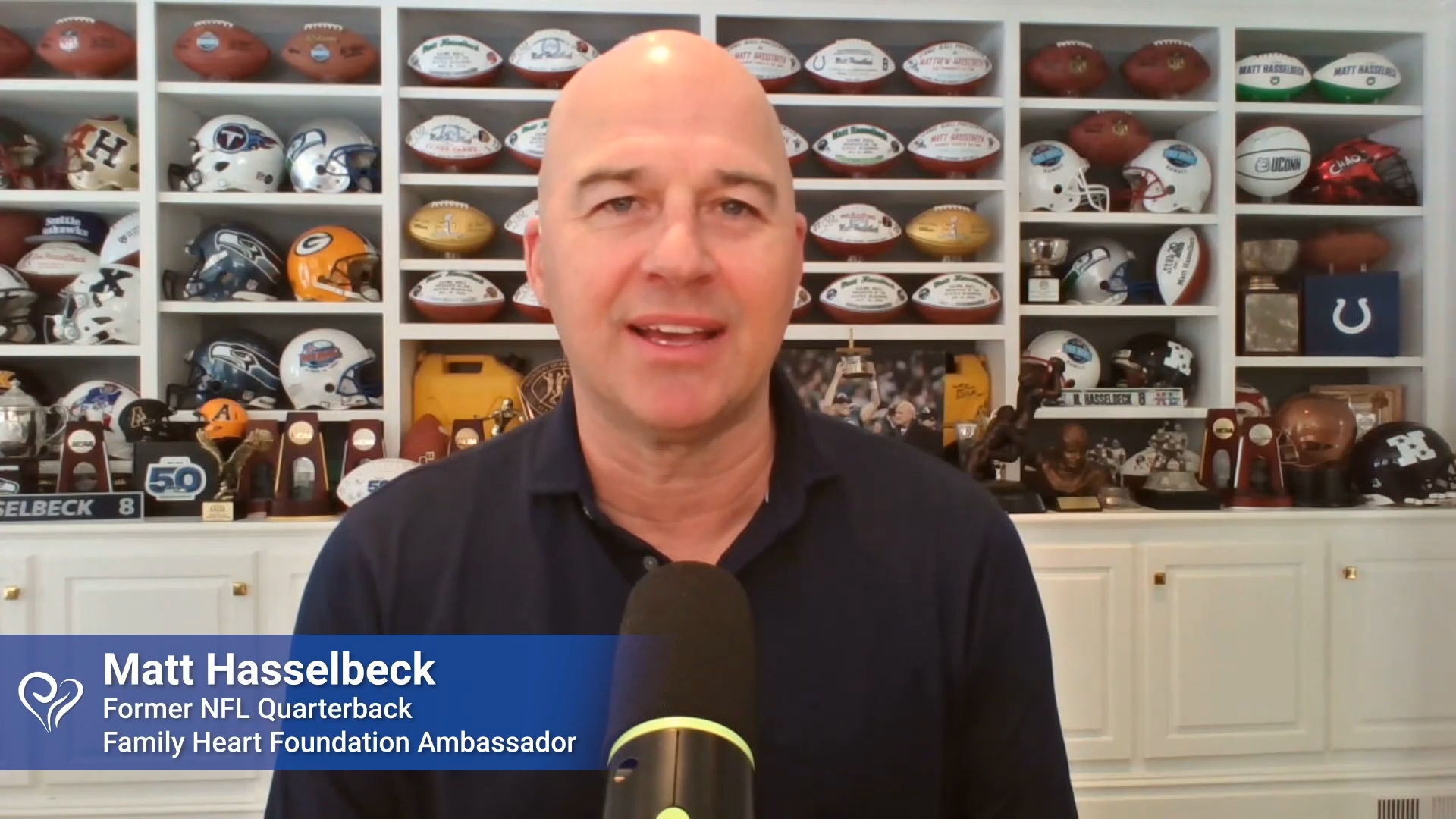
As a former NFL quarterback, Matt Hasselbeck spent years focused on performance, preparation and staying healthy. He didn’t think much about cardiovascular risk until it became part of his family’s story. Hasselbeck is teaming up with the Family Heart Foundation to shine a light on how Americans can protect themselves from high LDL cholesterol, the single biggest contributor to cardiovascular disease and death in our country.
FERNANDINA BEACH, Fla.--(BUSINESS WIRE)--To kick off Super Bowl LX week and American Heart Month, the Family Heart Foundation, a leading research and advocacy organization, is teaming up with three-time Pro Bowler and former Seattle NFL quarterback Matt Hasselbeck to launch a national campaign focused on raising awareness of high cholesterol as a key risk factor for heart attack and stroke. The campaign, “Tackle Cholesterol: Get into the LDL Safe Zone,” reinforces the importance of early screening for dangerous cholesterol levels and helps individuals understand the steps to protect themselves and their families from cardiovascular disease. Research shows that to be in the LDL Safe Zone individuals need to lower their high low-density lipoprotein (LDL) cholesterol and keep it low in accordance with individual risk guidelines. Hasselbeck, who was diagnosed with high LDL cholesterol last year, and has a family history of cardiovascular disease, will help reach families and sports fans nationwide with an opportunity for a free at-home screening, educational resources and support.
My first coach told me early in my career that it was key that I stay low, he said it would protect me in the game. I have discovered the same is true of LDL cholesterol. Get low and stay low to reduce your risk for cardiovascular disease.
Share
“I really thought I was super healthy and doing a good job taking care of myself,” Hasselbeck said. “After my dad passed away from a heart attack, I finally got screened and learned my cholesterol was high. At first, I didn’t understand what my screening results meant. It’s easy to assume you’re healthy, but you don’t really know until you find out what’s going on inside your body. Now, I understand I need to get my cholesterol low, and keep it low, so that I can keep doing the things I love.”
Like many Americans, 50-year-old Hasselbeck may have had high LDL cholesterol for years without knowing it. Even during routine physicals as a professional athlete, his risk went undetected. Following his dad’s passing, his mom urged him and his brothers to get screened to identify any potential risks for cardiovascular disease and take control of those risks. High LDL cholesterol often has no visible symptoms and over time it can build up in the arteries restricting blood flow and increasing the risk of a heart attack or a stroke. Many individuals are unaware of their risk until they, or a family member, experience a serious cardiac event.
For some people, genetics can contribute to high LDL cholesterol. Familial hypercholesterolemia is a genetic condition which causes high LDL cholesterol from birth. Lipoprotein(a) — also referred to as L-p-little-a — is another cholesterol-like substance that is inherited and can significantly increase the likelihood of early and preventable heart disease. The Family Heart Foundation’s free, at-home screening program, Cholesterol Connect®, screens for LDL cholesterol and Lipoprotein(a).
“Millions of Americans are unaware they are living with high LDL cholesterol or a genetic form of high cholesterol,” said Laurence Sperling, MD, FACC, FAHA, FACP, MASPC. “For many, the first indication of cardiovascular trouble is chest pain, a heart attack, or stroke. Understanding your risk and knowing that you have high LDL cholesterol is only the first step. Getting to your LDL Safe Zone is another critical step to reduce your risk of a heart attack or stroke.”
Supported by Amgen, the campaign provides a national forum for ongoing conversations about LDL cholesterol and highlights the importance of early screening and working with your physician to understand next steps. As part of the initiative, the Family Heart Foundation is extending its Cholesterol Connect program and individualized support through Care Navigation Services to make it available to everyone. While screening is key, research has shown that follow-up, referrals and linkages to long-term treatment and support is also important.1,2
“The level of LDL cholesterol circulating in the blood, regardless of the cause, is the single most modifiable cause of heart attacks and strokes today,” said Katherine Wilemon, founder and chief executive officer of the Family Heart Foundation. “The Family Heart Foundation is committed to empowering people with information and resources to reduce their risk and get the care they need. We are excited to partner with Matt to amplify awareness and encourage everyone nationwide to get a cholesterol screening to protect themselves and their families from early cardiovascular disease.”
For more information or to order a free, one-time at-home cholesterol screening, visit CholesterolConnect.org.
About the Family Heart Foundation
The Family Heart Foundation is a nonprofit research and advocacy organization. The Foundation is a pioneer in the application of real-world evidence, patient-driven advocacy, and multi-stakeholder education to help prevent heart attacks and strokes caused by familial hypercholesterolemia (FH) and elevated lipoprotein(a), or Lp(a), two common genetic disorders that have an impact across generations. The Family Heart Foundation conducts innovative research to break down barriers to diagnosis and management of inherited lipid disorders; educates patients, providers, and policy makers; advocates for change; and provides hope and support for families impacted by heart disease and stroke caused by FH, HoFH, and elevated Lp(a). The organization was founded in 2011 as the FH Foundation. For more information, visit FamilyHeart.org and follow us on Twitter, Facebook, Instagram and LinkedIn.
1. JAMA, August 2016 Viewpoint
2. The Lancet, May 2025
Contacts
Media Contact:
Jackie Aker
jackie@mplushealth.com