Omdia: 5G Standalone Networks and RedCap Devices Poised to Transform IoT Landscape in 2025
Omdia: 5G Standalone Networks and RedCap Devices Poised to Transform IoT Landscape in 2025
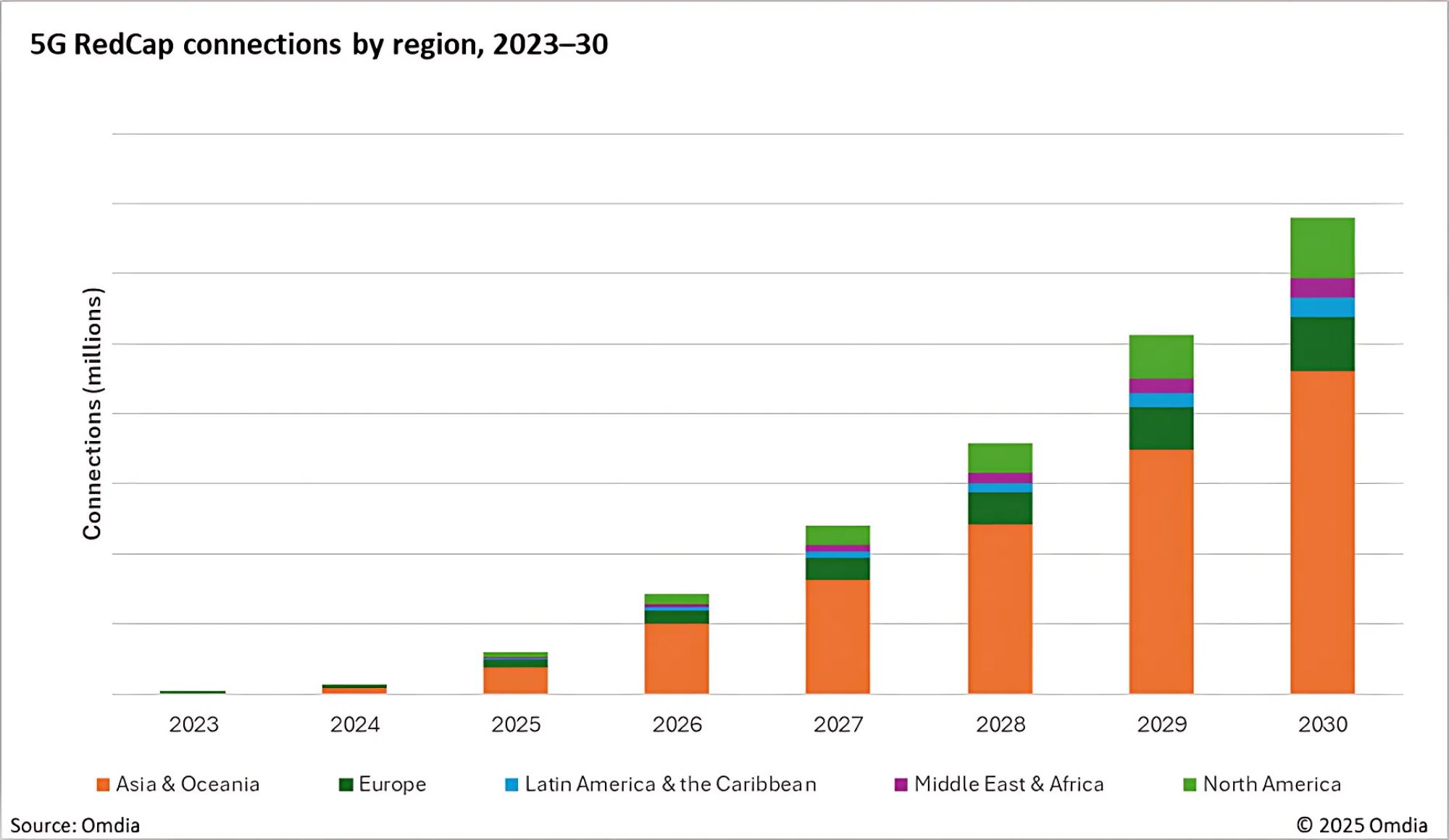
LONDON--(BUSINESS WIRE)--New analysis from Omdia reveals that 2025 is set to be a breakout year for 5G Standalone (SA) network deployments and RedCap device adoption, unlocking substantial opportunities for IoT applications across industries.
"With 5G SA deployments picking up pace, the industry is finally realizing the true potential of 5G," explains Alexander Thompson, Senior Analyst for IoT at Omdia.
Share
5G Standalone Networks Gain Momentum
After delays in 2024, global 5G SA rollouts are accelerating, delivering on 5G's core promise of ultra-fast speeds, ultra-low latency, and massive connectivity. transformative applications, particularly in manufacturing and industrial automation sectors, and other IoT-driven sectors.
“With 5G SA deployments picking up pace, the industry is finally realizing the true potential of 5G,” explains Alexander Thompson, Senior Analyst for IoT at Omdia. “2025 marks the first-time hardware and network ecosystems are aligned on RedCap, showcased by the recent Apple Watch launch supporting this technology.”
RedCap Devices Hit Key Milestones
The 5G device ecosystem reached a significant milestone. October 2024 saw T-Mobile introduce North America's first commercial 5G RedCap device -the TCL LINKPORT IK511 dongle. While module costs are still high, prices are projected to decrease as adoption increases, particularly in China where government subsidies are anticipated to drive market growth.
Advanced Network Capabilities Gaining Traction
Network slicing has successfully transitioned beyond trial phases with commercial offerings such as T-Mobile's T-Priority and Verizon's FrontLine services. Private 5G networks continue addressing critical security concerns cited by 33% of organizations in Omdia's IoT Enterprise Survey 2025 as the top priority for their IoT initiatives.
Meanwhile, the broader 5G ecosystem is expanding through network API monetization, with several key API families now being deployed globally.
About the Report
Omdia's 5G in IoT report provides an in-depth look at the latest market trends covering network slicing, private 5G implementations, API monetization strategies, 5G Standalone versus Non-Standalone architectures, and ten use cases with supporting case studies.
ABOUT OMDIA
Omdia, part of Informa TechTarget, Inc. (Nasdaq: TTGT), is a technology research and advisory group. Our deep knowledge of tech markets grounded in real conversations with industry leaders and hundreds of thousands of data points, make our market intelligence our clients’ strategic advantage. From R&D to ROI, we identify the greatest opportunities and move the industry forward.
Contacts
Fasiha Khan – Fasiha.khan@omdia.com